LifestyleCornerstone guide

Life in Hua Hin

What everyday life here actually feels like, once the novelty has worn off

Hua Hin is easy to enjoy on holiday. Living here is a different proposition. Daily life is quieter, more routine-driven and more varied than visitors assume — beaches before breakfast, markets, golf, cafés, school runs, evening meals, sport, friends and the occasional escape into the hills and national parks.

This guide looks past the attractions at what an ordinary week here involves, who tends to settle well, and what eventually wears on the people who do not.

Last verified
Last verified: August 2026
Next review:
February 2027
Reading time:
18 min
Residents walking and running along the shoreline of a Thai coastal town in the early morning

Hua Hin lifestyle in 30 seconds

Pace

Relaxed

Days follow a routine rather than a schedule.

Outdoor life

Excellent

Beach, golf, cycling and hills within reach.

Food

Very good

Thai everyday cooking plus a real international choice.

Social life

Easy if you take part

Nothing arrives automatically at your door.

Nightlife

Moderate

Bars and live music, but the town winds down early.

Family life

Good

Space, sport and schools; less variety than a city.

Hua Hin works particularly well for people who value comfort, routine and outdoor living more than constant novelty. There are enough restaurants, cafés, sports and social occasions to keep an ordinary week interesting, while the town stays far calmer than Bangkok, Phuket or Pattaya.

The trade-off is real. Anyone looking for big-city culture, a serious nightlife scene or a steady supply of new experiences will eventually find Hua Hin limited — and that limit tends to show up around month six, not week two.

Who tends to enjoy Hua Hin?

The same town produces very different experiences depending on what you bring to it.

Retirees and semi-retirees

The group the town fits most naturally.

  • · A pace that rewards routine rather than stamina
  • · Private hospitals and clinics close to the centre
  • · Golf, walking and swimming most days of the year
  • · An established long-stay community, so nothing you do is unusual
  • · A town small enough to know within a few months

Families

Space and sport, with a smaller ecosystem than a city.

  • · International and bilingual schooling shapes the week
  • · Swimming, football, tennis and beach time are ordinary, not treats
  • · Restaurants and public space are relaxed about children
  • · Weekends fill easily with day trips and water parks
  • · Fewer museums, clubs and specialist activities than Bangkok

Remote workers

Comfortable to work from, quieter to network in.

  • · Cafés double as informal offices during the morning
  • · Home internet is generally sufficient for calls and video
  • · Everyday costs leave room to live well on a European income
  • · European time zones work; American ones mean late evenings
  • · The professional community is small compared with Bangkok

Active adults

The strongest practical argument for the town.

  • · Several golf courses within an easy drive
  • · Padel, tennis, gyms and swimming all locally available
  • · Cycling and running work best early or late in the day
  • · Kitesurfing and other watersports in the windy months
  • · Hills, national parks and forest within day-trip range

People after a slower life

Less friction in the ordinary parts of the day.

  • · Errands take minutes rather than half a morning
  • · Traffic exists but rarely dominates the day
  • · Household help and services are affordable and normal
  • · Outdoor living for most of the year
  • · Bangkok stays reachable when you want the noise

Who may find Hua Hin less suitable

  • · You want a serious nightlife scene several nights a week
  • · You need the cultural range of a capital city — theatre, exhibitions, concerts
  • · You are single and young, and a large dating or social scene matters
  • · You would rather not drive, and want to live without a car or scooter
  • · You are picturing island beaches with clear turquoise water
  • · Your work depends on an international business network on your doorstep

None of these are faults in the town. They are simply questions of fit, and they are much cheaper to answer before you move than after.

What does a normal day actually look like?

Heat, not the calendar, sets the shape of the day.

  1. 07:00

    Morning outdoors

    Walking, running, cycling or breakfast before the heat builds. The beach is at its busiest with residents, not visitors.

  2. 09:00

    Coffee, work or errands

    Cafés work as informal meeting rooms. Markets, supermarkets, banks and the mechanic all get dealt with now.

  3. 12:00

    Lunch

    A Thai lunch somewhere simple is everyday food here rather than an occasion.

  4. 15:00

    Sport, work or the school run

    Gym, padel, golf, a swim, a few hours at the desk, or collecting children.

  5. 18:00

    The town comes back outside

    As the temperature drops, the beach road, the parks and the markets fill again.

  6. 19:00

    Dinner

    Thai, seafood, something international, or nothing more ambitious than the place around the corner.

  7. 21:00

    Quiet rather than wild

    There are bars and live music, but most evenings end earlier than they would in Bangkok or Pattaya.

Nobody lives exactly this schedule. The point is that Hua Hin lends itself to a rhythm built around mornings and evenings, with the hottest hours spent somewhere cool. Newcomers who fight that pattern find the first hot season exhausting. Everyone else quietly adopts it within a month.

Eating well is surprisingly easy

Food stops being an event here and becomes part of the infrastructure.

Thai food is everyday food in Hua Hin, not an outing. A plate of rice and something at a local shophouse costs less than the ingredients would at home, and most residents end up eating out several times a week without thinking about it. Seafood is the local speciality, and the night markets handle everything from grilled prawns to a bag of fruit on the way home.

The international side is better than the town's size suggests. There are Italian kitchens, steakhouses, Indian and Japanese restaurants, decent bakeries and a serious café culture that runs from breakfast until mid-afternoon. Supermarkets cover the ordinary weekly shop, and the larger stores stock enough imported cheese, wine and familiar brands to keep most kitchens happy — at prices that quietly inflate a budget if you are not paying attention.

There is a visible gap between the places on the tourist strip and the ones residents return to. Most long-stay households settle on a small rotation of eight or ten favourites rather than hunting for somewhere new every week, and food delivery fills the evenings when nobody wants to drive.
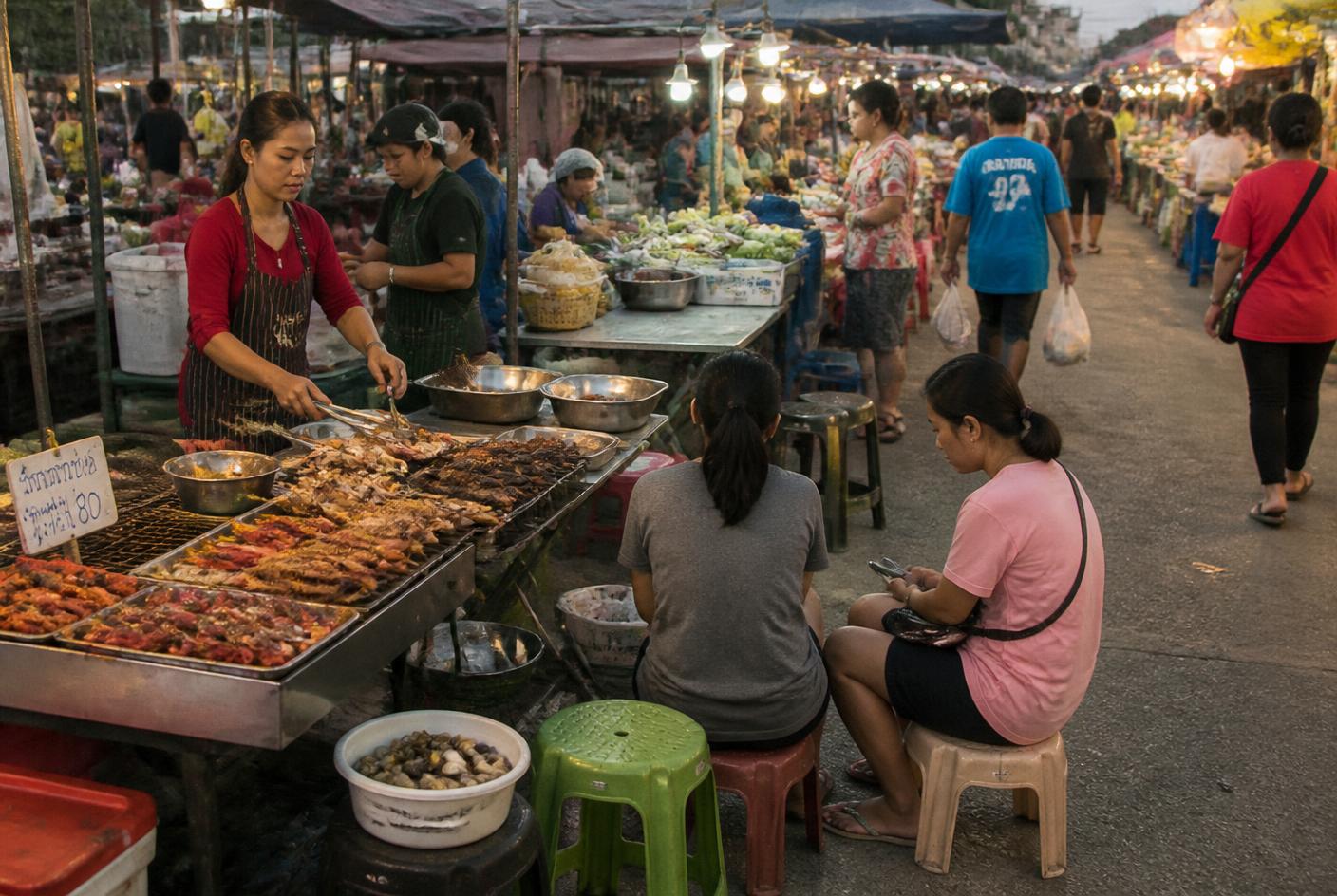
Evening market stall in a Thai town with grilled seafood and residents eating on plastic stools
Market food is ordinary weekday food here, not a night out.

A typical food week

  • MondayThe local Thai place you always go back to
  • TuesdayCooking at home with market produce
  • WednesdayMarket food, eaten standing up or taken away
  • ThursdaySomething international for a change
  • FridaySeafood
  • WeekendCafé breakfast, or dinner with friends

Restaurant, market and café listings live in the Lifestyle section, and are added only once they have been checked.

Hua Hin makes being outdoors easy

This, more than the beach, is the strongest practical argument for the town.

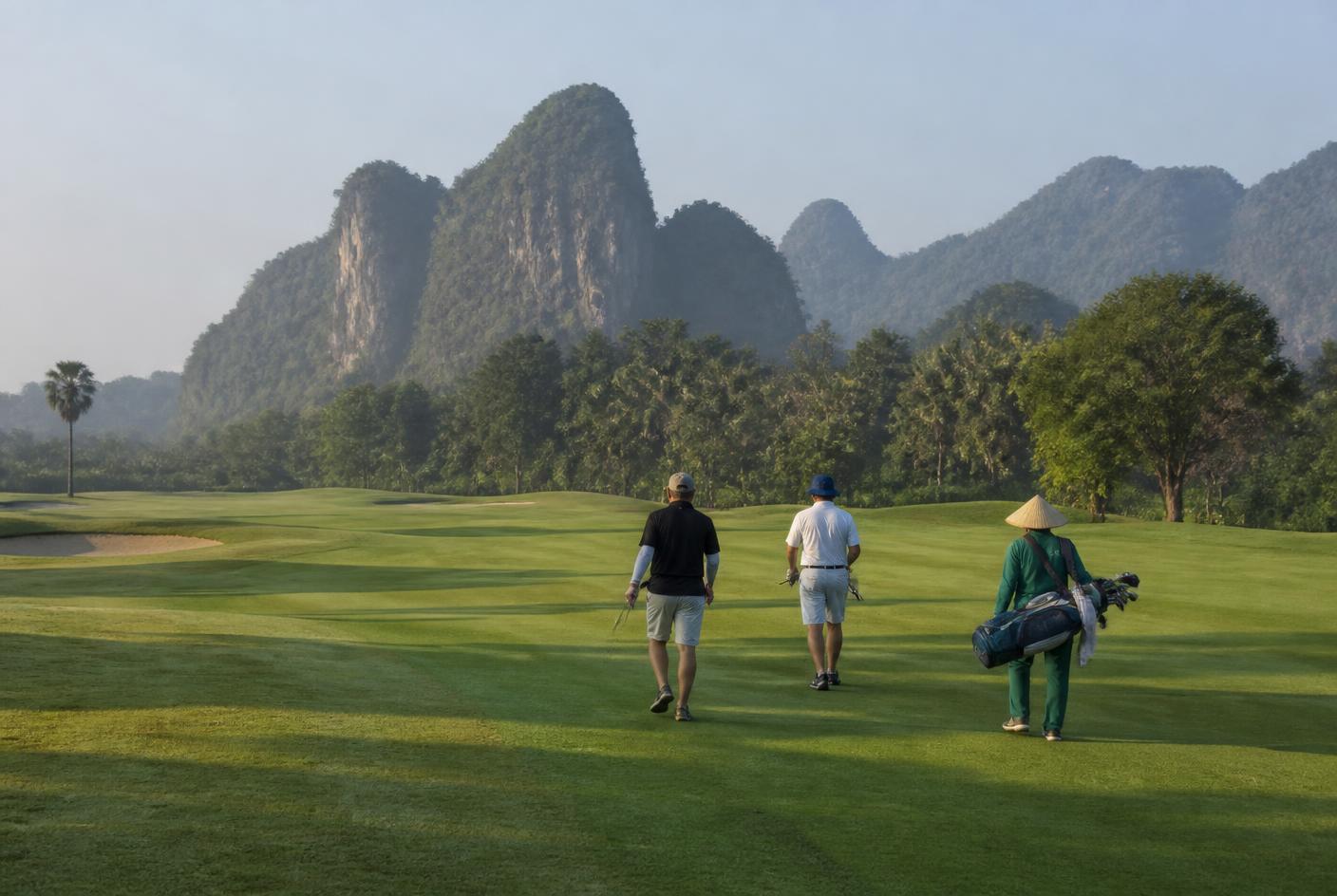
Two golfers and a caddie walking a fairway with limestone hills behind, early morning light

Golf, padel, tennis, cycling, running, swimming and the gym are all available within a short drive, and the climate means the season never really stops — it only shifts to different hours. Kitesurfing and other watersports take over the windy months, and the hills inland give walkers and cyclists somewhere with a gradient.

Sport also does something less obvious here: it is how most people build a social life. Regular tee times, a padel group or a Tuesday morning cycling ride produce friendships faster than any expat event.

Featured

Golf shapes the town more than any other activity

Golf is one of the few activities that genuinely shapes Hua Hin's international community. Several established courses sit within easy driving distance, and playing regularly is far more accessible here than in most European countries.

Explore the Hua Hin golf guide

The beach is part of life — but perhaps not as you imagine

This is gulf coastline, not island coastline, and residents use it differently from visitors.

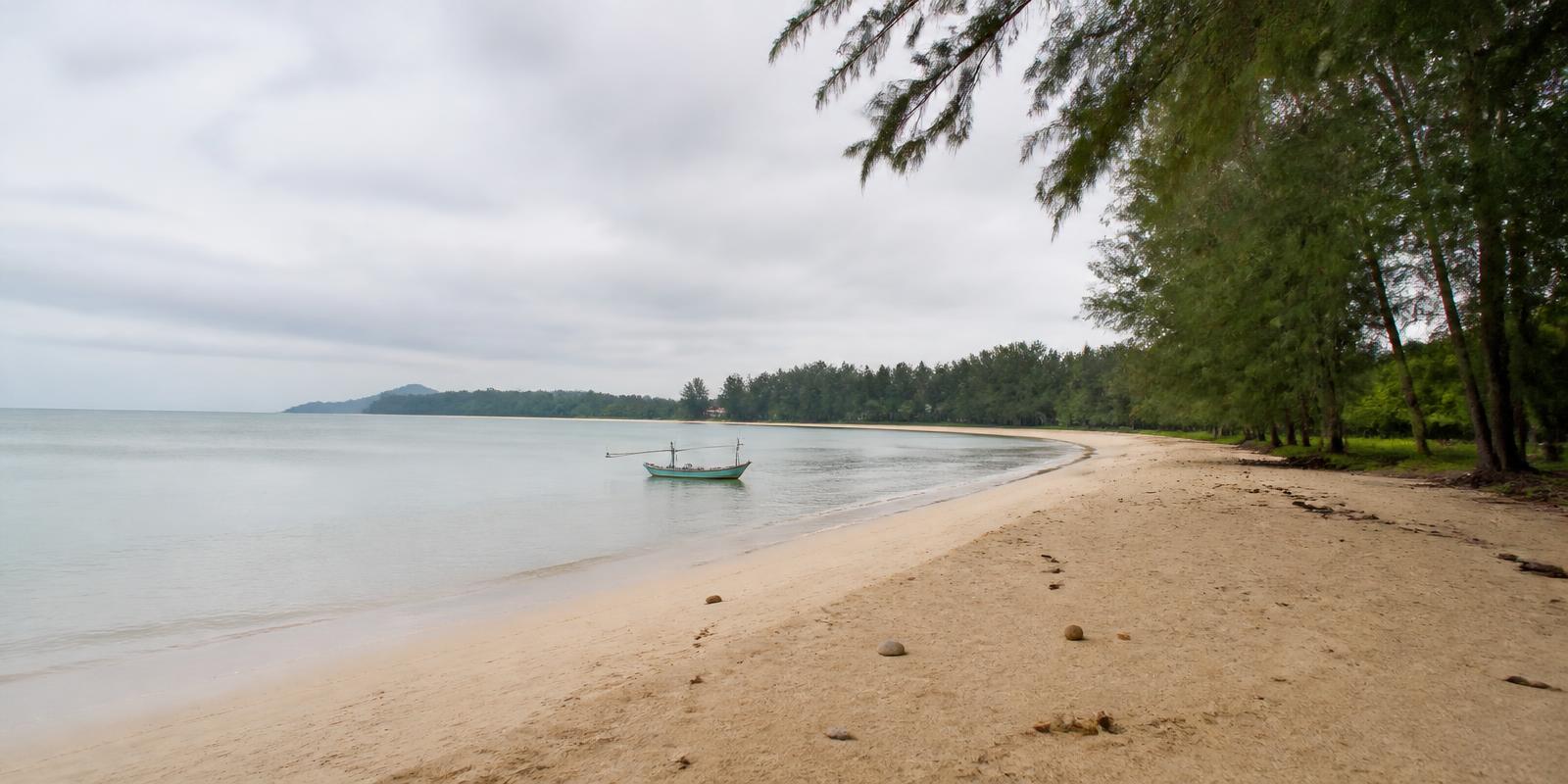
Long quiet beach lined with casuarina pines south of Hua Hin with a small fishing boat offshore

The water is warm and calm rather than clear and turquoise, the sand is long and walkable, and the character changes noticeably along the coast. For most residents the beach earns its place through early walks, running, dog walking, horse riding at the town end, sunrise, coffee near the sand and dinner with the sea in view — not through daily sunbathing.

Anyone arriving with island photographs in mind should adjust expectations. Anyone arriving wanting somewhere to be outside every morning will be very well served.

AreaCharacterBest for
Hua Hin BeachCentral and convenientEarly walks, running and easy access from town
Khao TakiabA lively mix of local and internationalEating near the sand and a busier atmosphere
Suan SonShaded and quieterRelaxed afternoons under the pines
Khao TaoSmall-scaleVillage atmosphere and a short stretch of sand
Pak Nam PranOpen and peacefulSpace, weekends away and long empty beach

When you want a change of scenery

One of Hua Hin's quieter advantages: everyday life stays calm while genuinely interesting places stay within reach.

Nature

The reason many residents keep a car.

  • Sam Roi YotLimestone peaks, marshland and quiet coastline south of town.
  • Kui BuriOne of the more reliable places in Thailand to see wild elephants.
  • Pala-U WaterfallForest and falls on the inland, mountainous side.

Culture

Older Thailand, close enough for a morning out.

  • PhetchaburiHistoric temples, a hilltop palace and cave shrines.
  • Phraya Nakhon CaveThe royal pavilion inside a collapsed cave, reached on foot or by boat.

Coast

Different stretches of the same gulf.

  • PranburiMangroves, quieter beaches and seafood.
  • Cha-AmA more Thai-holiday beach town to the north.

Driving times vary enough with traffic and route that we only publish them where we have checked them. Full write-ups sit in the day trips section of the Lifestyle hub.

What is Hua Hin like with children?

School sets the timetable; everything else fits around it.

Family life here is built around the school run, sport and water. Swimming is year-round, football, tennis and beach afternoons are ordinary rather than occasional, and restaurants and public spaces are relaxed about children in a way that surprises new arrivals from Europe. Weekends absorb water parks, day trips and whatever the school holiday programmes are running.

The honest limit is variety. Hua Hin provides plenty for an active family, but parents should not expect the range of clubs, museums, cultural institutions and specialist coaching available in a major city. Families who need that tend to make periodic trips to Bangkok rather than move there.

Will I actually meet people?

Probably — but Hua Hin does not hand you a social circle automatically.

Almost every friendship here starts with an activity. Golf and padel account for a surprising share of them; so do gyms, the school gate, a regular café, neighbours in a gated community, hobby groups and volunteering. People who join something in the first two months rarely struggle. People who wait to be invited often do.

It is worth separating two things that get confused. Living near other foreigners is easy and immediate. Building a community — people who notice when you are ill, who you travel with, who you can call at nine on a Sunday — takes a year or so, and it happens through repetition rather than events.

The pattern differs by group. Retirees have the most time and the widest existing network to join. Families meet each other through school within weeks. Remote workers have the hardest time of it, because the professional community is small and scattered; cafés and sport do more for them than any coworking scene.

The expat bubble

It is entirely possible to live here almost wholly within an international circle, and plenty of people do so happily for years. It is also true that some Thai language and a few genuine local relationships produce a noticeably richer version of the same life. Both are legitimate. It is worth deciding which one you are choosing rather than drifting into it.

Nobody here is short of acquaintances. The people who thrive are the ones who turned up to the same thing every week until acquaintances became friends.

Living in Thailand rather than simply living abroad

Cultural fluency here is less about knowing customs and more about adjusting how you react.

Thai social life runs on avoiding embarrassment for everybody involved. Directness that would read as efficient at home can read as aggressive here, and a raised voice ends a conversation rather than speeding it up. Hierarchy and seniority matter, politeness is structural rather than decorative, and problems are often signalled indirectly long before anyone states them.

Most friction that foreigners experience comes from mismatched expectations about time and certainty rather than from any cultural rule being broken. Things happen, but not always on the day you were told. Temples, festivals and neighbourhood events are open and welcoming, and turning up to them is one of the simpler ways to stop feeling like a visitor.

Five habits that make life easier

  • Learn some Thai, even badly — the effort counts more than the accuracy
  • Stay calm when something takes longer than you expected
  • Observe before judging; there is usually a reason
  • Respect the local etiquette around temples, elders and the royal family
  • Build relationships rather than treating every interaction as a transaction

Evenings are social. Nightlife is not the main event.

There is plenty to do after dark; there is not much to do after midnight.

Evenings here mean dinner, a beachside bar, live music in a handful of venues, a hotel bar for something quieter, or a wander through a night market. There are small nightlife pockets in and around the centre, and they are unremarkable compared with what Bangkok or Pattaya offer.

Hua Hin has nightlife. It simply does not define the town the way it defines some other Thai destinations, and most residents like it that way.

  • Quiet evenings out5 out of 5
  • Restaurants5 out of 5
  • Live music and bars3 out of 5
  • Clubbing1 out of 5
  • Late-night scene2 out of 5

Editorial impressions rather than measured ratings.

Your neighbourhood changes your lifestyle

Where you live here alters your daily life more than in most European towns.

  • Central Hua Hin

    The most walkable option. Restaurants, markets and services within a few minutes, at the cost of noise and traffic.

  • Khao Takiab

    Beach access and a mix of local and international life, with a short drive into town for anything else.

  • Western Hua Hin

    Villas, gardens and gated communities. Space and quiet, but almost everything involves driving.

  • Khao Tao

    Quieter and more village-like. A settled routine works well here; spontaneity less so.

  • Pak Nam Pran

    Open coast and calm. Wonderful at weekends, further from schools, hospitals and shops during the week.

Life becomes easier once you stop expecting to walk everywhere

Mobility quietly determines how much of the town is available to you.

Centrally, a scooter plus Grab and taxis covers most of what you need, and short trips are genuinely walkable outside the middle of the day. Anywhere else, a car becomes the default: schools, hospitals, supermarkets, golf and the better beaches are spread out, and pavements are unreliable between them. Songthaews run set routes along the main corridors and suit some households well.

Two people living west of town usually end up with two vehicles. It is worth budgeting for that before you sign a lease somewhere quiet.

The practical detail — licences, buying, insurance, trains and Bangkok connections — sits in the transport guide.

The year has its own rhythm

The weather does not just change the temperature; it changes what your week contains.

Cooler months

The town's best stretch

Mornings are comfortable, golf and cycling take over the calendar, and visitors from home tend to arrive. Restaurants are busier and booking matters more.

Hot season

Life moves to the edges of the day

People get up earlier, swim more, and treat the middle of the day as indoor time. Air conditioning becomes the largest line on the electricity bill.

Rainy periods

Green, quieter, more flexible

Rain here often arrives hard and then clears rather than settling in for days. Outdoor plans become provisional rather than cancelled.

See Hua Hin weather by month

A week can look like this

One plausible version of an ordinary week, rather than a recommendation.

  • MondayWork, a local lunch, a walk when the heat drops
  • TuesdayGym or padel, then dinner at home
  • WednesdayCoffee with friends, night market in the evening
  • ThursdayGolf in the morning, a slow afternoon
  • FridayBeach walk, then a restaurant evening
  • SaturdayFamily activity or a day trip out of town
  • SundaySlow breakfast, the pool, drinks at sunset
Not everyone comes to Hua Hin to slow down. But one of its strengths is that life does not need to be filled constantly to feel full.

What eventually frustrates some people?

None of this is a reason not to come. All of it is worth knowing first.

The heat

It does not so much stop you as reorganise you. Within a few months you plan errands, exercise and even shopping around the temperature.

Traffic and pavements

Calmer than Bangkok, but the main roads can be unpleasant and pedestrian infrastructure is inconsistent. Walking everywhere is rarely realistic.

Car dependency

Live outside the central grid and you will drive daily. For couples this often means two vehicles rather than one.

Limited big-city culture

Few concerts, exhibitions, specialist shops or professional networks. Bangkok covers this, but it is a day out, not an evening.

Repetition

People who need constant novelty eventually feel they have done the town. Others find the same routine is exactly the appeal.

Seasonal swings

The cool months feel busy and social; the low season can feel very quiet, especially if your circle travels.

Language

You can live here without Thai. Life gets easier, cheaper and considerably warmer with some.

For most residents these are acceptable trade-offs for a town that stays comfortable, manageable and easy to build routines around. The people who leave usually did not dislike Thailand; they needed more around them than a provincial coastal town can provide.

Why Hua Hin rather than somewhere else?

A broad lifestyle comparison, not a scoreboard.

Lifestyle dimensionHua HinBangkokPhuketPattayaChiang Mai
PaceRelaxedFastMixedBusyRelaxed
BeachYesNoExcellentYesNo
Outdoor sportExcellentModerateExcellentGoodExcellent
NightlifeModerateExcellentStrongVery strongModerate
Family lifestyleStrongStrongStrongMixedStrong
International communityStrongVery strongVery strongVery strongVery strong
Big-city amenitiesLimitedExcellentModerateModerateGood

These comparisons are deliberately broad. The right location depends far more on the life you want than on which destination scores highest overall.

Hua Hin may suit you if…

Two honest columns. Most people recognise themselves in one of them fairly quickly.

Hua Hin may suit you if

  • You prefer a relaxed daily rhythm to a busy one
  • You spend real time outdoors and want that to be easy
  • Restaurants matter more to you than clubs
  • You like routines and get comfort from them
  • You want the sea without island logistics
  • Golf, padel, cycling or the gym are part of your week
  • You want a town you can learn in a few months
  • You value comfort over constant excitement

Think carefully if

  • · Nightlife is central to how you live
  • · You need big-city professional opportunities
  • · You are expecting pristine tropical-island beaches
  • · You dislike driving or would rather not own a vehicle
  • · You need entertainment laid on for you
  • · A large cultural scene is non-negotiable
Hua Hin is rarely the most exciting place in Thailand. For the right person, that is precisely the point.

Common questions

The questions people ask before they commit to a year here.

Could you see yourself living here?

Lifestyle is only one part of the decision. Housing, visas, healthcare, schools, transport and money eventually matter just as much.