
Beaches in Hua Hin
Compare the coast from town to Pak Nam Pran by access, atmosphere and the way you want to use the beach.
- Last verified
- Last verified: August 2026
- Next review:
- February 2027
- Reading time:
- 13 min
Hua Hin beaches at a glance
Driving times are indicative; traffic and time of day can change them.
| Beach | Best for | Feel | Convenience | Quietness | From town |
|---|---|---|---|---|---|
| Hua Hin Beach | Everyday access and walking | Urban coastal | Very high | Lower | In town |
| Khao Takiab Beach | Residents and a beach routine | Residential | High | Moderate | ±10–15 min |
| Suan Son Pradipat | Shade and relaxed beach days | Spacious | Moderate | High | ±15–20 min |
| Khao Tao & Sai Noi | Scenery and quieter outings | Local, small-scale | Lower | High | ±20–25 min |
| Pak Nam Pran Beach | Space and a coastal escape | Open and peaceful | Lower | Very high | ±30–40 min |
Hua Hin BeachIn town
Everyday access and walking
Urban coastal · Convenience: Very high · Quiet: Lower
Khao Takiab Beach±10–15 min
Residents and a beach routine
Residential · Convenience: High · Quiet: Moderate
Suan Son Pradipat±15–20 min
Shade and relaxed beach days
Spacious · Convenience: Moderate · Quiet: High
Khao Tao & Sai Noi±20–25 min
Scenery and quieter outings
Local, small-scale · Convenience: Lower · Quiet: High
Pak Nam Pran Beach±30–40 min
Space and a coastal escape
Open and peaceful · Convenience: Lower · Quiet: Very high
Which beach should you choose?
- You want to walk there from town → Hua Hin Beach
- You want the beach to be part of daily life → Khao Takiab
- You want shade and room to spread out → Suan Son
- You want something smaller and prettier → Khao Tao / Sai Noi
- You want peace and a longer outing → Pak Nam Pran
The coastline, north to south
One drive, five very different moods. Tap any name to jump straight to it.
Hua Hin centre, heading south
- 1Hua Hin BeachTown, hotels, horses
- 2Khao TakiabHeadland, residential
- 3Suan SonPines and shade
- 4Khao Tao & Sai NoiSmall bays, village
- 5Pak Nam PranOpen, low-density coast
The pattern is consistent: the further south you go, the quieter and less urban the coastline becomes — and the more likely you are to need a car to get there.
Hua Hin Beach
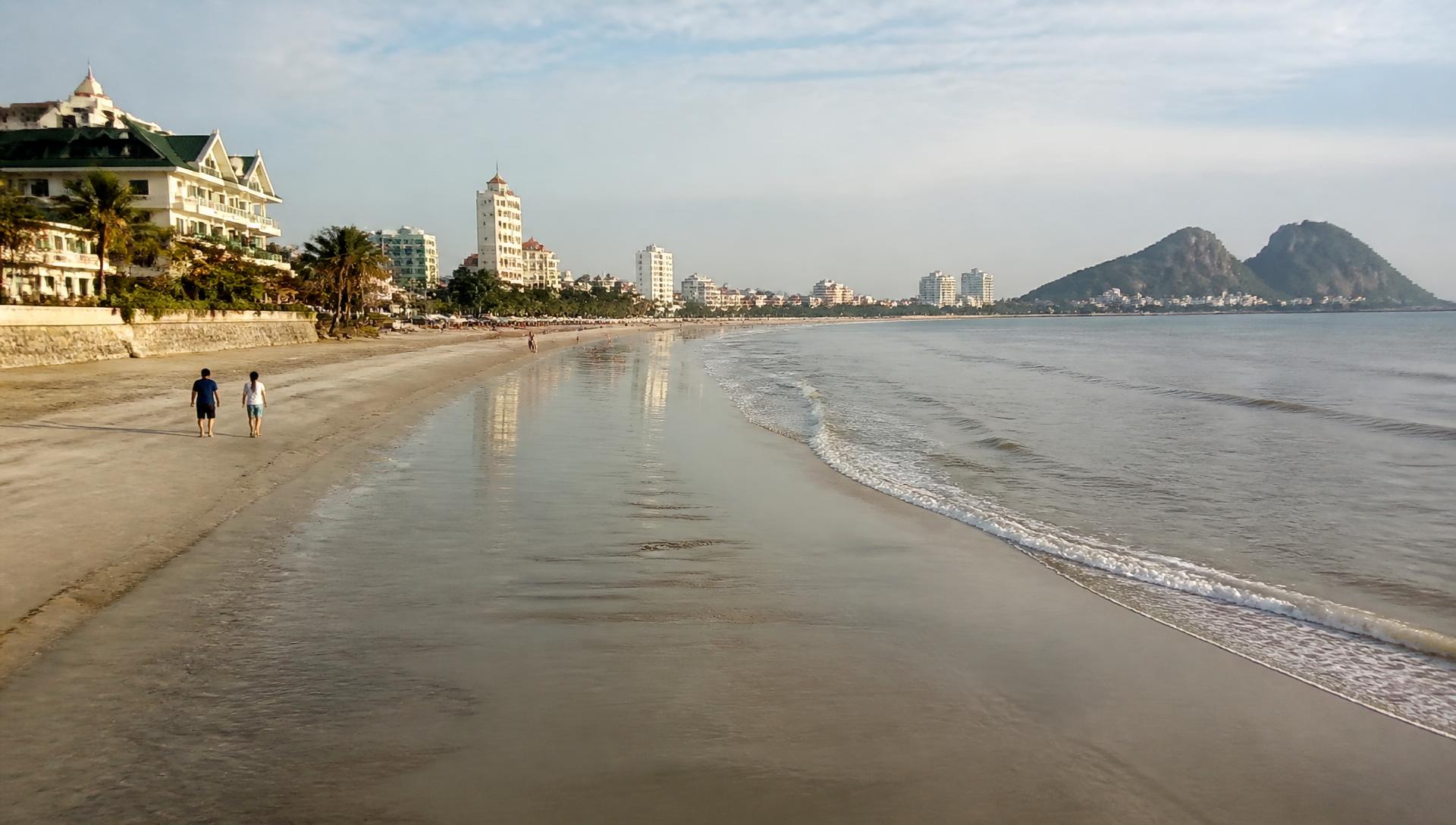
Hua Hin Beach makes far more sense once you stop judging it as a tropical island beach. The sand is golden-brown rather than white, the Gulf water is warm and often a little cloudy, and hotels, condominiums and restaurants sit close behind it for most of its length. Compared with a postcard from Krabi, it loses. Compared with almost anywhere else you might live, it wins easily.
What it has is length and access. From the pier at the northern end you can walk south for several kilometres towards the Khao Takiab headland without running out of beach, and at low tide the sand is wide and firm enough to walk, run or cycle on comfortably. Small lanes and hotel accesses come down to the beach at regular intervals, so getting onto it from town is rarely more complicated than finding the nearest gap between buildings.
Swimming is straightforward on a calm day. The water shelves gently, which is reassuring with children, though it also means that at low tide you may be wading a long way before it reaches your waist. Conditions change with the wind, and the northeast monsoon months can bring choppier water and more debris on the sand after a blow.
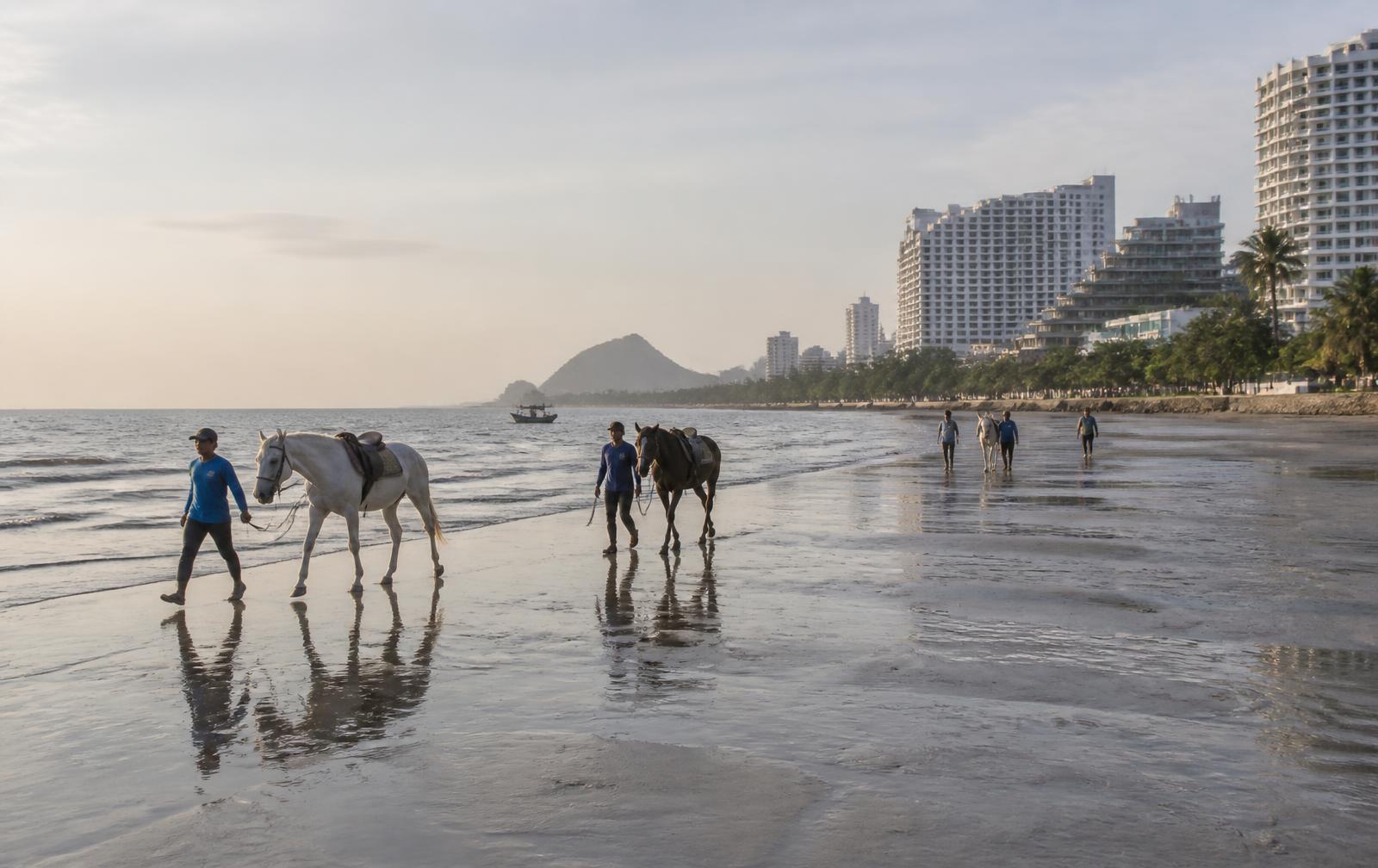
Horses are part of the scene here and have been for decades. You will see them being walked along the tideline in the morning and late afternoon, and short rides are usually available near the main hotel stretch. Prices are negotiated rather than fixed, so agree the length of the ride before you get on.
Shade is the main weakness. Apart from hotel loungers and a handful of trees near the access points, there is very little natural cover, which is why the beach empties out between roughly eleven and four. Food and drink are never far away — the hotels, the beach-facing restaurants and the vendors who walk the sand cover most needs without you having to plan anything.
Weekends and Thai public holidays change the mood completely. Bangkok arrives, the beachfront restaurants fill and parking becomes a small ordeal. Midweek mornings are a different beach entirely.
Khao Takiab Beach
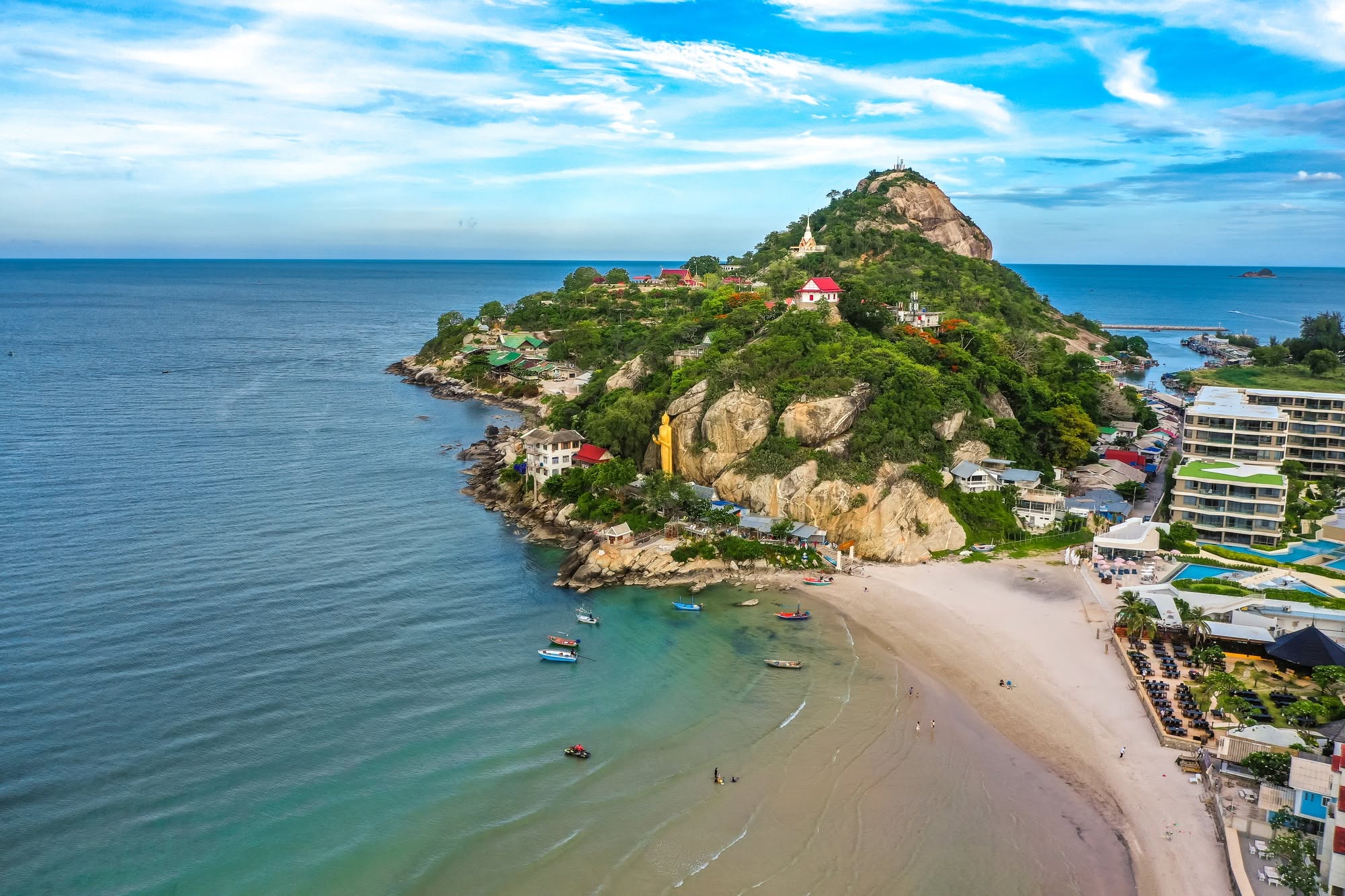
Head south from the centre and the town slowly loosens its grip. Hotels give way to condominium blocks, villa developments and low-rise apartments, and by the time the headland of Khao Takiab — Chopstick Hill — rises at the end of the bay, the beach has become part of a neighbourhood rather than part of a resort strip.
The sand is a continuation of the same long bay, so the walking is just as good and usually quieter. In the early morning you will see local residents doing their laps, dog walkers, and a few swimmers. Swimming is much the same as in town, though the water near the headland can be rockier underfoot and the southern end of the bay collects more seaweed at certain times of year.
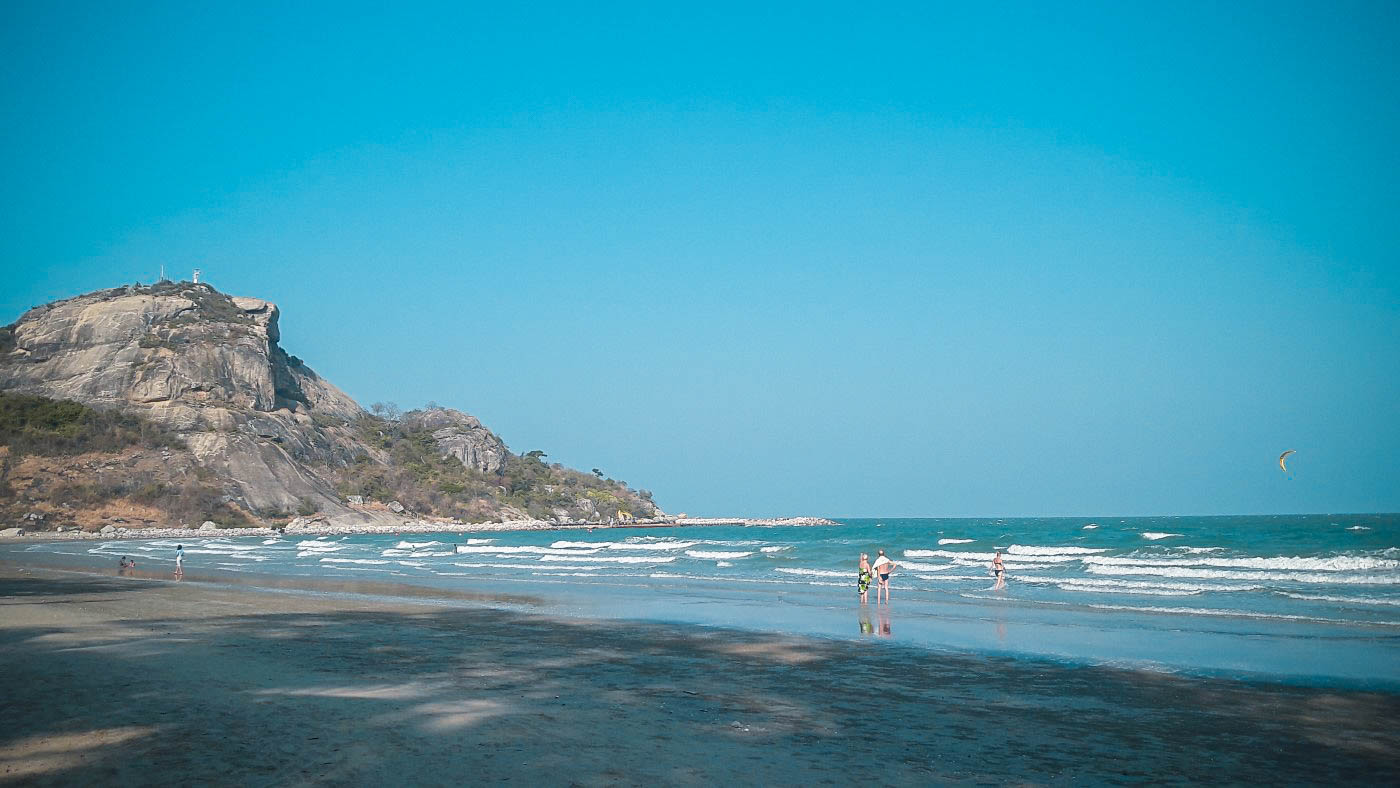
Behind the beach is a genuinely useful cluster of everyday places: seafood restaurants at the foot of the hill, cheap Thai food along the back roads, and the Cicada and Tamarind market area a short drive north, which runs on weekend evenings during the season. That combination of beach, food and practical shops is why many long-stay residents settle here rather than in the centre.
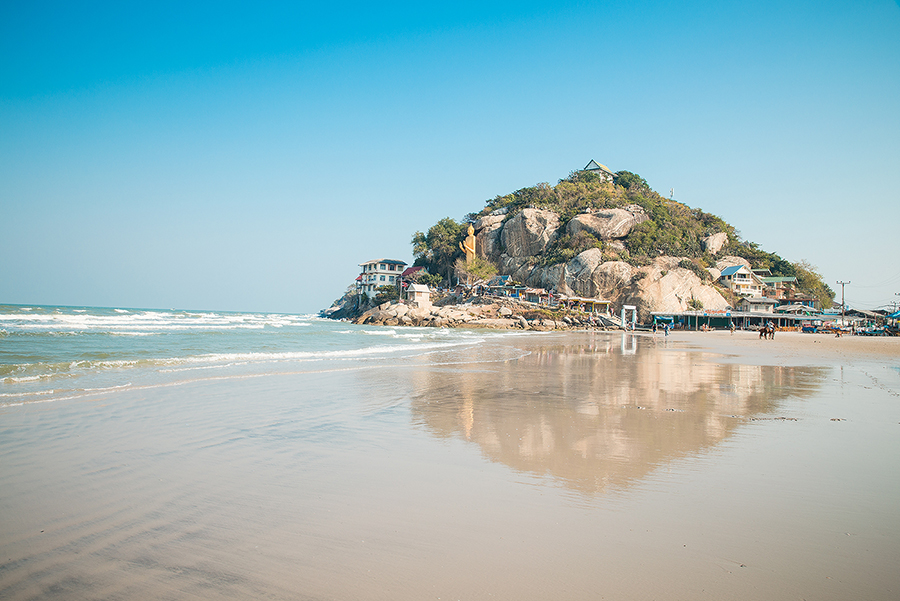
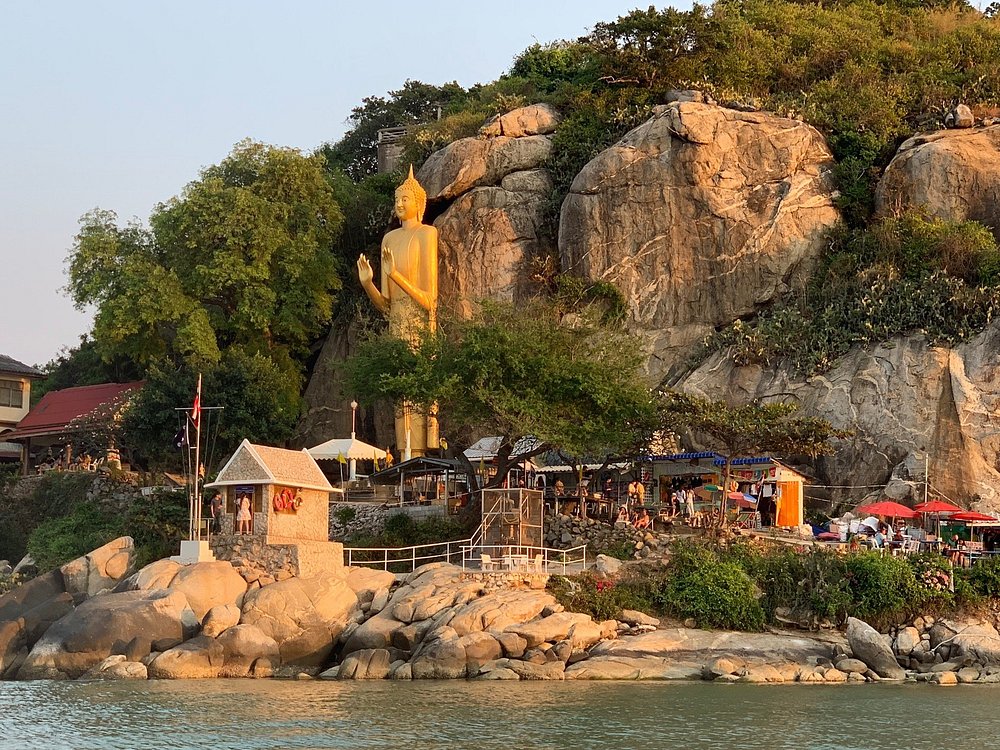
The hill itself is worth climbing once. Wat Khao Takiab sits at the top with a large standing Buddha, views back along the whole bay and a resident population of macaques. The monkeys are entirely habituated to people and confident about it. Do not carry visible food or loose bags, do not feed them, and do not try to retrieve anything they take.
Why residents like it
Khao Takiab becomes interesting when the beach is part of where you want to live rather than somewhere you want to visit. You get a daily walk, somewhere to eat, and the centre of town ten to fifteen minutes away — without paying central prices or listening to central traffic. The trade-off is that almost everything beyond groceries and dinner still means a drive into town.
Suan Son Pradipat
A few kilometres south of Khao Takiab the coast changes again, and it is the trees that do it. Suan Son Pradipat — the name refers to the pine grove — is a long beach backed by casuarina trees that grow right down to the edge of the sand, giving it something almost no other beach around Hua Hin has in quantity: natural shade.
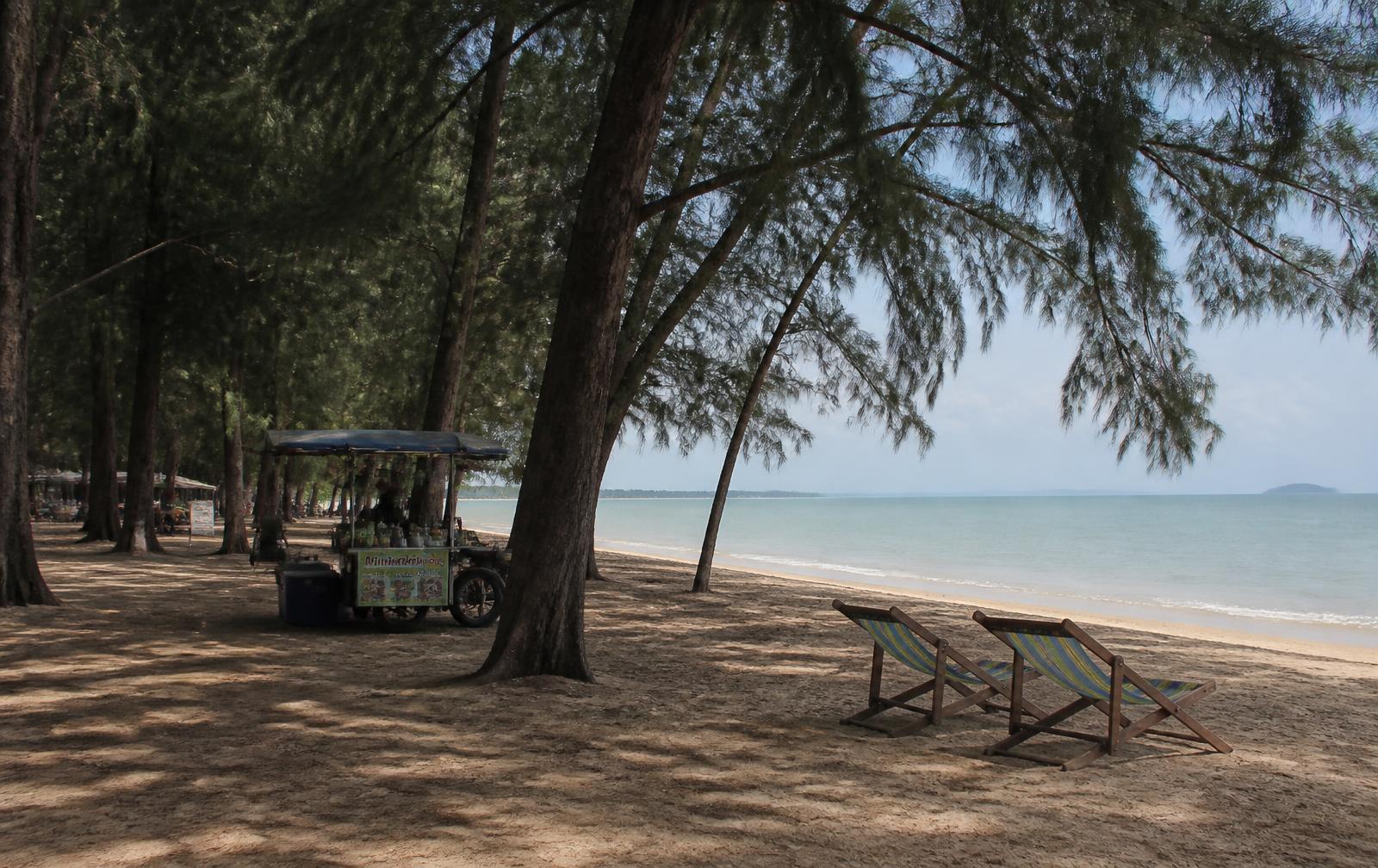
That single feature changes how people use it. Where the town beach is somewhere you walk, Suan Son is somewhere you settle in. Families arrive with mats and food, park under the pines, and stay for the afternoon. Deckchairs, simple beach restaurants and food carts are usually there, though this is not a place with polished facilities and you should not expect them.
Swimming is gentle and shallow, much like the rest of the bay, and the beach is wide enough that even a reasonably busy Sunday does not feel crowded. Weekdays can be close to empty. Weekends are Thai family weekends, which is a pleasant thing to be part of rather than something to avoid.
Access and facilities
Suan Son Pradipat is a Royal Thai Army welfare and recreation area that has long been used by the public, with daytime access, parking behind the trees and accommodation run on the site. Because it is military-administered, arrangements such as opening hours, parking charges or access to particular sections can be adjusted without notice. Treat published times and prices — including anything you read here or on travel sites — as indicative and check the signage on the day.
Last checked: August 2026
Khao Tao & Sai Noi
The Khao Tao area is not one uninterrupted beach, which is where most descriptions of it go wrong. Rocky headlands break the coast into a series of smaller stretches around a fishing village, a temple-topped hill and a reservoir behind it. The long sandy strip north of the village is what people usually call Khao Tao Beach; the short cove tucked south of the headland is Sai Noi, and it is the one that gets photographed.
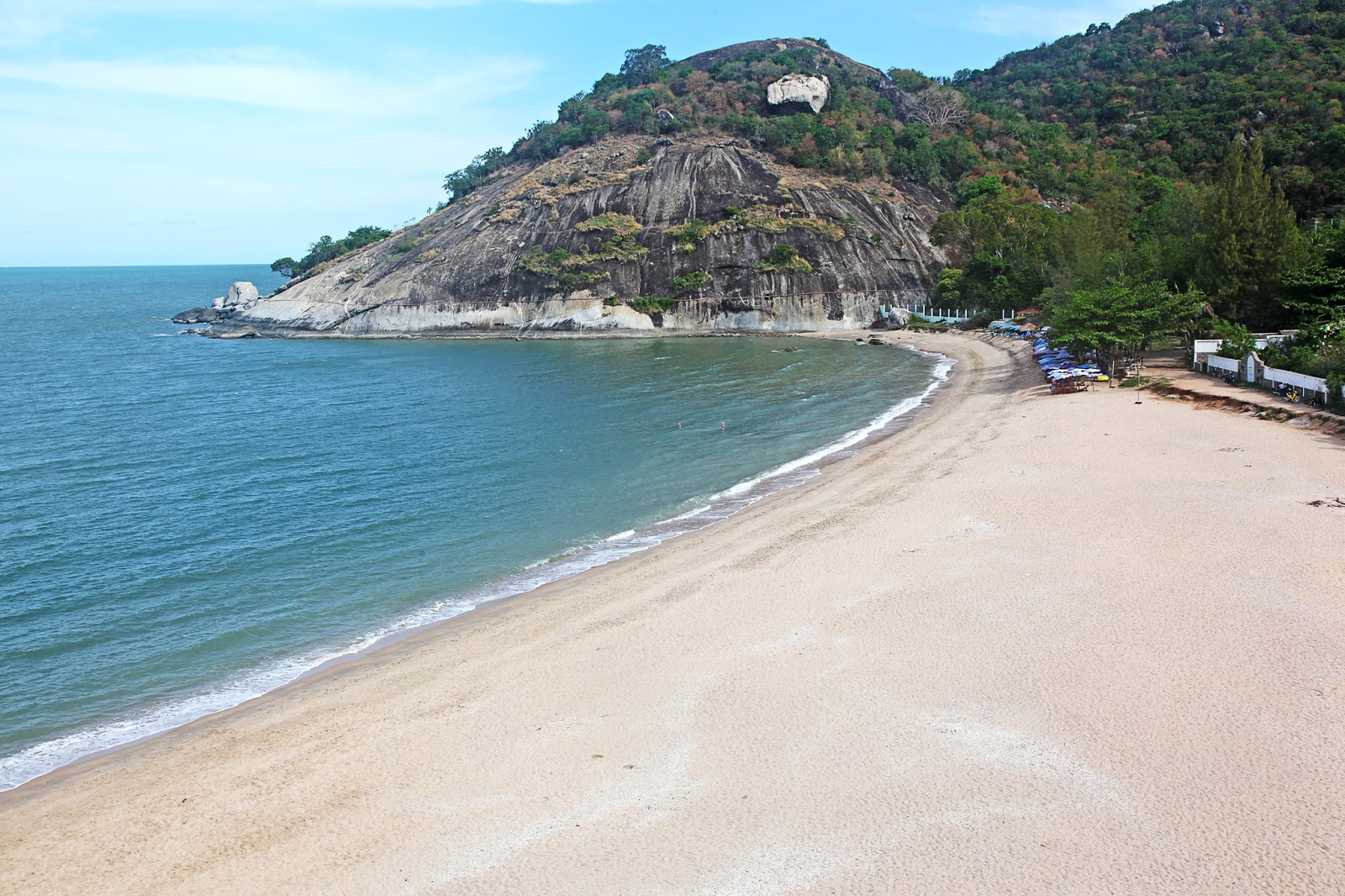
Sai Noi is the beach we come back to. It is small — a few hundred metres between rocks — but the sand is clean, the water is clearer than in town, and the green hills behind it make the whole bay feel enclosed rather than exposed. It used to be described as a secret. It is not one any more: on weekends and Thai holidays the narrow access road fills up and parking becomes the limiting factor. On a weekday morning it can still be almost empty.
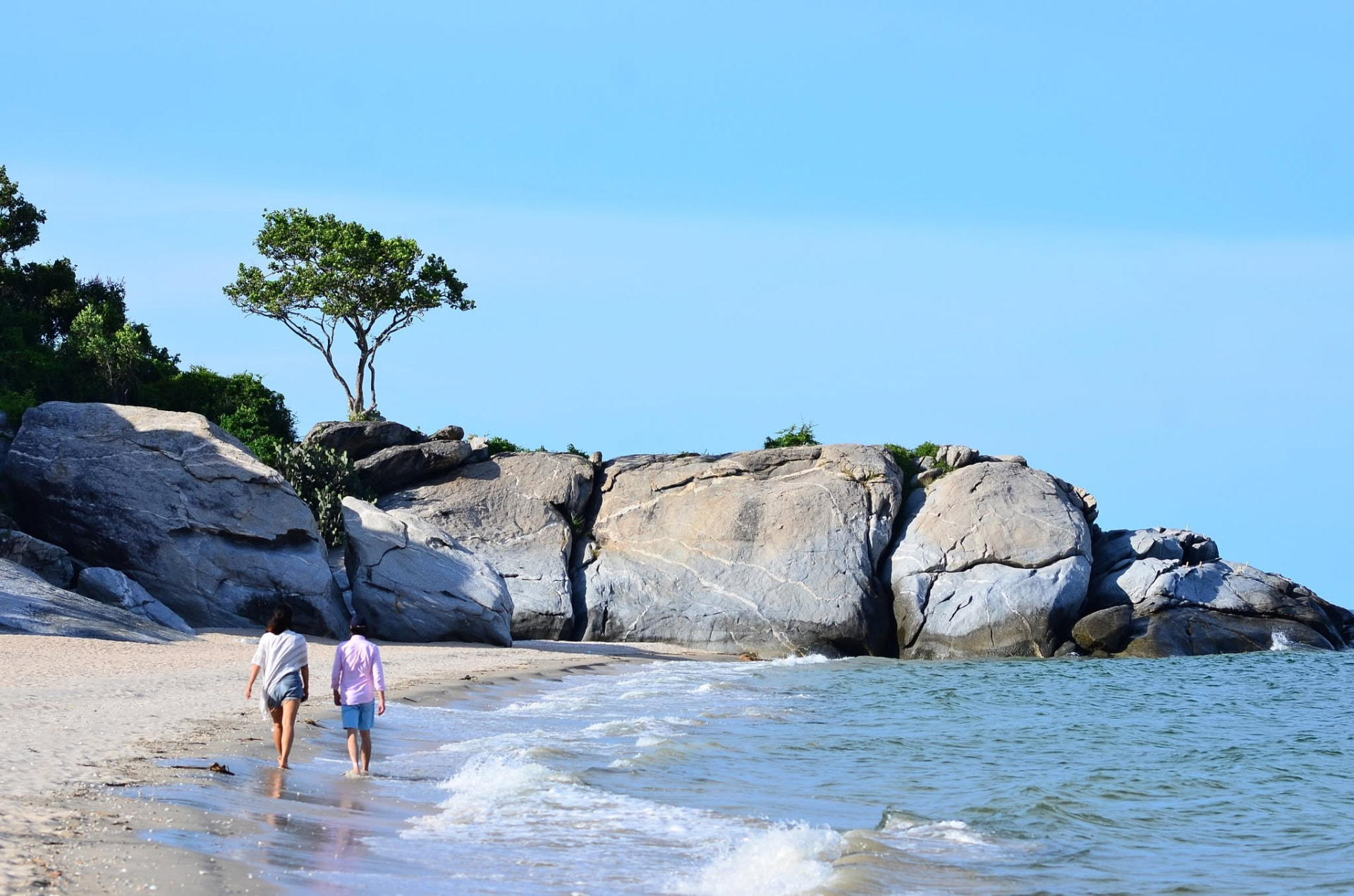
Swimming needs slightly more attention than the flat sandy bays further north. There are rocks at both ends of the cove and the bottom drops away faster in places, but the middle of the bay is easy enough and the water is usually calmer than the open coast. Bring water shoes if you like exploring the edges.
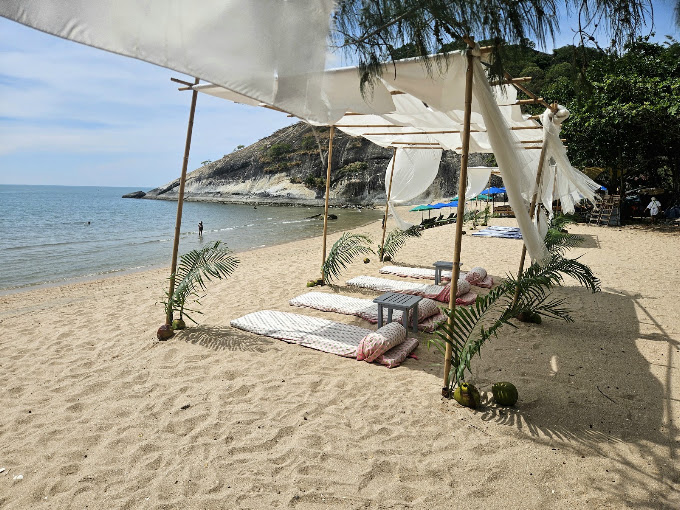
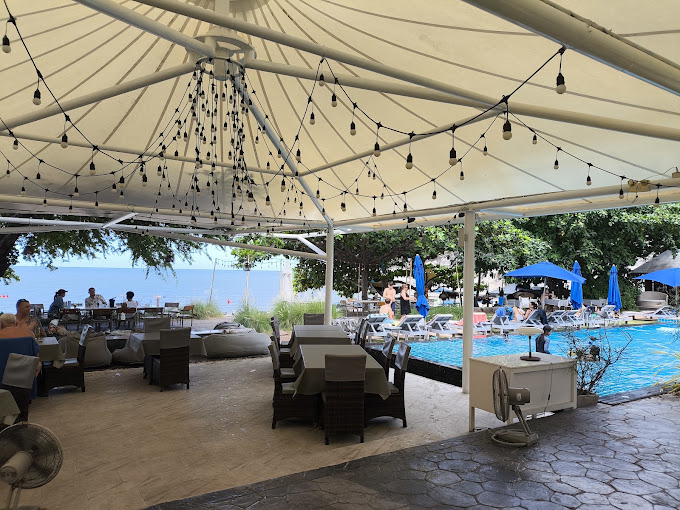
Khao Tao village itself is worth the detour independently of the beach. There is a working fishing harbour, the hillside temple with views along the coast, and the reservoir behind the village where people walk in the early evening. Together they make this feel like a deliberate outing rather than a beach you drop into — which is exactly why it stays quieter than the coast closer to town.
Pak Nam Pran Beach
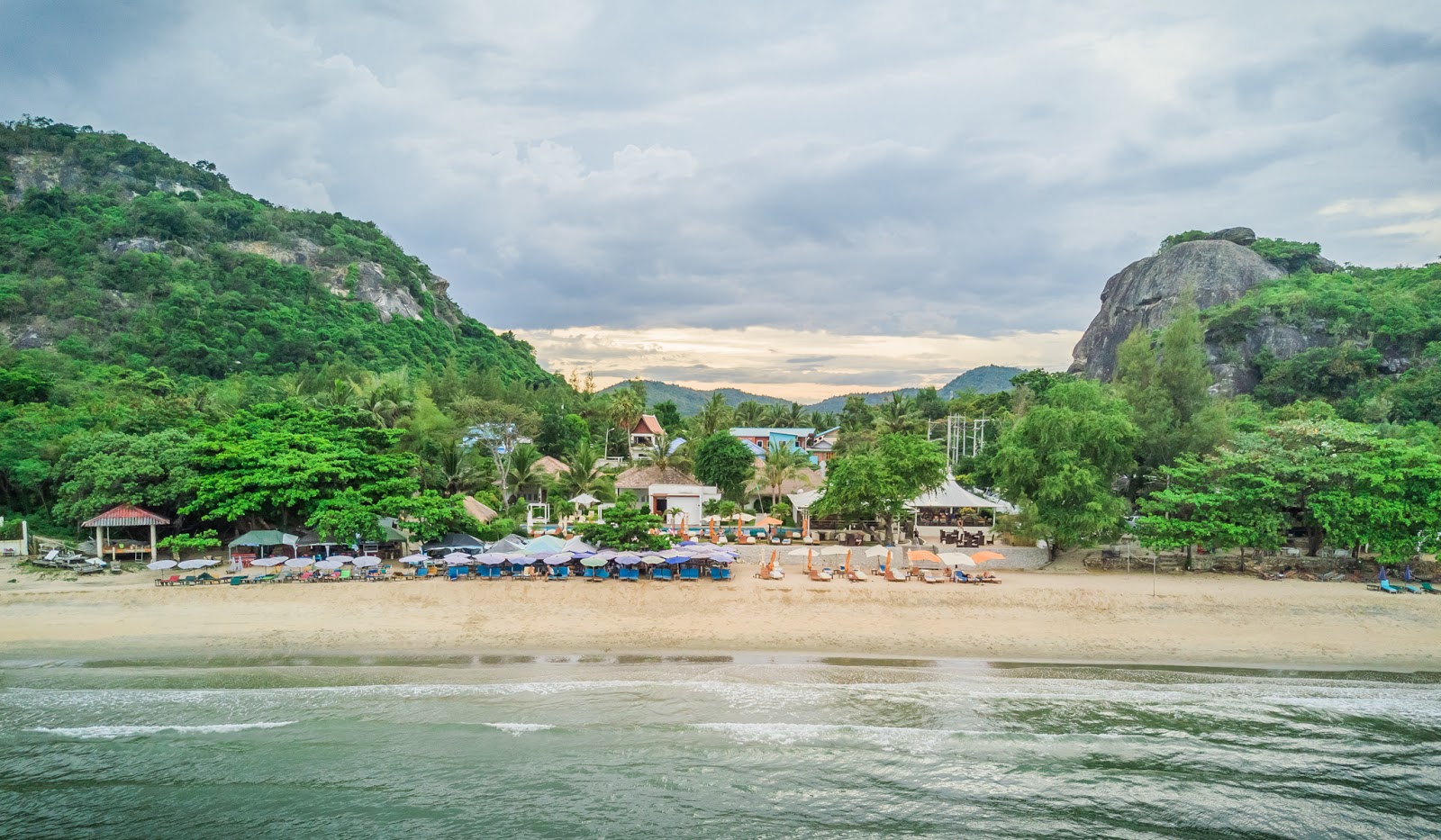
Roughly thirty kilometres south of Hua Hin, past Pranburi and the mangroves, the coast opens into something quite different. Pak Nam Pran is a long, wide, largely low-rise beach with a rebuilt promenade road behind it, boutique resorts and private houses set back among the palms, and a working fishing harbour at the river mouth. For years it was described as a sleepy village that the rest of the coast had forgotten. That is no longer entirely true — hotels, condominiums and villas have been going up steadily — but it still feels like a different pace of life.
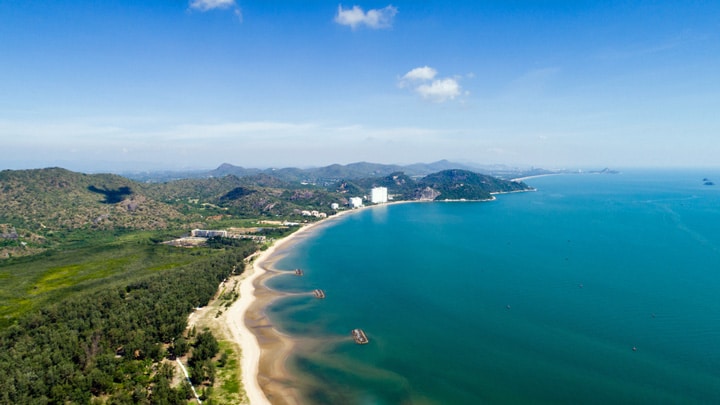
The scale is the point. You can walk for a long time here without meeting anyone, and the beach road is one of the better cycling stretches on this coast — flat, quiet and with the sea beside you almost the whole way. Swimming is usually calm, though the beach is more exposed than the bays further north and can pick up wind and surf. Come at the weekend and the mood changes: this is a favourite escape for Thai families and Bangkok visitors, and the seafood restaurants along the coast road fill up accordingly. Midweek it can be almost empty.
Food is a genuine reason to make the trip. The restaurants along the shore road are mostly simple, fish-focused and reasonably priced, and the ones tucked beside the harbour rock at the southern end are the sort of places where the catch arrives a few metres from your table. Add the small stalls that appear near the larger rock outcrops — grilled chicken, som tam, cold drinks — and a beach afternoon here needs very little planning.
What there is not is convenience. Shops are limited, public transport is thin enough that arriving without a vehicle is impractical, and getting to a hospital, an international school or a full supermarket means the drive back towards Hua Hin. The area is also spread out: distances that look walkable on a map rarely are.
Pak Nam Pran feels less like another section of Hua Hin Beach and more like a different version of coastal life. People who choose it usually know exactly what they are trading away.
The tide matters more than you would expect
This is the single most useful thing to understand about the coast here, and almost nobody mentions it. The tidal range along this part of the Gulf is enough to change the beach substantially through the day. At low tide you get a broad apron of firm, walkable sand and shallow water that seems to go on forever. At high tide, in front of some of the hotels in town, the usable strip can shrink to a few metres.
The practical effect is that two people can visit the same beach on the same day and come away with completely different impressions of it. If someone tells you Hua Hin Beach is disappointing, there is a fair chance they arrived at high tide on a windy afternoon in the wrong month.
You do not need a tide table to live with this, though a free tide app is worth having. After a week or two you simply notice which end of the day the water is at.
Swimming and sea conditions
Swimming along the Hua Hin coast is generally gentle. This is the Gulf of Thailand, not an open ocean coastline: the water is warm all year, the shelving is shallow, and on a typical calm morning it is closer to a large bath than to surf.
Conditions do change, though. Wind is the main variable — the northeast monsoon period tends to bring choppier water, murkier visibility and more debris washed up on the sand, while the calmest, clearest water usually falls in the earlier part of the year. Currents around headlands such as Khao Takiab and the Khao Tao coves deserve more respect than the open bays.
Lifeguard cover is not something to rely on anywhere along this coastline. Some hotel frontages and busier sections post flags or have staff watching the water, but this is inconsistent and can change from season to season. Treat any warning flag you see as meaningful, swim parallel to the shore rather than straight out, and keep children within arm's reach in anything other than flat water.
Jellyfish appear occasionally, as they do along most of the Gulf. Local warnings and signage are the best indicator; if the beach restaurants have vinegar bottles out, take the hint.
Morning or afternoon?
Beach life in Hua Hin starts early, and it is not a small difference. By half past six the sand in town is busy with walkers, runners, people swimming before work, horses being exercised and fishermen still working the shallows. The air is cool enough to be pleasant, the light is low and the sea is usually at its calmest.
In practice, early morning is when we find Hua Hin's beaches most enjoyable — and it is also the moment when the coastline stops feeling like a holiday backdrop and starts feeling like a town going about its day.
By ten the beach is emptying, and between about eleven and four most of it is given over to whoever has an umbrella. Then, from around five, everything comes back: families, dogs, football on the wet sand, and the restaurants behind the beach filling up as the light goes soft. Sunset here happens behind you, over the hills, rather than over the sea — which is why sunrise, not sunset, is the coast's best hour.
Beaches with children
Shade and parking usually matter more than the beach itself. Suan Son tends to work best: pines to sit under, room to spread out, shallow water and somewhere to park a few steps away. Hua Hin Beach is the practical choice if you are staying centrally, because you can walk down for an hour and go home again when someone has had enough — but bring your own shade.
Khao Takiab suits families who live nearby and treat the beach as part of the daily routine. Khao Tao and Sai Noi are fun for older children who like rocks and exploring, though the coves are smaller and busier at weekends. Pak Nam Pran gives you space, but it is a long drive with a tired child in the back.
No beach here should be treated as categorically safe. Conditions vary by day and by tide, supervision matters everywhere, and you should assume there is no lifeguard.
Visiting a beach is not the same as living beside it
People planning a move need to weigh the coast differently from visitors. On holiday, the best beach is the one that makes the nicest afternoon. When you live here, the best beach is the one you actually end up using — and that is almost always the closest one.
We have seen the same pattern repeatedly: someone falls in love with Pak Nam Pran on a Sunday, buys or rents near it, and then discovers that everything else in their week is forty minutes away. Meanwhile, a couple living in a modest condo two streets from the town beach walks on the sand every single morning for years. Proximity beats scenery over the long run.
Before committing to an area, walk the nearest stretch of coast at several different moments: early morning on a weekday, the middle of a hot afternoon, around six in the evening, and again on a Saturday or a Thai public holiday. Those four visits will tell you more about living there than any listing photograph.
Choosing where to live along the coast
Compare the neighbourhoods behind each of these beaches — what they cost, who lives there, and how much driving they involve.
Worth driving a little further
Three stretches of coast that fall into day-trip territory rather than everyday use.
Cha-Am, twenty-five kilometres north, is a Thai holiday beach in the old style: deckchairs, seafood served on the sand and busloads of weekend visitors from Bangkok. It is livelier and less polished than Hua Hin, and worth a lunch.
Khao Kalok, south past Pranburi, sits below a headland and gives you a long quiet beach with hardly any development behind it — one of the more genuinely empty stretches within an hour's drive.
Dolphin Bay and Sam Roi Yot are further again, roughly an hour or more, where the limestone peaks of the national park come down to the sea. Combine the beach with the park, the marshland or Phraya Nakhon Cave and it becomes a proper day out rather than a swim.
All three are drives, not habits. If you find yourself planning around them, you are looking at day trips rather than beaches — a subject we cover separately in the day trips guide.
Our practical pick
For a regular walk, choose the beach you can reach easily from home. For a longer afternoon, use the choices above to match the beach to shade, space or scenery.
Common questions
Which is the best beach in Hua Hin?
Can you swim at Hua Hin Beach?
Why does Hua Hin Beach look so different at different times of day?
Is Suan Son Pradipat open to the public?
Are there monkeys at Khao Takiab?
Which Hua Hin beach is best with children?
Related guides
Everyday life
Where to live
Planning around the weather
Hua Hin Compass verified
Last verified
August 2026
Next scheduled review
February 2027
Sources checked
- · Tourism Authority of Thailand attraction listings for the Hua Hin coastline
- · Local reporting on Sai Noi Beach and visitor numbers (2025)
- · Published information on the Suan Son Pradipat military recreation area
- · On-the-ground observation of beach access, facilities and daily rhythm
Beach access, parking arrangements, facilities and lifeguard cover can change without notice — particularly at Suan Son Pradipat and the smaller coves around Khao Tao. Check locally before relying on any detail here.