Getting aroundCornerstone guide

Getting around Hua Hin

Scooters, cars, songthaews, trains and the road to Bangkok

Hua Hin is a long, thin town strung along one highway. That single fact decides more about your daily life here than any other piece of local geography: how far you are from the beach, whether you can walk to dinner, and whether you need a vehicle at all.

This guide covers every realistic way of moving around locally, what licences you actually need, how to keep a scooter from becoming the worst decision of your move, and the honest comparison of the ways in and out of Bangkok.

Last verified
Last verified: August 2026
Next review:
February 2027
Reading time:
11 min
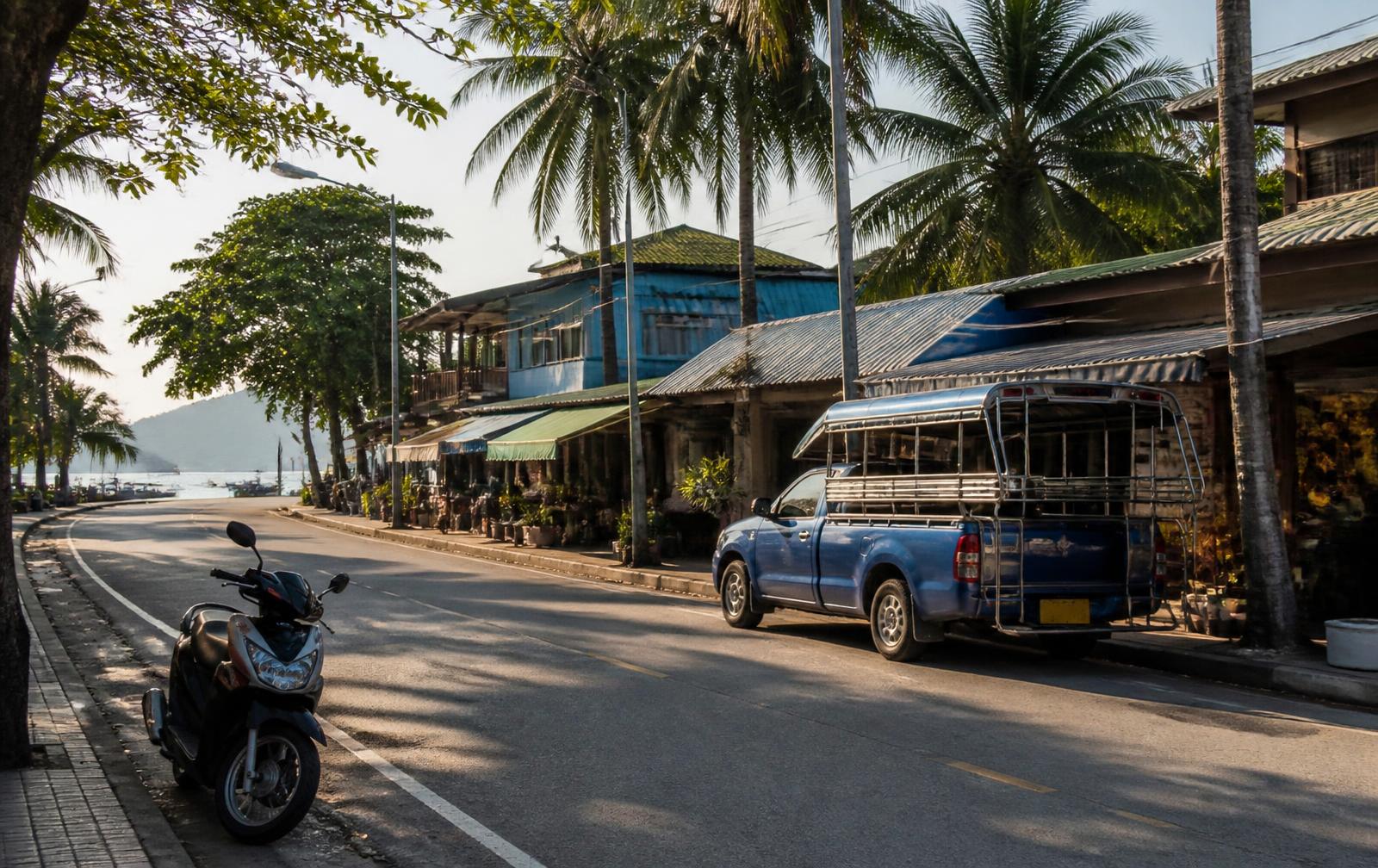
A parked scooter and a blue songthaew pickup taxi on a quiet coastal street in Thailand

Quick answer

Live centrally and you can manage without a vehicle. Live anywhere else and you will want one within a fortnight.

Most residents settle on a scooter for daily errands, a car once there is a school run or a hospital appointment in the week, and Grab or a private driver for evenings and airport runs. Decide where you are living first — the right transport follows from that, not the other way round.

How the town is laid out

Hua Hin runs north to south between the hills and the sea, with Phetkasem Road down the middle.

The compact part of town — the old station, Chatchai Market, the night market and the beach road — is walkable and pleasant on foot in the early morning and evening. Almost everything else spreads outward: shopping malls and hospitals along the highway, Khao Takiab to the south, Cha-Am to the north, and gated developments inland on the hillside.

Distances are short by European standards, but Phetkasem Road is a genuine highway with fast traffic, and crossing it on foot is unpleasant. That is the practical dividing line: homes on the beach side of the road feel walkable, homes inland almost never do.

Traffic is seasonal

Hua Hin is a weekend destination for Bangkok. Friday evenings and Sunday afternoons on the main road are noticeably slower, and the long Thai holiday weekends more so again. It is worth knowing before you book a flight out on a Sunday.

Your options locally

Five ways of getting around, and who each one actually suits.

Scooter or motorbike

The default way most residents move around town. Parking is free and easy almost everywhere, and nothing else gets you across Hua Hin as quickly.

Suits

Confident riders, single people and couples, anyone living outside the walkable centre.

Less suited to

Nervous riders, families with small children, anyone who will be out after a few drinks.

  • + Cheap to rent monthly and cheap to run
  • + Parking is never the problem it is with a car
  • + Reaches beach roads and lanes cars find awkward
  • By far the biggest source of serious injury for foreigners in Thailand
  • Unusable in a heavy rainy-season downpour
  • Insurance and hospital cover often depend on holding the correct licence and wearing a helmet

Cost: Monthly rental is the normal arrangement locally; ask for the monthly rate rather than paying by the day.

Your own car

Worth it once there is a school run, a hospital appointment or regular trips to Bangkok in your week. Air conditioning is not a luxury in April.

Suits

Families, retirees, anyone living inland or in a hillside development.

Less suited to

Part-year residents and anyone based in the town centre who rarely leaves it.

  • + Comfortable in heat and rain
  • + Makes Bangkok, Pranburi and the national parks easy day trips
  • + Safest option on Phetkasem Road
  • Parking in the old town and at markets is genuinely tight
  • Buying involves ownership, insurance and annual tax paperwork
  • Long-term rental is more expensive than most people expect

Cost: Long-term rental, leasing and buying all exist locally. Compare a 12-month rental against purchase before committing capital.

Songthaews

Converted pickups running fixed routes through town and out towards Khao Takiab. You flag one down, sit on the bench and press the buzzer to get off.

Suits

Anyone living on or near a route, and people who would rather not drive at all.

Less suited to

Trips outside the routes, late evenings, or when you are carrying a lot.

  • + The cheapest way to move around town
  • + No parking, no licence, no paperwork
  • Routes and frequency are informal and not published in a fixed timetable
  • Little use if you live in a development away from the main roads

Cost: Fares are low and typically fixed per route. We have not been able to confirm a published fare table from an official source.

Ride-hailing and taxis

Grab operates in Hua Hin, alongside motorbike taxi ranks and private cars arranged through your condo or hotel. Metered street taxis are far less common here than in Bangkok.

Suits

Evenings out, airport runs, and anyone who does not want to own a vehicle.

Less suited to

Relying on it for a daily commute — supply thins out away from the centre and late at night.

  • + Price agreed in the app before you travel
  • + No licence, insurance or maintenance to think about
  • + Motorbike taxis are quick for short hops
  • Availability drops outside the town centre
  • Non-app cars are negotiated fares, so agree the price before you get in

Cost: App fares are shown up front. Private car and motorbike-taxi fares are negotiated locally.

Walking and cycling

The old town, the beach road and the night market area are genuinely walkable. Beyond that the town spreads out along a highway.

Suits

People choosing a home in the compact centre or along the beach.

Less suited to

Anyone living inland, in Khao Takiab or in a gated development.

  • + Flat terrain
  • + Beach and market life is best on foot
  • + Early mornings are pleasant year round
  • Phetkasem Road carries fast, heavy traffic and is unpleasant to cross on foot
  • Pavements are inconsistent, and the middle of the day is hot for most of the year

Cost: Free — and the strongest argument for paying more to live centrally.

Licences and the law

The part most people get wrong, and the part insurers look at hardest after an accident.

Driving on a foreign licence

Thailand recognises an International Driving Permit issued under the 1949 Geneva Convention, used together with your national licence. Carry both, plus your passport. An IDP is a short-stay solution, not a substitute for a Thai licence once you live here.

Official source · Royal Thai Embassy · checked Aug 2026

Thai driving licence for residents

Longer-stay foreigners apply at a Department of Land Transport office. Typical requirements are a passport, proof of address (immigration certificate of residence or an embassy letter), a medical certificate and the eyesight, reaction, theory and practical tests. Exact documents and fees vary by office — confirm with the provincial office before you travel there.

Official source · Royal Thai Embassy · checked Aug 2026

Motorcycle licence category

Motorcycle entitlement is separate from a car licence and is tied to engine size. Riding a bike your licence does not cover is a common reason rental and travel insurance is refused after an accident. Confirm the current engine-size categories with the Department of Land Transport before renting anything larger than a small scooter.

Official source · Royal Thai Embassy · checked Aug 2026

An International Driving Permit is fine for a holiday. Once you are living here, a Thai licence is the sensible move: it is recognised without question at checkpoints, it removes an argument with an insurer, and it is useful identification in day-to-day life.

Applications are handled by the Department of Land Transport, and Hua Hin sits in Prachuap Khiri Khan province. Requirements, appointment systems and fees differ from office to office and change over time, so confirm the current list directly rather than relying on a forum post.

Confirm the current requirements before you go

We have not been able to confirm from an official source the exact engine-size categories, the fee schedule, or the office details serving Hua Hin. Check dlt.go.th or call the provincial office before making the trip with documents.

Staying safe on two wheels

Road accidents are the most common serious problem foreign residents in Thailand run into, and almost all of it is avoidable.

Before you ride

  • Confirm your licence covers the vehicle you are renting, in the engine size you are renting
  • Wear a helmet every time, including on a two-minute ride to the shop
  • Check what your health insurance says about motorbike accidents before you rent one
  • Photograph existing damage on any rental before you leave the shop
  • Never leave your passport as a rental deposit — offer a copy and a cash deposit instead
  • Avoid Phetkasem Road at night on two wheels
  • Carry the rental agreement and compulsory insurance paperwork in the vehicle

Hua Hin ↔ Bangkok

Around 200 km by road, and five genuinely different ways of covering it.

Train

Best for

A relaxed, scenic journey, and arriving at Hua Hin's station in the middle of town.

Watch out for

Only a handful of direct services a day, and punctuality varies. Check the current timetable and Bangkok departure station with the State Railway of Thailand.

Coach and minivan

Best for

Frequency and low cost. Minivans in particular run throughout the day.

Watch out for

Bangkok terminals differ by operator, and minivan driving standards vary. Coaches are the more comfortable choice for a long trip.

Airport coach

Best for

Arriving at Suvarnabhumi or Don Mueang without changing across Bangkok first.

Watch out for

Routes and departure times change; confirm the service is running on your date before you plan around it.

Private car transfer

Best for

Arrival day with luggage, families, and anyone landing late at night.

Watch out for

The most expensive option, and Bangkok traffic decides your journey time more than distance does.

Driving yourself

Best for

Flexibility, and trips where you need the car at both ends.

Watch out for

Motorway tolls, unfamiliar junctions and heavy truck traffic on the main route south.

Fares change, so we do not publish them

Train, coach and minivan fares are not published in a form we can verify and keep current. Check prices directly with the State Railway of Thailand or the operator on the day you book.

Airports and flights

Hua Hin has an airport, but for most journeys Bangkok is still your gateway.

Hua Hin Airport at Bo Fai handles limited scheduled domestic service, and plans for international routes have been discussed repeatedly without a settled outcome. Treat it as a bonus if a route happens to suit you, not as the basis for planning a life here.

In practice, Suvarnabhumi is the airport that matters. It is a road journey rather than a short hop, so allow generous margins in both directions — particularly on Sunday afternoons and around Thai public holidays.

Rail link to Bangkok

Hua Hin sits on the Southern Line and has its own station, with direct trains to and from Bangkok. Departure station in Bangkok, timetable and fares change — check the current schedule on the State Railway of Thailand site rather than relying on a printed timetable.

Official source · State Railway of Thailand · checked Aug 2026

Airport coach services

The Transport Co. announced direct coach routes from Suvarnabhumi and Don Mueang airports to Hua Hin in 2025. Services and departure points do change season to season — confirm before you build an arrival day around one.

Official source · thailand.go.th · checked Aug 2026

Your first month, in order

A sensible sequence that avoids buying a vehicle you later discover you did not need.

  1. 1

    Arrive without a vehicle

    Use Grab and songthaews for the first week and learn the geography from the passenger seat.

  2. 2

    Rent a scooter monthly

    Only if your licence covers it. Monthly rates are far better value than daily ones.

  3. 3

    Test your real routes

    Drive the school run, the hospital trip and the supermarket run at the times you will actually do them.

  4. 4

    Sort a Thai licence

    Once you have an address and the paperwork from immigration, get the licence out of the way.

  5. 5

    Decide on a car

    Long-term rental first. Buy only when you are confident about where you are living for the next few years.

Common mistakes

Six patterns we see repeatedly among new residents.

Renting a bike on the wrong licence

Shops rarely check, insurers always do. If your licence does not cover the bike, an accident becomes an uninsured accident.

Choosing a home before testing the commute

A quiet inland development looks excellent on a viewing at 11am on a Tuesday and very different during the school run in the rain.

Assuming Grab is always there

It works well in and around the centre. Further out, late at night, you may wait — or not get a car at all.

Leaving a passport as deposit

It is a common request from rental shops and a bad idea. A cash deposit and a copy of the photo page is the reasonable compromise.

Budgeting for a car and then never using it

Plenty of residents in the centre discover a scooter and the occasional Grab cost a fraction of what a car costs to keep.

Planning a tight connection to a Bangkok flight

Road travel from Hua Hin can be quick, but a single accident on the route south removes any margin you thought you had.

Next steps

Transport and location are the same decision seen from two angles.

Official and primary sources

Where to confirm the licence, rail and airport points on this page.

Official source

State Railway of Thailand

Primary source for

  • · Train timetables
  • · Ticket prices and booking
  • · Service disruptions
Open railway.co.th

Official source

Royal Thai Embassy — driving in Thailand

Primary source for

  • · International Driving Permit rules
  • · Thai driving licence requirements
Read the guidance

Official source

Department of Land Transport

Primary source for

  • · Licence categories and fees
  • · Provincial office locations
  • · Appointment booking
Open dlt.go.th

Official source

Suvarnabhumi Airport — ground transport

Primary source for

  • · Airport coach routes
  • · Official limousine counters
Open the airport page

Hua Hin Compass verified

Last verified

August 2026

Next scheduled review

February 2027

Sources checked

  • · State Railway of Thailand
  • · Department of Land Transport
  • · Royal Thai Embassy driving guidance
  • · Suvarnabhumi Airport ground transport
  • · Thai government portal (Transport Co. airport routes)

Checked Aug 2026. Hua Hin Compass is independent and has no rental, transfer or transport partners. Fares, timetables and licence requirements change — where we could not confirm a figure from an official source, we have said so rather than estimated it.