

Moving · Relocation · Cornerstone guide

Moving to Hua Hin

The Complete Relocation Guide

Moving to Hua Hin doesn’t have to be complicated. With the right preparation and a clear plan, the process is far more manageable than it may first seem.

What can make it seem difficult is the sheer number of decisions involved — visas, housing, schools, insurance, finances, documents, tax, transport and all the practical details of everyday life. When they all demand your attention at once, the move can quickly feel like too much to hold in your head.

The good news is that most of these decisions do not need to be made at the same time.

A successful move is largely about knowing what to deal with first, what can wait, and what is better decided once you are actually in Hua Hin.

Last verified
Last verified: August 2026
Next review:
November 2026
Reading time:
24 min
Hua Hin seen from the hills: residential neighbourhoods, tropical trees and the Gulf of Thailand coastline
Hua Hin from the hills — a working coastal town, not only a beach resort.
The sequence

Your move, in six stages

Every move is different, but the same key decisions tend to come up in roughly the same order. Use these six stages as a roadmap from the first idea of moving to Hua Hin through to building your everyday life here — read it end to end, or go straight to the stage that matters most right now.

01 — Quick answer

Start with six questions

If Hua Hin is becoming more than just an idea, there are six questions worth answering before you start making firm plans. Some will take more research than others, but together they will shape almost every decision that follows.

01

Can you legally stay?

Your visa options should be one of the first things you look at. How long you can stay in Thailand — and under what conditions — will influence everything from school planning and housing to work, insurance and when you make the move.

Thailand Visa Guide
02

Can you afford the lifestyle?

Work out what an ordinary month in Hua Hin would cost you — not the cheapest month you could possibly manage. Include the home you would genuinely want to live in, the school you would choose, healthcare, transport, eating out and the parts of your current lifestyle you would not want to give up.

Cost Compass
03

Where will your income come from?

Think about how you will fund your life in Thailand over the long term. That might be through a pension, investments, remote work, employment in Thailand or a combination of several sources. Your answer may affect both your visa options and your tax position.

04

Are children moving with you?

If you are moving with children, start researching schools early. Availability, curriculum and the school calendar can all influence when you move — and even which part of Hua Hin makes the most sense to live in.

Compare schools
05

How will healthcare be financed?

Day-to-day medical care in Thailand can be relatively affordable, but a serious illness or hospital stay is a very different financial risk. Decide early what you are comfortable paying yourself and what you want insurance to cover.

Health Insurance Guide
06

Where should you live?

It is tempting to start by looking at villas and neighbourhoods, but this is one decision that is often better left until later. Your school, budget, transport and daily routine will tell you far more about where you should live than property photos ever will.

Neighbourhood Compass

02 — The shape of the move

The eight decisions that shape your move

A move abroad rarely feels like one big problem once you break it down. It is really eight separate decisions, and each one becomes noticeably easier once the one before it has been settled.

01

Legal stay

Which long-stay route fits your age, income, family situation and plans for the next few years.

02

Money

A realistic monthly budget plus a buffer that survives an unexpected month.

03

Income & work

Where your income comes from, how it reaches Thailand, and what it means legally.

04

Family

School, curriculum and the academic year — the strongest constraint on timing.

05

Healthcare

Which medical risks you carry yourself and which an insurer carries for you.

06

Location

The neighbourhood that matches your daily routine, not the one with the best photographs.

07

Administration

Documents, reporting duties, banking access and home-country obligations.

08

Belongings

What genuinely travels with you, and what is cheaper and simpler to replace.

Work through them roughly in this order and far fewer of them will need revisiting.

03 — Fit

Is Hua Hin right for you?

Hua Hin suits a certain kind of life extremely well: coastal, unhurried and built around routine rather than novelty. Being honest about what the town does not offer is just as useful as knowing what it does.

Hua Hin may suit you if…

  • A slower coastal lifestyle with real daily routine
  • Warm weather year-round, and you tolerate humidity
  • Beaches without the logistical limitations of island life
  • Outdoor activities and sports
  • Access to private hospitals and clinics
  • A mix of Thai everyday life and an international community
  • Villas and condos at a range of realistic budgets
  • Bangkok within a few hours when you need a capital city

Think more carefully if you need…

  • A large international corporate job market
  • Big-city nightlife and constant variety
  • Extensive public transport instead of a car or scooter
  • European-style walkability in daily life
  • A cool climate or distinct seasons
  • A very wide choice of international schools
  • Everything handled in English, everywhere
Would you still enjoy Hua Hin when nothing particularly exciting is happening?

Living here eventually means school mornings, dentist appointments, electricity bills, supermarket runs, rainy afternoons and traffic.

If the ordinary weeks still appeal once the novelty has worn off, you are probably looking at the right place.

A quiet residential street in Hua Hin with local shops and a small café in the morning

04 — Test it

Try Hua Hin before you move

A well-planned scouting trip is the least expensive way to reduce the risk of a move, provided you use it to rehearse an ordinary week rather than to enjoy another holiday. Cook at home, drive the school run at eight in the morning, sit in the traffic on Petchkasem Road and see how the heat feels by mid-afternoon.

  • Rent somewhere you could realistically afford long term
  • Shop where you would normally shop, not only at tourist supermarkets
  • Test the school commute at the actual time of day
  • Visit neighbourhoods in the morning and again in the evening
  • Inspect genuine long-term rentals, not holiday listings
  • Visit the schools on your shortlist in person
  • Visit the hospitals and clinics you would rely on
  • Work remotely for a few days if that is your plan
  • Experience the heat outside the coolest months
  • Track what you actually spend, day by day

05 — Sequence

Your Hua Hin moving timeline

Some households plan a move for two years, others decide in four months. The months below matter less than the order: each stage assumes the previous one has been broadly resolved.

  1. 12–6 months before

    Decide whether the move works

    Nothing has to be booked yet. Spend this period working out whether a move to Hua Hin holds up legally and financially for your household, and use a scouting trip outside the cool season to test the assumptions you cannot check from home.

    • Investigate the long-stay routes that could apply to you
    • Build a first monthly budget for your household
    • Assess income, pensions and available capital
    • Investigate your likely tax position in both countries
    • Research healthcare providers and insurance options
    • Research schools and their admission calendars
    • Draw up a neighbourhood shortlist
    • Plan a scouting trip outside the coolest months
    • Review home-country obligations you cannot simply drop

    Goal — You should finish this stage able to say, with reasonable confidence, that the move is workable.
  2. 6–3 months before

    Turn the idea into a plan

    Research turns into decisions here. Choose the immigration route you are most likely to use, start gathering documents, and deal with anything that could quietly derail the move later — an expiring passport, a school with no places, a pet whose vaccinations need months of lead time.

    • Choose your likely immigration route
    • Start collecting documents and certified copies
    • Shortlist and contact schools
    • Compare health insurance quotes properly
    • Take cross-border tax advice where appropriate
    • Declutter — every item you keep has a shipping cost
    • Obtain shipping quotes and compare with replacing locally
    • Begin pet preparation with your vet
    • Check passport validity and remaining pages
    • Gather medical, school and financial records

    Goal — By the end of this stage, nothing outside your control should be able to stop the move.

  3. 3–1 months before

    Prepare for departure

    Real dates start appearing: the visa, the school start, the flight, the first weeks of accommodation. Book them in an order that makes sense — insurance from the right date, a short-term rental rather than a year-long lease, and a shipping window you can still adjust.

    • Complete your visa arrangements
    • Confirm the school place and start date
    • Activate health insurance from the correct date
    • Book flights
    • Book temporary accommodation for the first weeks
    • Confirm shipping collection and delivery windows
    • Finalise pet documentation and flight arrangements
    • Arrange prescriptions and a medication supply
    • Confirm international banking and card access
    • Obtain an International Driving Permit where relevant
    • Create secure digital copies of every document

    Goal — Everything time-critical should now be confirmed, with your first weeks in Hua Hin already arranged.

  4. Final month

    Protect the essentials

    The last weeks are not the time for new projects. Concentrate on the handful of things that are genuinely hard to fix from Thailand — documents, money, medication and anyone travelling with you, including pets.

    • Passport
    • Visa documents
    • Flights and transfers
    • First accommodation
    • Health insurance in force
    • School confirmation
    • Medication
    • Access to money
    • Original documents
    • Driving documents
    • Pet paperwork

    Goal — Anything difficult to undo from abroad is already settled.

  5. Arrival

    Make everyday life work

    The first days in Hua Hin are about getting the basics working: somewhere to sleep, a local number, a way to get around town and a hospital you know how to reach. Long-term choices such as a lease or a car can wait a few weeks.

    • Address registration and TM30 where applicable
    • Thai SIM card
    • Home internet
    • Transport: car, scooter or regular drivers
    • Register with a clinic or hospital
    • Start the Thai banking process
    • Household essentials

    Goal — Ordinary days work without improvising your way through them.

  6. First 30 days

    Build your new routine

    This is the month when Hua Hin either becomes home or stays a long holiday. Keep an eye on immigration deadlines and what you are really spending, but give at least as much attention to the school run, sport, and meeting people you would happily see again.

    • Put your immigration deadlines in a calendar
    • Start the Thai driving licence process
    • Keep learning neighbourhoods before committing to a long lease
    • Track your real cost of living
    • Settle the school routine
    • Pick up activities and sport
    • Find a community — this matters as much as paperwork

    Goal — A settled week you would be happy to repeat — not just a visa and a rental contract.

06 — Overview

Moving at a glance

A single view of when to start each decision, whether it genuinely has to be resolved before you fly, and where to read more.

  • Visa

    Start:
    12+ months
    Before moving:
    Yes
    Visa Guide
  • Budget

    Start:
    12+ months
    Before moving:
    Yes
    Cost Compass
  • Income / work

    Start:
    12+ months
    Before moving:
    Yes
    Work in Hua Hin
  • School

    Start:
    12–9 months
    Before moving:
    Yes
    School Compass
  • Tax

    Start:
    9–6 months
    Before moving:
    Understand it

    Tax & money section

  • Health insurance

    Start:
    6 months
    Before moving:
    Yes
    Health Insurance Guide
  • Neighbourhood

    Start:
    6 months
    Before moving:
    No — decide locally
    Neighbourhood Compass
  • Rental

    Start:
    3 months
    Before moving:
    Short term only
    Neighbourhood guide
  • Shipping

    Start:
    6–3 months
    Before moving:
    Yes

    Belongings section

  • Pets

    Start:
    9–6 months
    Before moving:
    Yes

    Pets section

  • Bank account

    Start:
    3 months
    Before moving:
    No — after arrival

    Money section

  • Driving licence

    Start:
    Before departure
    Before moving:
    Partly

    Driving section

  • SIM / internet

    Start:
    On arrival
    Before moving:
    No

    First week

  • Immigration reporting

    Start:
    On arrival
    Before moving:
    No

    Immigration admin

08 — Money

Build the budget before choosing the house

A realistic Hua Hin budget works in three layers. Most people plan the first two carefully and are then caught out by the third.

Layer 1

Relocation cost

Flights, deposits, shipping, visa costs, school setup fees, furniture and pet transport. One-off, but rarely small.

Layer 2

Monthly lifestyle

Housing, food, utilities, transport, school fees, healthcare and leisure — the ordinary month, not the cheapest one.

Layer 3

Financial resilience

Medical deductibles, emergency travel home, replacement equipment, exchange-rate movement and an interruption in income.

This is the layer that decides whether a move survives a bad year.

09 — Housing

Rent first, and decide where to settle later

  1. 01

    Arrive

    Flexible furnished accommodation for the first weeks.

  2. 02

    Explore

    Learn neighbourhoods, traffic and daily routes.

  3. 03

    Rent

    Commit once you understand your actual routine.

  4. 04

    Consider buying

    Only if ownership or a long lease still makes sense.

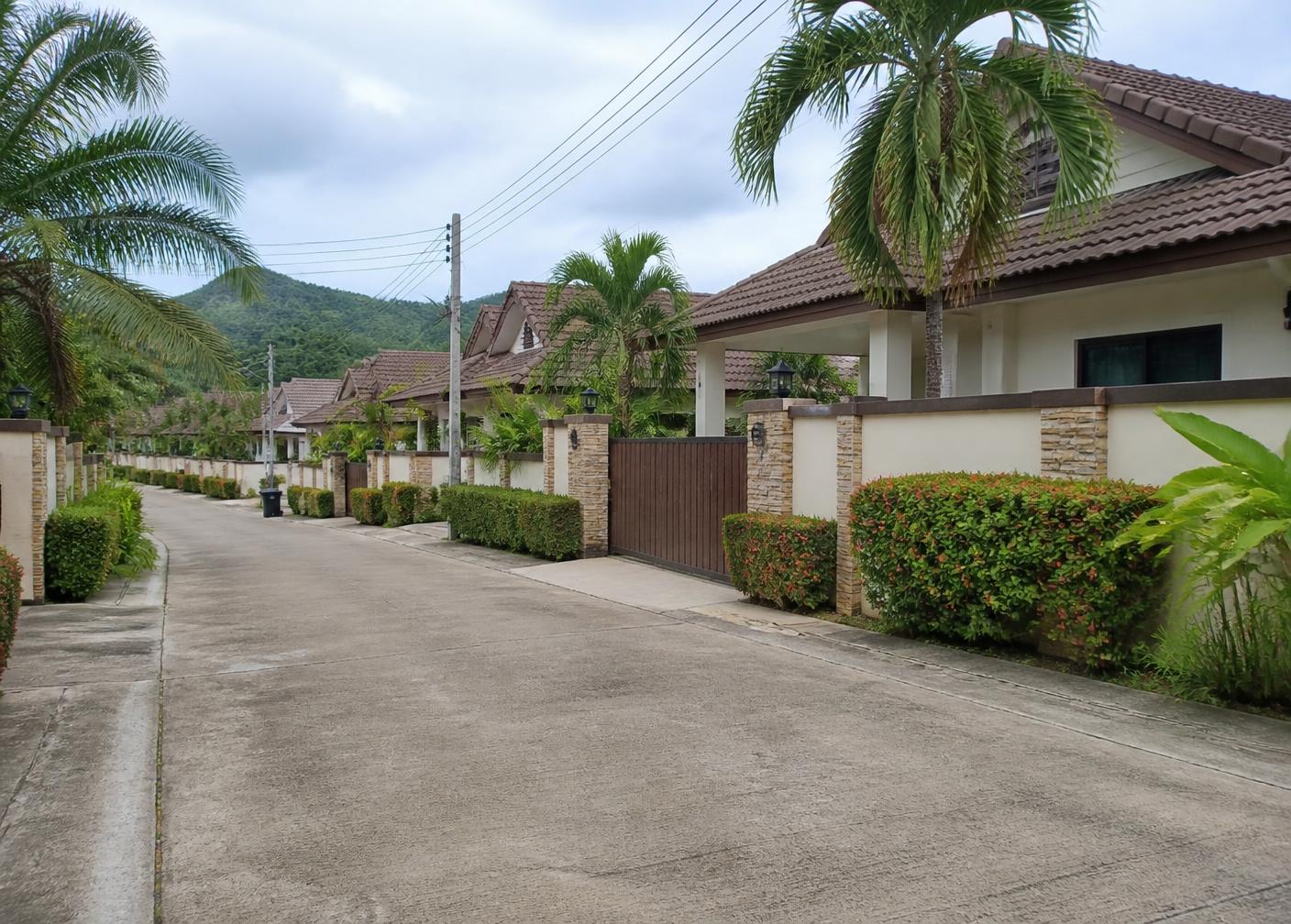
A quiet lane of single-storey villas with walled gardens in a Hua Hin residential development

What should determine where you live?

  • School commute
  • Car ownership
  • Beach access
  • Walkability
  • Restaurants
  • Quiet
  • Budget
  • Golf
  • Bangkok access
  • Garden
  • Nightlife
  • Shopping

The right area for you is wherever most of your daily priorities happen to overlap.

10 — Family

Moving with children changes the order of decisions

School → neighbourhood → house

Not: house → school.

School places, curriculum continuity and the academic calendar are the least flexible parts of a family move, and Hua Hin has a limited number of international schools. You may well find that the school you prefer changes which neighbourhoods are practical — and occasionally which month you fly.

A family walking with their child along a tree-lined street in Thailand on a school morning

Curriculum

British, IB, American or Thai-international — and how it matches what your child already knows.

Language

Language of instruction, and support for children arriving mid-programme.

Accreditation

Recognised accreditation and how qualifications travel onward.

Age range

Whether the school covers your child through to graduation.

University pathways

Where graduates actually go next.

Fees

Tuition plus registration, transport, uniforms, trips and exam fees.

Commute

Tested at drop-off time, not on a quiet Sunday.

Extracurricular

Sport, music and activities your child cares about.

Support

Experience with international children joining part-way through the year.

Don't plan only the administration

A child is leaving friends, extended family, a familiar school and a language environment they had mastered. That transition deserves as much planning as the shipping quote.

Build continuity where you can — keep contact with old friends, keep a sport or instrument going, and involve children in real decisions about the new house and neighbourhood.

11 — Healthcare

Which medical risks could seriously affect your finances?

Hua Hin has good private clinics and hospitals, and routine treatment is often manageable out of pocket. A long admission, major surgery or a serious diagnosis sits in an entirely different order of cost, which is where insurance earns its premium.

Comprehensive cover

Inpatient and outpatient care, with the widest reimbursement and the highest premium.

Major-medical / inpatient

Strong protection against hospital admission, with routine care paid yourself.

Higher deductible

A lower premium in exchange for carrying the first slice of every claim.

12 — Tax & money

Immigration and tax are different questions

Immigration

Can you legally remain in Thailand?

Governed by your visa category, its conditions and your reporting obligations.

These questions interact, but they are not the same.

Tax

Where and how may your income be taxable?

Governed by residence rules, the source of your income and any applicable treaty.

Areas worth investigating early

  • Days spent in Thailand each calendar year
  • Employment income
  • Remote income earned for foreign clients
  • Pensions
  • Investments and capital gains
  • Rental income at home
  • Companies you own or direct
  • Transfers of money into Thailand
  • Residence status in your home country
  • Any applicable double-tax treaty

General information only

This section is general planning information, not tax advice. Cross-border tax depends entirely on your personal circumstances — obtain personalised advice from a qualified adviser in both countries where appropriate.

13 — Banking

Example international money setup

This is one common structure, not a requirement. Many households need less; some need more.

  1. Home-country bank

    Salary, pension, existing direct debits and card access.

  2. International transfer provider

    Moves money at a transparent rate, on your schedule.

  3. Thai bank account

    Local rent, utilities, school fees and everyday payments.

Investment accounts — held separately

Brokerages often treat a change of residence differently from a bank. Check before you move, not after.

Before leaving home, confirm:

  • Can your bank keep you as a non-resident?
  • Does it require a home-country address?
  • Does anything depend on your current phone number?
  • How is two-factor authentication handled abroad?
  • What are the transfer limits and fees?
  • Will your investment accounts stay accessible?
  • Who can access money on your behalf in an emergency?

14 — Documents

Two folders, and nothing else to remember

One physical folder for originals that travels in your hand luggage. One encrypted digital folder you can reach from anywhere.

Physical folder — originals

  • Passports
  • Civil-status documents
  • Driving licences and IDP
  • School records
  • Insurance policies
  • Medical information
  • Visa documents
  • Pet records
  • Financial evidence

Digital folder — secure copies

Scanned, named consistently, stored encrypted and reachable without your laptop.

  • Passport.pdf
  • Marriage-Certificate.pdf
  • School-Report-2026.pdf
  • Health-Insurance.pdf
  • Vaccination-Records.pdf

15 — Belongings

What to bring, and what to let go

Worth bringing

  • Important personal items
  • Laptops and specialist electronics
  • Equipment that is hard to replace here
  • Medication and prescriptions
  • Documents
  • Quality clothing you actually wear
  • Sentimental possessions

Think twice

  • Inexpensive furniture
  • Large appliances
  • Heavy decorative items
  • Old kitchen equipment
  • Winter clothing beyond a single trip home
  • Anything kept because it might be useful someday
A few packed moving boxes, a passport folder and documents in a bright room with tropical daylight

Ship, or sell and replace?

Compare the full cost of shipping against the cost of buying the same things again in Thailand.

  • Freight
  • Insurance
  • Customs
  • Handling
  • Storage
  • Replacement cost

Moving with pets

  1. 01

    Veterinary preparation

    Vaccination, microchip and titre timing.

  2. 02

    Documentation

    Health certificates and official endorsement.

  3. 03

    Airline

    Route, crate and temperature restrictions.

  4. 04

    Thai import process

    Permits and arrival inspection.

Do not work backwards from the flight date. Work forwards from the earliest veterinary requirement.

Before you move

Your final 72 hours

Rather than another long list, these are the six areas worth checking one last time. If each of them is in order, you are ready to fly.

Travel

Flights, transfer, first address, passport.

Immigration

Visa documents and arrival formalities.

Money

Cards, a backup payment method, working access.

Health

Insurance in force, medication, medical details.

Digital

Phone, authentication, cloud documents.

Family

School confirmation and arrival arrangements.

Ready to fly

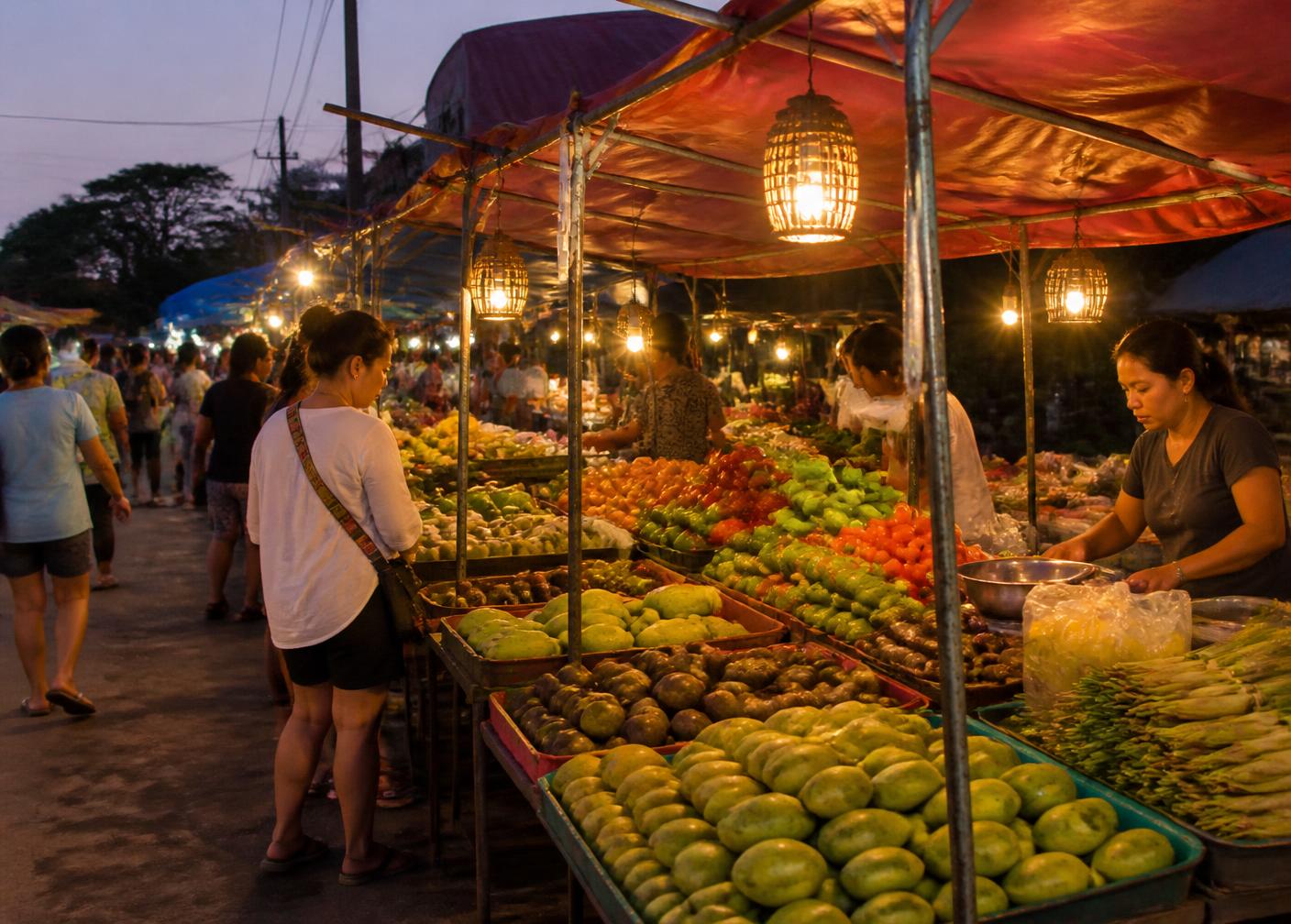
Evening fresh-food market in Hua Hin with fruit and vegetable stalls under warm lantern light

16 — Arrival

Your first week: make daily life work

Six practical steps turn an arrival into a functioning household in Hua Hin.

  1. 1

    Address / TM30

    Register where you are staying, through your landlord or yourself.

  2. 2

    Thai SIM

    A local number unlocks nearly every other service.

  3. 3

    Transport

    A car, a scooter or reliable regular drivers.

  4. 4

    Banking

    Start the account process; expect it to take more than one visit.

  5. 5

    Healthcare

    Identify your clinic and your nearest emergency hospital.

  6. 6

    Family routine

    School run, meals and a first weekly rhythm.

17 — Settling

Your first 30 days

Grouped by area of life rather than by date, because the first month rarely runs to schedule. Finding a community belongs on this board just as much as immigration reporting does.

01

Administration

Immigration deadlines in your calendar.

02

Transport

Driving licence and the vehicle decision.

03

Housing

Keep learning neighbourhoods before a long lease.

04

Finance

Track what you actually spend.

05

Healthcare

Understand providers, referrals and your policy.

06

Family

School routine and the children's activities.

07

Community

Sport, clubs, volunteering and a social network.

A move only really lasts once there is a life around it, not merely a visa and a rental contract.

18 — Ongoing

The administration that repeats

90-day reporting

A recurring notification of residence where your status requires it.

See the Visa Guide

Re-entry

Understand what leaving Thailand means for your specific permission to stay.

See the Visa Guide

19 — Driving

Getting on the road legally

  1. Before moving

    Keep your national licence valid and obtain an International Driving Permit where relevant.

  2. After settling

    Investigate converting to a Thai driving licence once you have an address and the required documents.

Car licence

Its own application, tests and documentation.

Motorcycle licence

A separate licence entirely — holding one does not permit the other.

Insurance claims can depend on holding the correct licence for the vehicle you are riding or driving.

20 — Experience

Ten mistakes worth avoiding

None of these are dramatic, and none are unusual. They are simply expensive, and every one of them is avoidable with a little foresight.

  1. 01

    Choosing the house before the school

    The commute you accept in week one becomes the commute you resent in month six.

  2. 02

    Planning a permanent life around tourist-entry logic

    Short entries are designed for visits, not for building a household.

  3. 03

    Assuming visa status equals tax status

    They are separate systems with separate rules and separate thresholds.

  4. 04

    Buying property immediately

    Ownership is the least reversible decision available to a newcomer.

  5. 05

    Shipping everything

    Freight, customs and handling frequently exceed the value of what is inside the boxes.

  6. 06

    Underestimating healthcare risk

    Routine care is affordable; a long admission is not.

  7. 07

    Forgetting home-country obligations

    Deregistration, pensions, tax filings and insurance do not pause on their own.

  8. 08

    Budgeting around the cheapest possible month

    Real life includes school fees, flights home, repairs and the occasional expensive week.

  9. 09

    Solving only the paperwork

    A move without friendships, routine or purpose rarely lasts a second year.

  10. 10

    Trying to complete everything before arrival

    Several things can only be done in Thailand, in person, after you land.

21 — Profiles

Three moves. Three different priorities.

Illustrative examples to help you recognise your own sequence. They are educational, not personalised advice.

Family

Marc & Sophie

Child aged 12

Priority sequence

  1. Visa
  2. School
  3. Tax
  4. Insurance
  5. Neighbourhood
  6. Housing

Biggest mistake to avoid

Signing a one-year lease before visiting the school at drop-off time.

Open School Compass
Retiree

Peter

63

Priority sequence

  1. Retirement route
  2. Tax
  3. Health insurance
  4. Banking
  5. Housing
  6. Driving

Biggest mistake to avoid

Leaving insurance until after a first medical episode has already happened.

Open Health Insurance Compass
Remote professional

Anna

36

Priority sequence

  1. Visa
  2. Work & tax
  3. Internet
  4. Budget
  5. Social life
  6. Neighbourhood

Biggest mistake to avoid

Choosing a quiet villa far from anyone, then working alone for six months.

Open Cost Compass

22 — Action

Your Hua Hin moving checklist

37 practical steps across four stages. Tick them off as you go — your progress is saved in this browser, no account needed.

Your progress

0 of 37 completed · 0%

Before committing

Decide whether the move actually works for your household.

Before departure

Everything that must be arranged while you are still at home.

Final days

Only the essentials.

After arrival

The first weeks in Hua Hin.

Progress is saved in this browser only. Clearing your browser data resets the checklist.

23 — Personalise

Turn the guide into your move plan

This guide sets out what a move to Hua Hin generally involves. Plan Your Move narrows that down to the tasks that apply to your household, in the order and at the time they matter.

  1. Generic roadmap

    Everything a move can involve.

  2. Your household

    Partner, children, pets, income.

  3. Your dates

    Target month and school year.

  4. Your priorities

    What matters, what does not.

  5. Personal action plan

    Sequenced, dated, yours.

If you want more than a plan

The guide and the free plan stay free. These are the options when you want the plan maintained, reviewed or supported personally.

Free

€0

No account required

Plan Your Move

Explore your personal relocation path.

  • Personal move profile
  • Preliminary timeline
  • Key actions for your situation
  • Relevant Hua Hin Compass guides
  • Relevant Compass tools
Start planning

Self-guided

€49

one-time

My Hua Hin Plan

Turn your research into a complete personal move plan.

  • Personal account
  • Personal dashboard
  • Full personalised checklist
  • Detailed move timeline
  • Progress tracking
  • Personal deadlines
Unlock my plan

Most popular

€179

one-time

My Hua Hin Plan + Personal Call

Validate your decisions with personal relocation guidance.

Everything in My Hua Hin Plan, plus:

  • 60-minute personal video consultation
  • Pre-call profile review
  • Personal relocation discussion
  • Personal recommendations
  • Advisor-created actions
  • Updated plan after your consultation
Get my plan + personal call

Personal support

€349

one-time

My Hua Hin Plan + Personal Support

Personal follow-up as your plan becomes reality.

Everything in the Personal Call plan, plus:

  • 90 days personal support
  • Questions through your dashboard
  • Advisor replies
  • Advisor comments on relevant actions
  • Personal plan adjustments
  • One additional 30-minute follow-up call
Get personal support

Hua Hin Compass provides practical relocation planning and decision support. Regulated legal, immigration, tax, medical and financial advice should be obtained from qualified professionals where required.

Continue planning your move

Immigration

Money

Health & everyday life

24 — Questions

Frequently asked questions

25 — Trust

Official sources

Official source

Thailand Immigration Bureau

Extensions of stay, address reporting and 90-day notifications

Immigration Bureau
Official source

Ministry of Foreign Affairs

Visa categories, consular services and e-visa applications

Consular information
Official source

The Revenue Department

Personal income tax, residence rules and filing obligations

Revenue Department
Official source

Thai Customs Department

Import of household effects and personal belongings

Customs Department
Official source

Department of Livestock Development

Import requirements for cats and dogs

Animal import rules
Official source

Department of Land Transport

Thai driving licences and vehicle registration

Land Transport

Hua Hin Compass verified

Last verified

August 2026

Next scheduled review

November 2026

Sources checked

  • · Thailand Immigration Bureau
  • · Ministry of Foreign Affairs
  • · The Revenue Department
  • · Thai Customs Department
  • · Department of Livestock Development
  • · Department of Land Transport

This guide explains how relocation decisions fit together. Rules, fees and requirements change — always confirm the detail with the relevant authority or a qualified professional before acting.

Final Compass advice

Do not try to make your relocation perfect. Make it reversible.

  • Rent before buying.
  • Test before committing.
  • Keep financial buffers.
  • Do not ship everything.
  • Do not close useful accounts too early.
  • Do not choose a house before understanding your routine.

You do not need to have your whole life in Hua Hin figured out before you arrive. You only need to have the decisions figured out that are difficult to reverse afterwards.