
HousingCornerstone guide

Housing in Hua Hin

Renting, buying and what each really involves

Housing is the largest line in almost every Hua Hin budget, and it is the decision that quietly sets the shape of your day: how far you drive, whether you swim before breakfast, how much of your month goes on electricity.

This guide covers the kinds of home you can realistically rent here, what moves the price, how leases work, what a foreign national can and cannot own, and when buying actually makes sense.

Last verified
Last verified: August 2026
Next review:
February 2027
Reading time:
14 min
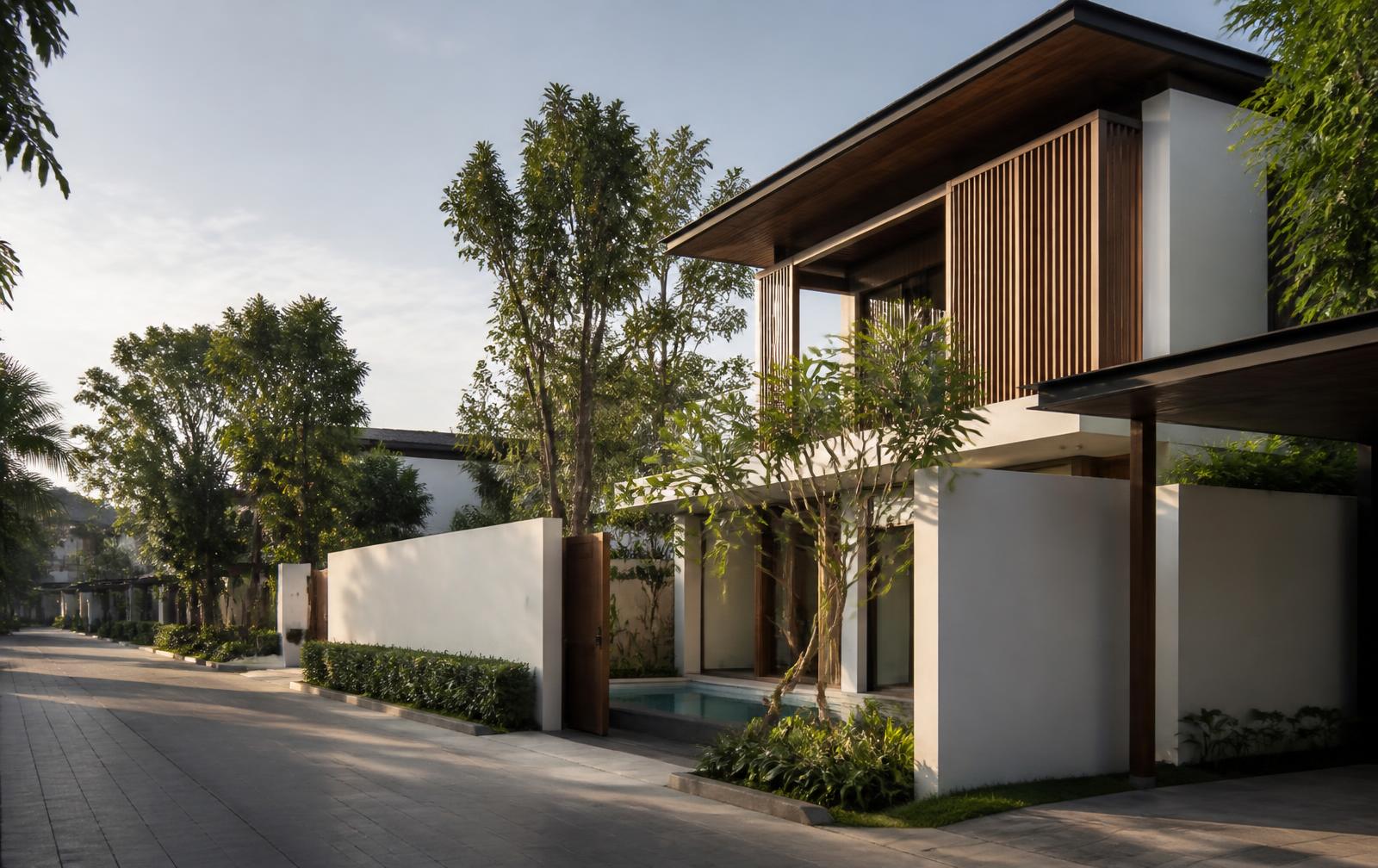
Modern house with wooden screens and a small pool on a quiet residential street in Thailand

Quick answer

Rent first, in the area you think you want, for at least a year.

Rental supply in Hua Hin is generous and contracts are short, so the cost of changing your mind is low. Buying is a different matter: foreigners cannot normally own land, condominium purchases are limited by a building quota, and resale here can be slow. Almost nobody regrets renting for a first year; a good number of people regret buying in their first three months.

The right order of decisions

Most housing regret in Hua Hin comes from doing these steps in the wrong order.

  1. 1

    Fix the practical anchors

    School, hospital, work, golf, the airport run to Bangkok. These rarely move, and they decide which parts of the map are realistic.

  2. 2

    Choose two or three areas

    Town centre, beachside, hillside or inland are genuinely different lifestyles at genuinely different prices.

  3. 3

    Set a total housing budget

    Rent plus electricity, water, internet, estate or building fees, pool and garden care. The rent alone is not the number.

  4. 4

    Rent for a full year

    Live through the hot season, the rain and the busy months before committing to anything permanent.

  5. 5

    Only then consider buying

    With a year of local knowledge, a secure long-stay route and independent legal advice.

Types of home, and who each one suits

Four broad categories cover almost everything on the market here.

Condominium

A unit in a managed building, usually with a pool, gym, security and a monthly common-area fee based on the size of your unit.

Suits

Couples and single people, part-year residents, anyone who wants to lock the door and travel.

Less suited to

Families who need outdoor space, or dog owners — many buildings restrict pets.

Advantages

  • The only property type a foreigner can normally own freehold
  • Maintenance and security are handled for you
  • Easy to leave empty for months at a time
  • Central locations are usually walkable

Trade-offs

  • Common-area fees continue whether you are there or not
  • Building management quality varies enormously
  • Sea-view units carry a real premium, and salt air is hard on fittings
  • Resale can be slow in buildings with a lot of similar units

Running costs: Monthly common-area fee, sinking fund contributions, electricity, water and internet.

Townhouse

A narrow two- or three-storey house in a row, usually inland, often the most affordable way to get a whole house.

Suits

Budget-conscious households who want space rather than facilities.

Less suited to

Anyone who wants a garden, a pool or quiet neighbours on both sides.

Advantages

  • Considerably more floor area for the money
  • No shared facility fees in many developments
  • Practical for a small family or a home office

Trade-offs

  • Little or no outdoor space
  • Noise travels between units
  • Usually a car or motorbike journey from the beach

Running costs: Electricity, water, internet, occasional maintenance, sometimes a small estate fee.

House in a gated development

A detached or semi-detached house inside a managed estate (moobaan), typically with a gate, security and often a communal or private pool.

Suits

Families, retirees who want a garden, and anyone who values a quiet street and neighbours nearby.

Less suited to

People who want to walk to bars, markets and the beach without a vehicle.

Advantages

  • Space, a garden and usually parking
  • Security and street lighting are handled by the estate
  • Easy to meet people — many developments have a mixed Thai and foreign community

Trade-offs

  • Monthly estate fees, and standards slip when the developer stops subsidising them
  • Most are inland, so daily life needs a vehicle
  • A private pool is a real ongoing cost, not a decoration

Running costs: Estate fee, electricity (air conditioning dominates), water, garden and pool maintenance.

Standalone house or villa

A house on its own plot, from a modest Thai-style home to a hillside villa with a view over the bay.

Suits

Long-term residents who want privacy, space and control over the property.

Less suited to

First-year arrivals who are still deciding where in Hua Hin they want to be.

Advantages

  • Privacy and no estate rules
  • Space for pets, guests and hobbies
  • The widest range of budgets and styles

Trade-offs

  • You are the maintenance department: pool, garden, pumps, aircon and roof
  • Security is your responsibility
  • The land itself cannot normally be owned by a foreigner

Running costs: Electricity, water, internet, gardener, pool care, pest control and a realistic repair budget.

Where you live changes the home you get

Hua Hin is long and narrow, and the price of a home tracks its distance from the sea more than anything else.

In the town centre you trade space for walkability: markets, restaurants and the beach on foot, but traffic and noise with them. Khao Takiab and the southern beaches feel calmer and more residential while still being coastal. Hin Lek Fai and the hills behind town buy you views and cooler evenings at the cost of a car journey for everything. Inland areas such as Thap Tai give families the most house and garden per baht, and assume you will drive.

Before you shortlist properties, it is worth deciding which of those lives you are actually signing up for.

What actually drives the rent

We do not publish rental price tables we cannot verify. What we can do is explain the levers, so you can read a listing properly.

Distance from the beach

The same house costs noticeably more within walking distance of the sand than it does a few kilometres inland. This is the single biggest lever on your rent.

Pool: shared, private or none

A private pool raises both the rent and the monthly running cost. A shared pool in a well-run development is usually the cheaper way to swim every day.

Furnished or unfurnished

Most rentals here come furnished. Unfurnished is cheaper per month but rarely pays off unless you are staying for several years.

Contract length and season

Monthly and high-season lets are priced very differently from a twelve-month contract. Owners discount meaningfully for a long, reliable tenant.

Air conditioning

Electricity is the bill that surprises people. How many rooms you cool, and for how many hours, matters more than the tariff itself.

Condition and age

Older properties near the sea suffer from salt corrosion. A cheap rent with a failing aircon system and a leaking roof is not cheap.

Rent is only part of the housing budget

Air conditioning, pool maintenance, a gardener and estate or building fees can add a meaningful amount every month. Model the full household budget rather than the headline rent.

Finding a rental

The Hua Hin rental market is informal, local and rewards being here.

A large share of what is available never appears on an international portal. Local agents, Facebook groups, estate noticeboards and simply asking at the security gate of a development you like all produce listings that never make it online. Prices are also negotiable in a way that a published figure suggests they are not, particularly for a twelve-month contract paid reliably.

Agents here are usually paid by the landlord, so viewing through one costs you nothing — but it also means they are not your adviser. Use several, view more properties than you think you need, and be willing to walk away from the first place that feels close enough.

The rental contract

Thai leases are usually short, simple documents. That is exactly why the details matter.

Check before you sign

  • Who the landlord actually is, and evidence they own the property
  • The exact deposit amount and the written conditions for getting it back
  • Whether the rent is quoted per month or per season, and what happens in high season
  • Who pays for repairs, and the threshold above which the owner is responsible
  • How electricity and water are billed — the meter reading or a fixed rate set by the owner
  • Whether the estate or building fee is included in your rent
  • Notice periods on both sides, and the penalty for leaving early
  • Whether pets, guests and subletting are allowed
  • An inventory and dated photographs of the condition at handover
  • The address the property is registered at, if you need it for immigration paperwork

Deposits are where disputes happen

Agree in writing what the deposit covers, what counts as fair wear and tear, and when it is returned. Take dated photographs of every room, the meters and any existing damage at handover, and keep a copy signed by both sides.

If you are applying for or extending a long-stay permission, ask the landlord early whether they will provide the documents immigration may request, such as a copy of the lease, the owner's identification and the house registration book. Some owners do this routinely; others have never been asked and will need time.

What a foreigner can and cannot own

These rules are the foundation of every purchase decision in Thailand, so it is worth being precise about them.

Land ownership by foreigners

As a general rule foreign nationals cannot own land in Thailand. Narrow statutory exceptions exist, and they are exceptions rather than a normal route for a private buyer.

Official source · Department of Lands · checked Aug 2026

Condominium freehold

Foreigners can hold a condominium unit freehold within the building's foreign-ownership quota under the Condominium Act. Confirm the remaining quota for the specific building before committing.

Official source · Department of Lands · checked Aug 2026

Registered lease term

A lease of immovable property can be registered for a maximum of 30 years. Promised renewals are contractual promises, not an automatic extension of the registered right.

Official source · Department of Lands · checked Aug 2026

Transfer costs on a purchase

Transfer fee, stamp duty, specific business tax and withholding tax may apply on a transfer. Rates and temporary reductions change — confirm the amounts due at the Land Office on the day.

Official source · Revenue Department · checked Aug 2026

In practice this leaves three common routes. A condominium unit held freehold in your own name, within the building's foreign quota, is the cleanest. A registered lease of a house and its land gives you a defined right for a fixed term. Ownership of a house as a structure, separate from a lease of the land beneath it, is also possible but needs to be documented properly rather than assumed.

Structures that place land in a Thai company formed for that purpose, or in the name of a partner or nominee, are common conversation topics locally. They carry legal and practical risk, and they are not something to enter into on the strength of a developer's reassurance.

This is general information, not legal advice

Property law and tax treatment depend on your specific circumstances and change over time. Before any purchase, take advice from a Thai-qualified lawyer you appointed yourself, and confirm the current position with the Land Office.

Buying: the practical process

If you do buy, the sequence below keeps the risky parts early, where they are still cheap to walk away from.

  1. 1

    Appoint your own lawyer

    Before you pay any reservation fee, not after.

  2. 2

    Due diligence

    Title deed, encumbrances, access, building permits and — for a condo — the foreign quota and outstanding fees.

  3. 3

    Reservation and contract

    Have the sale and purchase agreement reviewed before signing; deposits are frequently non-refundable.

  4. 4

    Bring funds in correctly

    Foreign currency transferred into Thailand generally needs to be documented properly for a foreign-name condo transfer. Your bank and lawyer should agree the wording in advance.

  5. 5

    Transfer at the Land Office

    Ownership changes hands there, taxes and fees are settled on the day, and the split between buyer and seller is negotiable.

Due diligence checklist

  • The title deed type and that it matches the land you are being shown
  • Who is named on the deed and whether there is a mortgage or encumbrance
  • For a condo: the building's remaining foreign-ownership quota, in writing
  • For a condo: outstanding common-area fees on the unit and the sinking-fund balance
  • Access rights to the plot — a road you use is not always a road you have a right to use
  • How funds will be brought into Thailand and evidenced for the transfer
  • The realistic cost and timeline of resale before you commit
  • Independent legal advice from a lawyer you appointed yourself, not one introduced by the seller

Budget for the exit, not only the entry

Resale in Hua Hin can take considerably longer than in a European city, especially in large developments where many similar units compete. Assume your money is not quickly accessible.

Renting versus buying

The financial case is rarely the deciding factor. Flexibility, legal position and how settled you are usually matter more.

Flexibility

Renting

Change area, size or budget at the end of a contract.

Buying

Committed until you find a buyer, which can take time.

Legal position

Renting

Straightforward: a lease, a deposit and a notice period.

Buying

Condo freehold is clear; anything involving land needs careful structuring and advice.

Upfront cost

Renting

Deposit plus first month.

Buying

Full purchase price plus transfer taxes, legal fees and furnishing.

Ongoing cost

Renting

Rent, utilities, and usually the owner covers major repairs.

Buying

No rent, but all maintenance, fees, insurance and repairs fall to you.

Exit

Renting

Give notice and leave.

Buying

Resale to a limited pool of buyers, at a price the market decides.

Best suited to

Renting

Anyone in their first years here, or with an uncertain visa or family situation.

Buying

Settled residents with a secure long-stay route and money they can leave in Thailand.

Common mistakes

Six patterns we see repeatedly, and all of them are avoidable.

Buying before living here through a full year

Hua Hin in February and Hua Hin in October are different places. Renting for at least a year tells you whether you actually want a hillside view, a beach walk or a quiet inland street — and it costs far less than an unwanted resale.

Choosing the property before the neighbourhood

A beautiful house in the wrong area produces a daily commute you did not sign up for. Decide where your life happens — school run, hospital, golf, market, airport trips — and let that narrow the map first.

Underestimating running costs

Electricity for air conditioning, pool chemicals, a gardener, estate fees and the repairs an older tropical house needs can add a significant amount on top of the rent. Budget for the house you will actually live in.

Treating a renewal clause as ownership

A 30-year registered lease with promised renewals is not the same as owning land. Understand what is legally registered and what is only a contractual promise, and price the difference.

Using a structure you do not understand

Arrangements built around nominee shareholders or a company formed purely to hold land carry legal risk. If a seller explains it quickly and reassuringly, that is a reason to get your own lawyer, not a reason to relax.

Skipping the written inventory

Most deposit disputes come down to what the property looked like on day one. Photographs with a date and a signed inventory take twenty minutes and settle the argument before it starts.

Next steps

Housing sits between two decisions: where in Hua Hin you want to be, and what your month costs once you are there.

Official and primary sources

Where to confirm the legal points on this page. If a source below contradicts this guide, the source is right.

Official source

Department of Lands

Primary source for

  • · Title deeds and land records
  • · Lease registration
  • · Transfer procedure at the Land Office
Open dol.go.th

Official source

Revenue Department

Primary source for

  • · Taxes on property transfers
  • · Rental income tax
  • · Withholding on sale proceeds
Open rd.go.th

Hua Hin Compass verified

Last verified

August 2026

Next scheduled review

February 2027

Sources checked

  • · Department of Lands (dol.go.th)
  • · Revenue Department (rd.go.th)
  • · Condominium Act and Civil and Commercial Code lease provisions

Checked Aug 2026. Hua Hin Compass is independent and has no property agency partners. This guide is general information about how housing works locally — it is not legal, tax or investment advice. Rules, taxes and market conditions can change before the next review.