Pak Nam Pran & Pranburi Coast
Quiet coastal living south of Hua Hin: a long beach road, space, nature and seafood, at the cost of distance from everything Hua Hin provides.
- Last verified
- Last verified: August 2026
- Next review:
- February 2027
- Reading time:
- 8 min
The short verdict
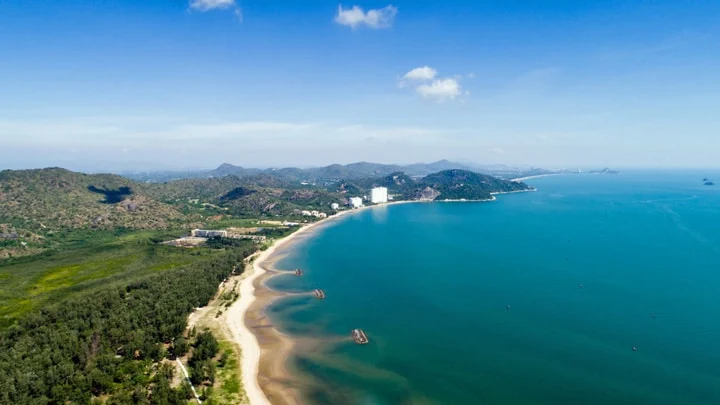
The coast around Pak Nam Pran begins about twenty-five kilometres south of Hua Hin, where the Pranburi river reaches the sea. A beach road runs south from the fishing village past houses, small boutique hotels and long, mostly empty stretches of sand.
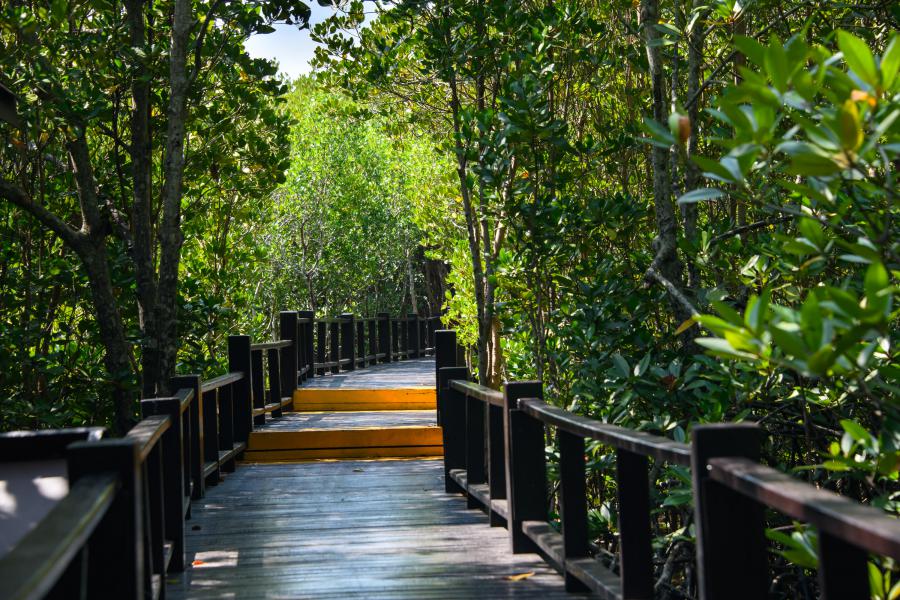
It is the quietest of the areas Hua Hin Compass profiles, and the most defined by landscape: mangroves and the forest park at the river mouth, the sea on one side and open country behind, with Sam Roi Yot's limestone hills visible to the south.
The distance is the whole decision. Hua Hin's hospitals, shopping and restaurants are half an hour away, so daily life here means either accepting a smaller local world or spending real time in the car.
How we define this area
Pak Nam Pran is the coastal area at the mouth of the Pranburi river, not the same place as Pranburi town, which sits inland on the main road. Hua Hin Compass profiles the coastal lifestyle area — the village and the beach road running south — rather than the town.
At a glance
Pak Nam Pran & Pranburi Coast in summary
- Best for
- Quiet, space, nature, sea air
- Less suited to
- Non-drivers, families needing schools, medical needs
- Area character
- Low-density coastal, fishing village and beach road
- Typical housing
- Houses and villas, few condos
- Beach access
- Direct along most of the beach road
- Walkability
- Pleasant along the beach road, impractical for services
- Car needed?
- Yes — assume every errand is a drive
- To Hua Hin centre
- Roughly 25–30 km, typically 30–40 minutes
- Families
- Difficult if children attend school in Hua Hin
- Retirement
- Good for active, car-owning retirees who want calm
Comparison scores used by Neighbourhood Compass
- Families
- 6/10
- Retirement
- 9/10
- Nightlife
- 2/10
- Walkability
- 3/10
- Transportation
- 4/10
- Shopping
- 4/10
- Schools
- 4/10
These scores exist so areas can be ranked against each other in Neighbourhood Compass. They are relative, not measurements — the sections below explain what sits behind them.
What living here actually feels like
The coast wakes up early and slowly. Fishing boats work off the river mouth, a few people cycle the beach road, and the sand is usually empty enough that you notice anyone on it.
There is no commercial centre to speak of. Life revolves around your own house, the beach, a handful of restaurants and the village at the northern end. What the area has instead of amenities is space and silence.
Weekends bring Bangkok visitors to the boutique hotels and the seafood restaurants, and the beach road gets busier for a day or two. It never approaches Cha-Am's weekend crowds.
Seasonally it changes more than the town does. The wind that makes the coast good for kitesurfing in the cool months also brings stronger surf, and the low season can feel very empty indeed.
Where within the area?
The coast reads very differently along its length, and the difference matters more here than the neighbourhood label.
Pak Nam Pran village and the river mouth
The working end: fishing boats, seafood, the local market and the most everyday services in the area. Busier and less polished than the beach road south.
The beach road
Houses, villas and small hotels facing the sea. The classic version of the area, walkable and cyclable, and where most international residents live.
Further south towards Khao Kalok
Quieter still, with headlands, coves and a scattering of resorts. The most beautiful stretch and the furthest from any services.
Pranburi town, inland
The ordinary Thai town on the main road, with banks, a hospital, markets and shops. Not a coastal lifestyle area, but where much of the practical business of living here gets done.
Who this area suits
People who want quiet coastal space
Houses with land, sea air, and a beach that is genuinely uncrowded on most days — the closest thing to rural coastal living within reach of Hua Hin.
Retirees who drive and don't need daily services
If the week doesn't require hospitals, schools or a lot of shopping, the distance stops mattering and the setting takes over.
Outdoor and water-sports people
Cycling on the flat coast road, kitesurfing in the windy season, mangroves and the national park to the south.
Second-home owners and part-year residents
A large share of the housing here is used seasonally, which is part of why the area is quiet — and why services stay thin.
Think twice if…
- You don't drive. There is no practical alternative here, and ride-hailing coverage is unreliable this far south.
- You have children in school in Hua Hin. The commute is long enough to shape the entire family week.
- You have ongoing medical needs. Local clinics cover the basics; hospitals mean Hua Hin, and specialists often mean Bangkok.
- You want restaurants and a social life within reach. The choice locally is small and quiet, especially in low season.
- You need reliable shopping. Groceries mean the village, Pranburi town or a drive north.
Housing and what you tend to find
This is a house market. Condominiums are rare; most stock is standalone houses and villas, ranging from simple Thai homes in the village to architect-designed beachfront properties.
Because so much of the housing is seasonal or holiday-oriented, long-term rentals turn over less predictably than in Hua Hin, and finding the right property can take longer. Low-season rates are often much softer than high-season ones.
Beach-road houses and villas
Direct or near-direct beach access, often with a pool. The premium product here, and still frequently cheaper than an equivalent Hua Hin beachfront address.
Houses set back from the coast
More land for the money, quieter again, and a short cycle or drive to the beach.
Small projects and boutique developments
A handful of low-density projects, sometimes attached to hotel or wellness operations.
Village and inland Thai housing
The most affordable option, generally unfurnished and rarely marketed in English.
Indicative rents
Listings in this area commonly sit around ฿9,000 – ฿40,000 a month for long-term rentals. Season affects prices here more than anywhere else in the Hua Hin area; a long lease agreed in low season is not comparable to a high-season holiday rate.
Rental prices vary substantially by property type, condition, location and season. Figures are indicative rather than quotations.
Daily life
Groceries
The village market and convenience stores cover the daily basics. A full shop means Pranburi town or a drive towards Hua Hin, so households here tend to buy in larger, less frequent trips.
Food
Excellent seafood and Thai food, plus a small number of restaurants attached to boutique hotels. The international choice is limited, and some places close or reduce hours in low season.
Healthcare
Clinics locally and a hospital in Pranburi town for everyday care. Private hospitals are in Hua Hin, and specialist treatment usually means Bangkok. This is the most important practical factor to weigh before moving here.
Schools
Thai schools serve the area; international and bilingual education means commuting into the Hua Hin area, which is a long daily journey for children.
Everyday services
Banks, post and administrative errands are mostly done in Pranburi town rather than on the coast.
Remote work
Fixed-line internet reaches most established properties, but quality varies along the coast. Test the connection at the specific house rather than trusting the area.
Can you live here without a car?
A car or motorbike is strongly recommended
Along the beach road you can walk or cycle to the sand, a restaurant and, at the northern end, the village. That is the extent of what is reachable without a vehicle.
Everything else — a proper supermarket, a hospital, a school, Hua Hin's restaurants and services — is a drive of twenty minutes or more, and public transport is limited to buses and songthaews on the main road inland.
Most households run a car, and many add a scooter or bicycles for the flat coast road. If only one person drives, the other's daily independence will be very limited.
Travel times are approximate and vary with traffic and your exact starting point. See the transport guide and Thai driving licence guide.
Beach life
The beach is the reason to be here. It runs for kilometres south from the river mouth, wide at low tide, backed by casuarinas and houses rather than hotels, and quiet on most days of the year.
It is a beach for walking, cycling and swimming rather than for beach clubs and deckchairs. In the windy months it draws kitesurfers, and the surf can be strong enough that swimming needs judgement.
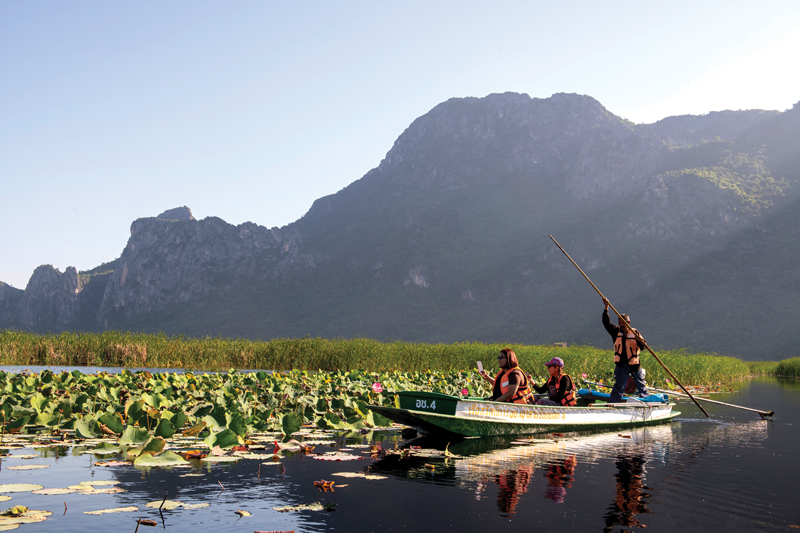
Further south the coast breaks into coves around Khao Kalok, and beyond that Sam Roi Yot National Park begins — the reason many residents cite for choosing this side of Hua Hin.
Community and social life
The international community here is small and dispersed, mixing full-time residents with people who use their houses seasonally. Because so few people are around all year, the social scene is quiet, particularly outside the cool season.
Residents tend to know each other through neighbours, a small number of restaurants and shared interests like cycling, boats or kitesurfing. People who want an active organised social life generally accept that they will drive to Hua Hin for it.
What becomes part of life hereNot a list of attractions — the places residents actually end up using.
Pak Nam Pran beach and beach road
The long, quiet shoreline south of the river mouth.
The daily walk, swim or cycle that defines living here.
Read morePranburi Forest Park mangrove boardwalk
A boardwalk through the mangroves at the river mouth.
A regular local walk and the clearest illustration of why this coast feels different from Hua Hin.
Read moreThe fishing harbour at Pak Nam Pran
The working harbour and its seafood trade.
Where the area's food comes from, and the busiest, most local part of the coast.
Khao Kalok
The headland and coves south of the main beach.
The closest quiet beach alternative, and a common Sunday routine.
Read moreSam Roi Yot National Park
The limestone hills, caves and wetlands south of the area.
On the doorstep rather than a day trip — a genuine advantage of living this far south.
Read morePranburi town
The inland town with the hospital, banks and markets.
Where much of the practical business of living on this coast actually happens.
Where it is
An approximate living area rather than an administrative boundary.
How it compares
The areas people usually weigh against this one.
Versus Khao Takiab
A similar beach-centred life while staying inside Hua Hin, so hospitals, shopping and schools remain close — busier, denser and more expensive.
Khao Takiab guideVersus Cha-Am
Also quiet and coastal, but a working Thai town with more everyday services and a closer run to Bangkok, and without the nature setting.
Cha-Am guideVersus Thap Tai
Comparable space and quiet at a similar distance from town, but inland and family-oriented rather than coastal.
Thap Tai guideNot sure which of these fits your household? Answer nine questions and see how they rank for you.
Compare this area in Neighbourhood CompassBefore signing a lease here
Questions people ask about living here
What is the difference between Pak Nam Pran and Pranburi?
Is Pak Nam Pran too far from Hua Hin?
Can you live on the Pranburi coast without a car?
Is it a good area for retirees?
What kind of housing is available?
Is the beach good for swimming?
Hua Hin Compass verified
Last verified
August 2026
Next scheduled review
February 2027
Sources checked
- · Hua Hin Compass area visits and photography
- · Department of National Parks information for Sam Roi Yot and Pranburi Forest Park
- · Hua Hin Compass beaches and day-trips research
- · Current rental listings across Pranburi coast agencies
Local business and price information on this page is reviewed roughly every six months; geographic and character descriptions annually.
Where to go next
Compare areas
Housing and cost
Family and health
Everyday life