Take on the flight
Documents, medication, devices, security keys and anything the household needs before a shipment lands. Also anything irreplaceable.
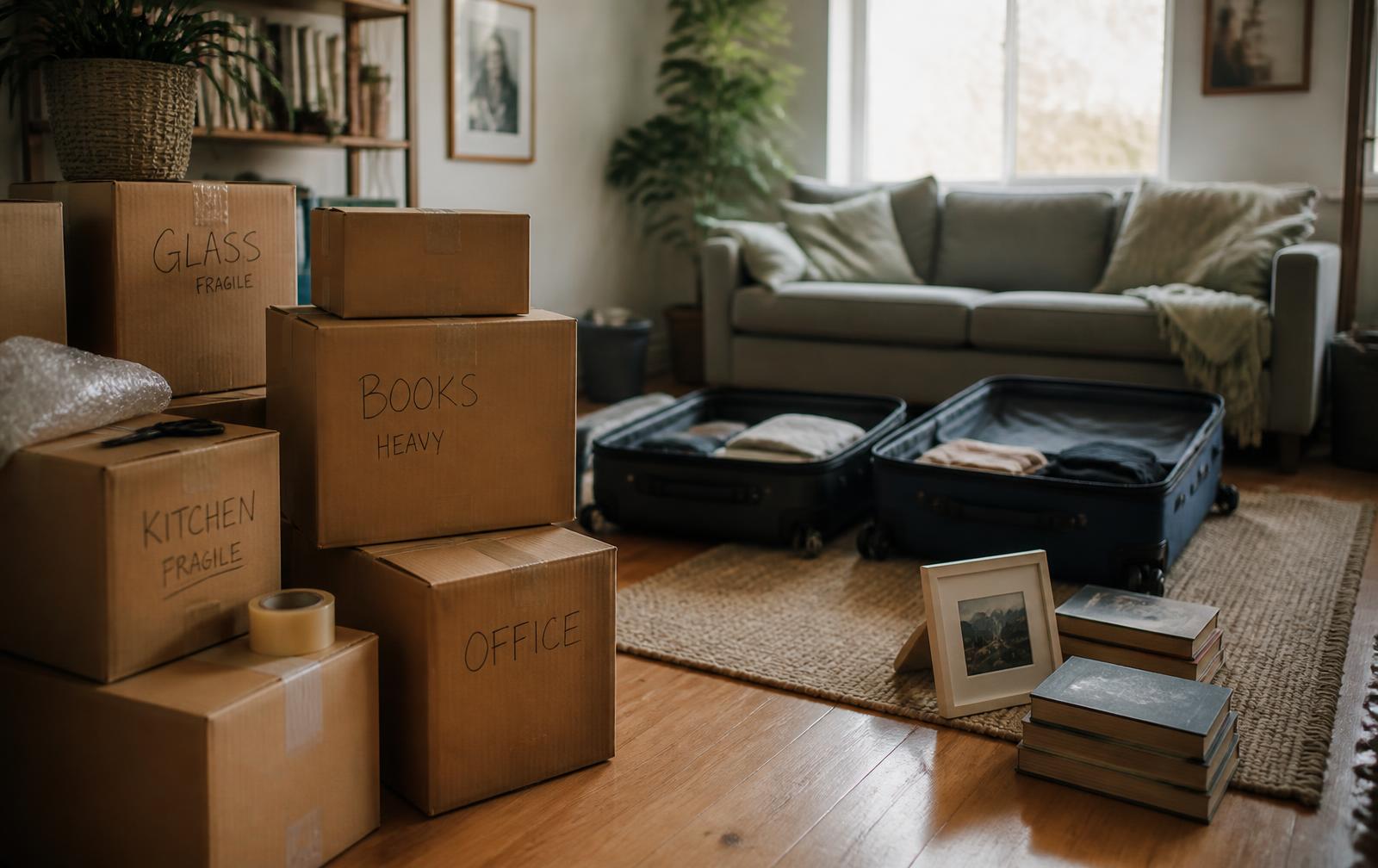
Pack essentials and hard-to-replace items. Use the category overview to decide what to ship or buy after arrival.
Keep documents, medication and anything personal or difficult to replace with you. Compare the cost of shipping bulky everyday items with buying them locally.
A quick pass across the whole household. Filter by category; the reasoning for each area follows below.
Usually bring
Hard to replace, personal, or needed in the first days.
Bring if specific
Only if your requirements are particular — size, quality, medical or work-related.
Usually buy locally
Widely available here, and often better suited to the climate.
Rarely worth shipping
Bulk, cost or condition usually argue against putting it on a boat.
| Item | Verdict | How it travels | Why |
|---|---|---|---|
| Lightweight everyday clothing | Usually buy locally | Buy after arrival | Bring a few weeks' worth; the rest is cheap here and better cut for the humidity. |
| Smart-casual outfits | Bring if specific | Checked bag | Useful for dinners, school meetings and clubs. Tailoring locally is an option if fit matters. |
| Suits and formal wear | Bring if specific | Checked bag | One set covers weddings and funerals. Heavy wool suits mostly hang unused. |
| Winter coats and heavy knitwear | Rarely worth shipping | Checked bag | Keep one light layer for aircraft, mountains and trips home; store or sell the rest. |
| Light rain jacket or packable poncho | Usually bring | Checked bag | Monsoon rain is warm and heavy — thin and breathable beats waterproof-and-sealed. |
| Technical sportswear | Bring if specific | Checked bag | Bring what fits you well, especially in larger sizes; basics are easy to top up here. |
| Swimwear | Usually buy locally | Buy after arrival | Worn constantly and replaced often; local supply is endless. |
| Shoes in larger or wide sizesAnyone above roughly EU 44 / UK 10, or with wide feet | Usually bring | Checked bag | Ordinary Thai retail is stocked for local sizing; check availability before relying on it. |
| Orthotics and prescribed insolesAnyone with a podiatric prescription | Usually bring | Hand luggage | Made to your feet, slow to reproduce abroad. Bring a spare pair if you have one. |
| Running, golf and court shoes | Bring if specific | Checked bag | If you have a model that suits you, bring it. Generic trainers are easy to buy. |
| Sandals and everyday flip-flops | Usually buy locally | Buy after arrival | What most people actually wear here, and cheap on every corner. |
| Leather dress shoes | Bring if specific | Checked bag | One pair is plenty. Leather needs airing in humid rooms or it grows mould. |
| A specific skincare or haircare routine | Bring if specific | Checked bag | International brands are sold here, but ranges differ. Bring a few months while you find substitutes. |
| Non-whitening deodorant and lotions | Bring if specific | Checked bag | Many local formulations include whitening agents; check labels if you would rather avoid them. |
| Cosmetics in your shade | Bring if specific | Checked bag | Shade ranges are aimed at the local market. Bring what you rely on. |
| Contact lenses and solution | Usually bring | Hand luggage | Bring a first supply plus your prescription; replacements are available but take time to arrange. |
| Bulk shampoo, soap and cleaning products | Rarely worth shipping | Buy after arrival | Heavy, leak-prone and inexpensive here. A week's supply is enough. |
| Regular prescription medication | Usually bring | Hand luggage | Carry it in original packaging with prescriptions and a doctor's letter, and check the rules for your specific medicine. |
| Medication containing controlled substancesAnyone on ADHD, strong painkiller, sedative or similar treatment | Bring if specific | Hand luggage | Thai FDA rules set permits and quantity limits for narcotic and psychotropic medicines. Verify before travelling. |
| Spare glasses and your prescription | Usually bring | Hand luggage | Opticians here are good and quick, but a spare pair covers the gap. |
| CPAP, hearing aids and similar devicesAnyone using a fitted medical device | Usually bring | Hand luggage | Bring spare consumables, filters and batteries — matching parts locally can take time. |
| Everyday painkillers and first-aid basics | Usually buy locally | Buy after arrival | Pharmacies are everywhere and staffed by pharmacists who speak English. |
| Laptop and chargers | Usually bring | Hand luggage | Modern chargers handle 100–240 V, so a plug adapter is usually all you need. |
| Phone | Usually bring | Hand luggage | Bring it unlocked; local SIM and eSIM plans are cheap. |
| External drives and backups | Usually bring | Hand luggage | Small, valuable and irreplaceable in content. Never in the hold or a container. |
| Ordinary monitor | Usually buy locally | Buy after arrival | Fragile in transit and widely sold here. Colour-critical or ultrawide screens are a different decision. |
| Desktop PC or workstation | Bring if specific | Shipment | Worth shipping only if the machine is genuinely specialist. Check the PSU accepts 220 V. |
| 120 V appliances from North AmericaAnyone moving from the US, Canada or Japan | Rarely worth shipping | Buy after arrival | Thailand runs 220 V at 50 Hz. Motor and heating appliances need a transformer and still run poorly. |
| Kettles, toasters and small appliances | Usually buy locally | Buy after arrival | Cheap here, and local models match the sockets and voltage without adapters. |
| Printer | Rarely worth shipping | Buy after arrival | Bulky, and cartridges are easier to source for a locally bought model. |
| Smart-home hubs and plugs | Rarely worth shipping | Buy after arrival | Regional plug shapes and app regions cause friction; rebuy the sockets, keep the hub if it is region-free. |
| Plug adapters and a multi-socket strip | Usually bring | Hand luggage | One strip plus one adapter charges the whole family in week one. |
| Security keys and authenticator backups | Usually bring | Hand luggage | Locked-out accounts are the classic first-week disaster. Bring the spare key too. |
| Headset and webcam | Usually bring | Hand luggage | Small, familiar and immediately needed for calls. |
| Specialist peripherals | Bring if specific | Checked bag | Drawing tablets, audio interfaces, calibrators — hard to match locally, easy to carry. |
| Desk and office chair | Rarely worth shipping | Buy after arrival | Volume-heavy. Ergonomic chairs are available here, though the premium models are pricier than in Europe. |
| Original documents | Usually bring | Hand luggage | Never in freight. See the Documents to Prepare guide for the full list. |
| Jewellery and heirlooms | Usually bring | Hand luggage | Carry it or leave it in a safe at home. Household freight insurance rarely covers it properly. |
| Good kitchen knives | Usually bring | Shipment | Light, long-lived and genuinely missed. Never in hand luggage. |
| Specialist cookware | Bring if specific | Shipment | A favourite cast-iron pan or baking tin travels well. A full batterie de cuisine does not. |
| Plates, glasses and cutlery | Usually buy locally | Buy after arrival | Heavy, breakable and inexpensive here. |
| Coffee equipment | Bring if specific | Shipment | Espresso machines are sold here but cost more; a grinder or hand brewer is easy to pack. |
| Baking tins and scales | Bring if specific | Shipment | Specific tin sizes are the awkward ones to find; general bakeware is available. |
| Sofas and armchairs | Rarely worth shipping | Buy after arrival | Enormous shipping volume, and fabric upholstery struggles in humid coastal rooms. |
| Beds and mattresses | Rarely worth shipping | Buy after arrival | Bulky, and bed sizes may not match locally sold sheets. Measure before assuming. |
| Flat-pack furniture | Rarely worth shipping | Buy after arrival | Rarely survives a second assembly, and the same ranges are sold in Thailand. |
| Antique or sentimental furniture | Bring if specific | Shipment | Possible, but ask about humidity, air-conditioning and how the piece is finished. |
| Outdoor furniture | Usually buy locally | Buy after arrival | Locally sold pieces are built for sun, rain and salt air. |
| Thick duvets and winter bedding | Rarely worth shipping | Buy after arrival | Air-conditioned rooms need a light quilt, not a tog-rated duvet. |
| A pillow you sleep well on | Bring if specific | Checked bag | Light, compressible and the difference between good and bad first weeks. |
| Sheets and towels | Usually buy locally | Buy after arrival | Buy after you know the bed size in your actual home; thin cotton dries faster here. |
| Books you genuinely reread | Bring if specific | Shipment | A single box, not a library. Paper foxes and mildews in humid rooms. |
| Photo albums and irreplaceable papers | Usually bring | Hand luggage | Digitise first, then carry the originals that matter most. |
| Old paper files | Rarely worth shipping | Buy after arrival | Scan, store encrypted, recycle. Almost nobody misses the folders. |
| Comfort toys and familiar beddingFamilies with young children | Usually bring | Hand luggage | Not a logistics decision. The known object does a lot of work in week one. |
| School books and learning materialsFamilies keeping a home-country curriculum or language | Bring if specific | Checked bag | Home-language reading material is the hardest to replace here. |
| Children's clothes | Usually buy locally | Buy after arrival | They grow, and lightweight local clothing suits the school day better. |
| Children's bicycles | Usually buy locally | Buy after arrival | Outgrown quickly and awkward to ship; local shops cover the usual sizes. |
| Specialist educational or medical itemsFamilies with additional-needs or medical requirements | Usually bring | Hand luggage | Anything prescribed or assessed for your child is worth carrying with you. |
| Golf clubs | Bring if specific | Checked bag | If you play often and your set is fitted, bring it. Occasional players can rent at the courses. |
| Road or gravel bike | Bring if specific | Shipment | Serious riders bring their own frame; casual riders buy locally and skip the freight risk. |
| Rackets and court gear | Usually bring | Checked bag | Light, and a racket you know is worth the baggage space. |
| Musical instruments | Bring if specific | Checked bag | Humidity affects wooden instruments. Note that Thai customs treats instruments differently from ordinary household effects. |
| Camera and lenses | Usually bring | Hand luggage | Carry it, keep it dry, and use silica gel or a dry cabinet at home. |
| Diving equipment | Bring if specific | Checked bag | Mask, computer and regulator travel well; tanks and weights never do. |
| Hobby and DIY tools | Usually buy locally | Buy after arrival | Heavy, and mains-powered tools need to match 220 V anyway. |
| A small box of pantry favourites | Bring if specific | Checked bag | Spice blends and baking staples ease the first weeks. Check restrictions before packing anything. |
| Bulk food in a household shipment | Rarely worth shipping | Buy after arrival | Food is a regulated category and can hold up an entire container. |
| Meat, dairy and fresh produce | Rarely worth shipping | Buy after arrival | Animal and plant products are subject to quarantine controls. Do not improvise. |
| Familiar bed, blanket and toysAnyone moving with an animal | Usually bring | Checked bag | Smells of home, and settles an animal faster than anything you can buy. |
| Travel crateAnyone flying an animal | Bring if specific | Checked bag | Airlines specify the crate. Buy the one your carrier accepts rather than the one you own. |
| Pet medication and vet recordsOwners of animals on treatment | Usually bring | Hand luggage | Bring a supply plus records; ask your vet what is available under a different brand name here. |
Bring a few weeks' worth; the rest is cheap here and better cut for the humidity.
How it travels: Buy after arrival
Useful for dinners, school meetings and clubs. Tailoring locally is an option if fit matters.
How it travels: Checked bag
One set covers weddings and funerals. Heavy wool suits mostly hang unused.
How it travels: Checked bag
Keep one light layer for aircraft, mountains and trips home; store or sell the rest.
How it travels: Checked bag
Monsoon rain is warm and heavy — thin and breathable beats waterproof-and-sealed.
How it travels: Checked bag
Bring what fits you well, especially in larger sizes; basics are easy to top up here.
How it travels: Checked bag
Worn constantly and replaced often; local supply is endless.
How it travels: Buy after arrival
Anyone above roughly EU 44 / UK 10, or with wide feet
Ordinary Thai retail is stocked for local sizing; check availability before relying on it.
How it travels: Checked bag
Anyone with a podiatric prescription
Made to your feet, slow to reproduce abroad. Bring a spare pair if you have one.
How it travels: Hand luggage
If you have a model that suits you, bring it. Generic trainers are easy to buy.
How it travels: Checked bag
What most people actually wear here, and cheap on every corner.
How it travels: Buy after arrival
One pair is plenty. Leather needs airing in humid rooms or it grows mould.
How it travels: Checked bag
International brands are sold here, but ranges differ. Bring a few months while you find substitutes.
How it travels: Checked bag
Many local formulations include whitening agents; check labels if you would rather avoid them.
How it travels: Checked bag
Shade ranges are aimed at the local market. Bring what you rely on.
How it travels: Checked bag
Bring a first supply plus your prescription; replacements are available but take time to arrange.
How it travels: Hand luggage
Heavy, leak-prone and inexpensive here. A week's supply is enough.
How it travels: Buy after arrival
Carry it in original packaging with prescriptions and a doctor's letter, and check the rules for your specific medicine.
How it travels: Hand luggage
Anyone on ADHD, strong painkiller, sedative or similar treatment
Thai FDA rules set permits and quantity limits for narcotic and psychotropic medicines. Verify before travelling.
How it travels: Hand luggage
Opticians here are good and quick, but a spare pair covers the gap.
How it travels: Hand luggage
Anyone using a fitted medical device
Bring spare consumables, filters and batteries — matching parts locally can take time.
How it travels: Hand luggage
Pharmacies are everywhere and staffed by pharmacists who speak English.
How it travels: Buy after arrival
Modern chargers handle 100–240 V, so a plug adapter is usually all you need.
How it travels: Hand luggage
Bring it unlocked; local SIM and eSIM plans are cheap.
How it travels: Hand luggage
Small, valuable and irreplaceable in content. Never in the hold or a container.
How it travels: Hand luggage
Fragile in transit and widely sold here. Colour-critical or ultrawide screens are a different decision.
How it travels: Buy after arrival
Worth shipping only if the machine is genuinely specialist. Check the PSU accepts 220 V.
How it travels: Shipment
Anyone moving from the US, Canada or Japan
Thailand runs 220 V at 50 Hz. Motor and heating appliances need a transformer and still run poorly.
How it travels: Buy after arrival
Cheap here, and local models match the sockets and voltage without adapters.
How it travels: Buy after arrival
Bulky, and cartridges are easier to source for a locally bought model.
How it travels: Buy after arrival
Regional plug shapes and app regions cause friction; rebuy the sockets, keep the hub if it is region-free.
How it travels: Buy after arrival
One strip plus one adapter charges the whole family in week one.
How it travels: Hand luggage
Locked-out accounts are the classic first-week disaster. Bring the spare key too.
How it travels: Hand luggage
Small, familiar and immediately needed for calls.
How it travels: Hand luggage
Drawing tablets, audio interfaces, calibrators — hard to match locally, easy to carry.
How it travels: Checked bag
Volume-heavy. Ergonomic chairs are available here, though the premium models are pricier than in Europe.
How it travels: Buy after arrival
Never in freight. See the Documents to Prepare guide for the full list.
How it travels: Hand luggage
Carry it or leave it in a safe at home. Household freight insurance rarely covers it properly.
How it travels: Hand luggage
Light, long-lived and genuinely missed. Never in hand luggage.
How it travels: Shipment
A favourite cast-iron pan or baking tin travels well. A full batterie de cuisine does not.
How it travels: Shipment
Heavy, breakable and inexpensive here.
How it travels: Buy after arrival
Espresso machines are sold here but cost more; a grinder or hand brewer is easy to pack.
How it travels: Shipment
Specific tin sizes are the awkward ones to find; general bakeware is available.
How it travels: Shipment
Enormous shipping volume, and fabric upholstery struggles in humid coastal rooms.
How it travels: Buy after arrival
Bulky, and bed sizes may not match locally sold sheets. Measure before assuming.
How it travels: Buy after arrival
Rarely survives a second assembly, and the same ranges are sold in Thailand.
How it travels: Buy after arrival
Possible, but ask about humidity, air-conditioning and how the piece is finished.
How it travels: Shipment
Locally sold pieces are built for sun, rain and salt air.
How it travels: Buy after arrival
Air-conditioned rooms need a light quilt, not a tog-rated duvet.
How it travels: Buy after arrival
Light, compressible and the difference between good and bad first weeks.
How it travels: Checked bag
Buy after you know the bed size in your actual home; thin cotton dries faster here.
How it travels: Buy after arrival
A single box, not a library. Paper foxes and mildews in humid rooms.
How it travels: Shipment
Digitise first, then carry the originals that matter most.
How it travels: Hand luggage
Scan, store encrypted, recycle. Almost nobody misses the folders.
How it travels: Buy after arrival
Families with young children
Not a logistics decision. The known object does a lot of work in week one.
How it travels: Hand luggage
Families keeping a home-country curriculum or language
Home-language reading material is the hardest to replace here.
How it travels: Checked bag
They grow, and lightweight local clothing suits the school day better.
How it travels: Buy after arrival
Outgrown quickly and awkward to ship; local shops cover the usual sizes.
How it travels: Buy after arrival
Families with additional-needs or medical requirements
Anything prescribed or assessed for your child is worth carrying with you.
How it travels: Hand luggage
If you play often and your set is fitted, bring it. Occasional players can rent at the courses.
How it travels: Checked bag
Serious riders bring their own frame; casual riders buy locally and skip the freight risk.
How it travels: Shipment
Light, and a racket you know is worth the baggage space.
How it travels: Checked bag
Humidity affects wooden instruments. Note that Thai customs treats instruments differently from ordinary household effects.
How it travels: Checked bag
Carry it, keep it dry, and use silica gel or a dry cabinet at home.
How it travels: Hand luggage
Mask, computer and regulator travel well; tanks and weights never do.
How it travels: Checked bag
Heavy, and mains-powered tools need to match 220 V anyway.
How it travels: Buy after arrival
Spice blends and baking staples ease the first weeks. Check restrictions before packing anything.
How it travels: Checked bag
Food is a regulated category and can hold up an entire container.
How it travels: Buy after arrival
Animal and plant products are subject to quarantine controls. Do not improvise.
How it travels: Buy after arrival
Anyone moving with an animal
Smells of home, and settles an animal faster than anything you can buy.
How it travels: Checked bag
Anyone flying an animal
Airlines specify the crate. Buy the one your carrier accepts rather than the one you own.
How it travels: Checked bag
Owners of animals on treatment
Bring a supply plus records; ask your vet what is available under a different brand name here.
How it travels: Hand luggage
What should be reachable before the shipment lands and before the house is set up.
For where packing sits in the wider sequence — twelve months out to your first month here — work through the Moving Compass checklist or build a dated plan with My Hua Hin Plan.
“Bring it” is not the same as “put it in a suitcase”. Three separate decisions run through this whole page.
Documents, medication, devices, security keys and anything the household needs before a shipment lands. Also anything irreplaceable.
Bulky but genuinely worthwhile possessions: specialist equipment, a small box of books, cookware you actually use, sentimental furniture.
Everyday household goods, most furniture, bedding, basic electronics and anything cheaper to rebuy than to move.
This guide is about what is worth moving. How you move it — freight options, container sizes, air freight and the customs process — is a separate subject, and one where a good international mover earns their fee.
Household effects are a customs category, not a suitcase
Thai Customs allows people changing residence to Thailand to import used household effects in reasonable quantities under stated conditions, and specifically treats some categories — including musical instruments and sports equipment — differently from ordinary furnishings. What applies to you depends on your visa route, quantities and how the shipment is declared, so confirm the current position with Customs or your shipper before you pack around it.
Thai Customs — used household effectsOfficial source1Is it difficult to replace in Thailand?
Fitted, prescribed and made-to-measure things score highest here.
2Does the exact version matter to you?
If any equivalent will do, the answer is almost always to buy locally.
3Is it expensive relative to what it costs to move it?
Compare replacement cost with the volume it occupies, not with its original price.
4Do you need it in the first week?
A shipment can take weeks. Anything urgent belongs in a bag you carry.
5Is it compact enough to carry?
If it fits in luggage, the decision is easy. If it needs freight, think harder.
6Will it survive heat, humidity and salt air?
Leather, paper, wood and delicate upholstery all age faster here.
7Is there a customs or transport complication?
Food, medicines, instruments and sports equipment are treated differently from ordinary household effects.
Hua Hin is warm all year, humid for much of it, and wet in bursts between roughly May and November. Clothes dry quickly, and they also wear out quickly — sun, sweat and frequent washing are hard on fabric. That argues for bringing a working wardrobe rather than a complete one.
What people underestimate is air conditioning. Offices, malls, cinemas, clinics and long-distance buses are cold. A light long-sleeved layer earns its place far more often than a second pair of shorts. The other underestimate is smart-casual: Hua Hin has a social life, and shorts and a technical t-shirt do not cover every evening.
What people overestimate is winter clothing. If you travel to Europe, Japan or northern Thailand in the cool season you will want one warm layer — but a wardrobe built for a northern winter is expensive to move and awkward to store in a humid house.
Thailand has plenty of shoe shops, and international sports brands are well represented in the bigger stores. The friction is in the size range: ordinary retail is stocked for the local market, so the further you sit from average local sizing — larger feet, wide fittings, narrow heels — the more likely you are to be choosing from whatever happens to be left rather than what you want.
We have not found an authoritative published source on stocked size ranges, and it varies by shop and brand, so treat this as practical caution rather than a rule. If you already know that buying shoes at home takes effort, assume it will take more effort here, and bring the pairs you rely on: everyday walking shoes, one smart pair, and your sports shoes.
Orthotics and prescribed insoles are a separate case. They are made for your feet, they weigh nothing, and reproducing them abroad means finding a podiatrist, repeating the assessment and waiting. Bring them, and bring the spare set if you have one.
One practical note on leather
Leather shoes and bags mould in unventilated wardrobes here. If you bring good shoes, plan for airing, silica gel or a dehumidifier in the wardrobe rather than discovering the problem in the second rainy season.
Supermarkets and pharmacies in Hua Hin carry the major international brands alongside Thai ones, and Bangkok is two and a half hours away for anything more specific. Online delivery covers a lot of the rest. So the honest answer is that you do not need to ship a year of toiletries, and bulk liquids are heavy, leaky and slow.
Two nuances are worth planning around. First, product lines differ by market: the brand may be here without the exact shampoo, moisturiser or shade you use. Second, many personal-care products sold in Thailand include skin-whitening agents, which is simply a matter of reading labels if you would rather avoid them.
A sensible approach is a few months of whatever you are particular about — skincare you have settled on, a specific hair product, cosmetics in your shade, contact-lens supplies — and everything else bought here. Anything prescribed by a dermatologist belongs in the medication section below, not this one.
The one category where getting it wrong is more than an inconvenience. Verify before you travel.
Check your specific medicine before you fly
Thailand regulates medicines brought in as passenger belongings, and medicines containing narcotic drugs or psychotropic substances are controlled separately. Under Thai FDA guidance, travellers under treatment may carry certain scheduled medicines for personal use within a stated maximum supply, and must apply for an FDA permit in advance — the guidance published in 2024 sets that at a 90-day supply and a permit requested at least 15 days before travel.
Rules change, and they depend on the exact substance, the quantity and how it travels. Check your own medication against current FDA guidance, and speak to your prescriber, well before your flight. This page is general information, not medical or legal advice.
Thai FDA — travellers carrying personal medicationsOfficial sourceLast checked: 18 August 2026
For ordinary prescriptions, the practical approach is a supply that covers your first months, kept in original labelled packaging, with a copy of the prescription and a doctor’s letter listing the generic names and dosages. Generic names matter: the brand you know may be sold here under another name, and a pharmacist or doctor can only help if they can identify the molecule.
Glasses, spare glasses and your current optical prescription are worth carrying. Opticians in Thailand are good and fast, but not on your first weekend. The same logic applies to fitted devices — hearing aids, CPAP machines, orthopaedic supports: bring the device, bring spare consumables, and check the voltage on any charger or pump.
Everyday pharmacy items are the opposite case. Painkillers, antihistamines, plasters and antiseptics are cheap and everywhere, and Thai pharmacists are genuinely helpful. A small travel kit is enough.
Once you are here, the wider question is how care is paid for. That is covered in the health insurance guide.
Sockets in Thai homes follow the national standard TIS 166-2549 and are usually hybrid, accepting flat two-pin and round two-pin plugs; grounded three-pin outlets are common in newer buildings. In practice a European or Australian traveller needs little more than a cheap adapter, and often not even that.
Almost all modern personal electronics — laptops, phones, tablets, cameras, most monitors — use switching power supplies rated 100–240 V, 50/60 Hz. Check the small print on the brick: if it says 100–240 V, you need a plug adapter, not a transformer. Bring the devices, bring their chargers, and bring one multi-socket strip so a single adapter powers the whole desk.
Appliances designed for 120 V markets are a different story. Anything with a motor, a heating element or a clock — American kettles, hairdryers, blenders, mains clocks — either needs a heavy step-down transformer or runs badly on 50 Hz. Moving them is rarely worth it when local equivalents are inexpensive and match the sockets.
In between sit the judgement calls. A standard monitor, printer or games console is easier to rebuy than to ship intact. A colour-calibrated display, a specialist workstation or a machine you depend on professionally can justify the freight — confirm the power supply accepts 220 V first, and check whether the warranty is regional.
The personal half — laptop, headset, security keys, authenticator backups, external drives, drawing tablet, audio interface, adapters — is small, familiar and immediately needed. Carry all of it, and carry the backups separately from the devices they protect.
The furniture half — desk, chair, ordinary monitor, filing — is volume. Buy it here once you know the room. Good ergonomic chairs exist in Thailand, though premium imported models can cost more than in Europe, so budget for one properly rather than assuming you will improvise.
Short section, simple rule: irreplaceable things travel with you.
Original civil documents, diplomas, jewellery, heirlooms and small high-value electronics do not belong in ordinary household freight. A container is handled by many people over many weeks, and standard cover for used household goods is not designed for items you could not buy again.
Which papers to gather, what may need translation or legalisation, and what to arrange before you leave are all covered in the dedicated Documents to Prepare guide.
Plates, glasses, cutlery, pots and small appliances are heavy, breakable and cheap here. Thailand has full-range department stores, home-goods chains and a large second-hand market, and rented homes often come with a basic kitchen already.
The exceptions are the things you use daily and would notice immediately: good knives, a favourite pan, a grinder or hand brewer, specific baking tins. They are compact, they last decades, and matching them locally means either paying import prices or settling. Knives travel in the shipment or checked baggage, never in the cabin.
Do not assume Western kitchen goods are unavailable, though. Ovens are less common in Thai homes than in European ones, so check what your rental actually has before deciding how much baking equipment to move.
Furniture occupies volume, and volume is what you pay for. Set that against three local realities: a large share of rental homes in Hua Hin are let furnished or part-furnished, locally made furniture is widely available at a range of price points, and pieces sold here are built for heat and humidity.
Climate matters more than people expect. Upholstered sofas, veneered cabinets and untreated wood all fare worse in a humid coastal house than in a heated northern one, especially in a room that is only air-conditioned in the evenings.
So the working principle is that ordinary furniture usually makes less sense to ship than personal or specialist items. That is guidance, not a rule: if you own an inherited piece, a fitted office chair or a bed you sleep well in and you are shipping a container anyway, the marginal cost of including it may be small. What rarely works is shipping a full house of replaceable furniture and discovering the dimensions do not fit a Thai floor plan.
Thick duvets and winter bedding have no role in an air-conditioned bedroom in Thailand; a light quilt or blanket does the job. Sheets and towels are inexpensive here, and thinner cotton dries far better in humid air than heavy European towelling.
Bed sizes are the practical catch. Mattress dimensions vary between markets and between manufacturers, so linen you already own may or may not fit the bed in your new home. Rather than assume either way, measure the bed once you have it and buy sheets locally to match.
A pillow is the sensible exception. If you sleep badly on the wrong one, it is light, it compresses into a bag, and it makes the first fortnight noticeably better.
Four piles help: irreplaceable, regularly used, sentimental, and replaceable. The irreplaceable pile — photographs, letters, original certificates — travels with you after being digitised. The regularly used pile is usually smaller than expected, and often exists as an e-book. The sentimental pile deserves a box, not a pallet. The replaceable pile is the one people ship and regret.
Humidity is the deciding argument. Paper in an unventilated Thai room foxes, warps and eventually mildews. Anything you keep on open shelves needs airflow, and anything precious needs a sealed box with desiccant or a climate-controlled room.
Clothes, shoes that will not fit in six months, bicycles and most equipment are easier to buy here. Children grow, and lightweight local clothing suits a Thai school day better than what they wore at home.
What is worth the space is different in kind. A familiar blanket, a specific soft toy, the bedtime books, a poster from the old bedroom — these cost nothing to carry and do real work during a transition that children did not choose. Home-language reading material is also genuinely hard to replace locally, and worth a box.
Anything prescribed or formally assessed — medication, therapy equipment, an education plan and its supporting reports — belongs in hand luggage with the rest of your important papers. School records and what to request before you deregister are covered in the documents guide, and schools in Hua Hin covers the admissions side.
Hua Hin is an outdoor town — golf, cycling, tennis, swimming, running, gyms. You will use equipment here more than you did at home, which argues for bringing the gear you already like rather than replacing it under time pressure.
The distinction that works is fit. A racket, saddle, camera body, wetsuit or set of clubs that suits you is worth the baggage fee. Weights, tanks, mains-powered tools and general-purpose equipment are not — they are heavy, they are sold here, and freight damage is a real risk.
Two practical checks before you commit: airline sports-baggage rules and fees vary a lot between carriers, and Thai Customs treats sports equipment and musical instruments separately from ordinary household effects, so confirm the position for anything valuable travelling in a shipment.
Wooden instruments and anything with electronics need humidity control once they arrive — a dry cabinet for camera gear is a small purchase that saves an expensive one.
If you play regularly and your clubs are fitted to you, bring them. Courses here rent sets, and pro shops sell clubs, but rental equipment is a compromise you feel every round and replacing a fitted set properly is neither quick nor cheap.
If you play a few times a year, the calculation flips: renting for the first months costs less than the baggage fees and lets you decide what you actually need once you have played the local courses. Which those are, and what a round costs, is in the Hua Hin golf guide.
Hua Hin has supermarkets with substantial international sections, and Bangkok has everything else. Imported items cost more than at home and exact brands vary, but the shortage most people imagine does not exist.
Food is also a regulated category. Medicines, cosmetics and food brought into Thailand as passenger belongings fall under Thai FDA rules, and animal and plant products additionally involve quarantine controls. We are deliberately not publishing a prohibited-items list here, because it changes and depends on the product — check current guidance for anything beyond a few sealed packets, and never let food hold up a household shipment.
On the packing side, keep it simple: the bed, blanket and toys that smell of home, a crate that meets your airline’s specification rather than the one you already own, and a supply of any medication together with vet records. Ask your vet which of your animal’s medicines and foods exist here, possibly under different brand names.
For import paperwork, vaccination timing and airline procedures, follow the Moving with Pets guide.
Heat and humidity, particularly through the rainy months, encourage mould on leather, fabric, paper and anything stored in a closed cupboard with no airflow. Salt air near the sea accelerates corrosion on metal fittings, hinges, tools and bicycle components. Insects find cardboard and paper storage appealing.
None of this makes possessions unliveable — it just changes what is sensible to move. Delicate upholstery, veneered furniture, leather collections, paper archives and anything needing stable conditions are exactly the items whose shipping cost buys you the least.
Practical answers are cheap: silica gel in wardrobes and camera bags, a dry cabinet for lenses, sealed boxes with desiccant for documents, airflow rather than sealed rooms, and a dehumidifier in the wettest months. Plan for them rather than discovering the need.
Sofas, wardrobes and flat-pack units take up most of the volume in a container and are replaceable here, often with pieces better suited to humid rooms.
Plates, glasses and pans are heavy, breakable and inexpensive locally. Bring the two or three things you would genuinely notice losing.
Most people ship a wardrobe for a climate they left. One warm layer for flights and trips home covers the realistic need.
A year of shampoo is heavy, leaks in transit and is sold three minutes from wherever you end up living.
Printers, kettles, standard monitors and smart plugs are cheaper to rebuy than to ship, and locally bought models match the sockets.
Old files and manuals arrive damp and unread. Scan them before the move and keep only what is legally or personally irreplaceable.
People with larger or wider feet often find ordinary local retail is stocked for local sizing, and end up buying online or waiting for a trip home.
International brands are here, but the exact line, shade or formulation may not be. A few months' supply buys time to find a substitute.
Arriving without prescriptions, a doctor's letter or a permit for a controlled medicine turns a routine refill into a problem.
Birth certificates, marriage certificates and diplomas are slow to obtain from a distance and expensive to legalise remotely.
Photographs, a child's familiar blanket, a wedding gift — they weigh nothing and carry disproportionate weight in the first weeks.
A fitted set of clubs, a saddle, a favourite racket or a specific camera lens is harder to reproduce here than most people expect.
None of these apply to everybody. They are the categories that come up repeatedly because they share a shape: small, personal, and slow to reproduce from a distance.
Official references used while checking the regulatory and technical points on this page.