01
Married to a Thai national
A spouse-based Non-O and family extension route may apply. This is the largest group and the one most of this guide is written for.
Read the spouse route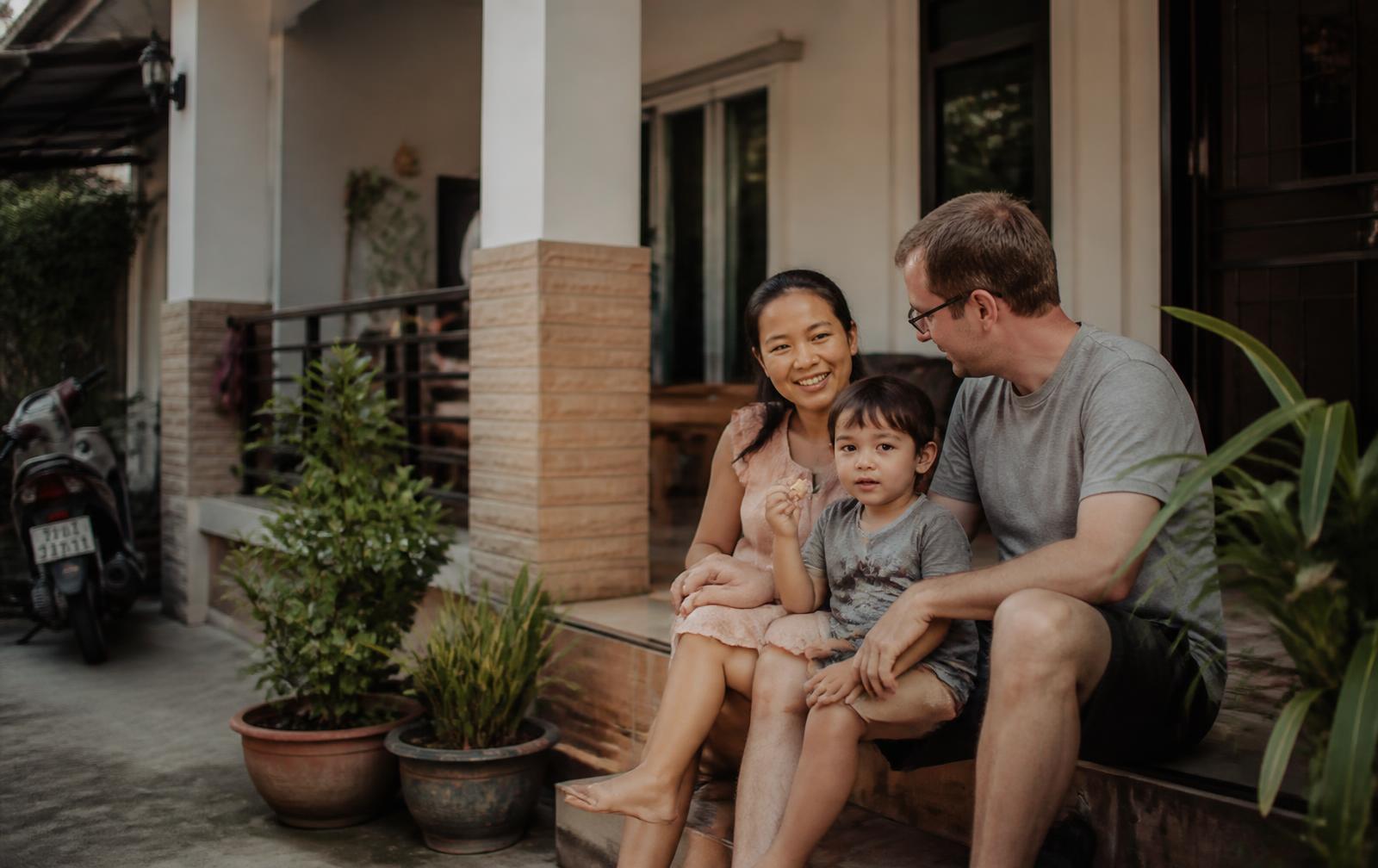
Understand how a Thai family relationship supports a Non-O application and what is needed for an extension.
Thai family routes at a glance
Three things people merge into one
Visa, permission to stay and annual extension are separate. The visa lets you travel here, the stamp on arrival sets how long you may currently remain, and the extension is a fresh application made in Thailand each year on the strength of your family relationship.
National criteria, local paperwork
The family categories and the headline financial figures are set nationally. The documents you must produce, the forms, the photocopy conventions, the day counts applied to a bank balance and how far an office goes in verifying a relationship are handled locally, and practice genuinely varies. Confirm the current requirements with the office handling your case before you move money or book flights.
This is general relocation information, not immigration or legal advice, and no guide can promise that an application will be approved.
Last checked: August 2026
Four situations that look similar from outside and behave differently in practice.
A spouse-based Non-O and family extension route may apply. This is the largest group and the one most of this guide is written for.
Read the spouse routeA family-based Non-O route may apply because of your relationship with a Thai-national child, subject to evidenced legal parentage and the financial criteria that apply to that basis.
Family-based routes exist for eligible foreign children of Thai nationals, generally framed around minor or dependent children rather than adults.
If your immigration basis is another foreigner's Thai visa rather than a Thai national, that is a dependant route and not the subject of this page.
Compare the main Thailand visa routesInside My Hua Hin Plan, the three Thai-national bases above sit in one route, Non-Immigrant O — Thai Spouse & Family. Following a foreign spouse or parent is a separate route, Non-Immigrant O — Guardian & Dependant. The relationship evidence differs by basis, an initial visa application and a later extension are separate applications handled by different authorities, and each issuing post sets its own document, financial and minor-applicant requirements. Confirm what your own post asks for before you rely on any list.
How a family-based stay is actually built
Non-Immigrant O status
Obtained from a Thai mission or the e-Visa system, or in some circumstances converted from another entry inside Thailand.
Enter and receive permission to stay
The immigration officer stamps a date in your passport. That date, not the visa, governs how long you may currently remain.
Evidence the Thai family relationship
Marriage registration, birth and parentage records, and your Thai family member's own civil documents.
Meet the applicable requirements
Financial evidence where the route carries a money test, plus address documents and application forms.
Apply for an extension of stay
Filed at your local Immigration Office before your current permission expires, and granted a year at a time.
People often say they are renewing their marriage visa. In practice they are applying for a new extension of stay, on the same family basis, with a fresh set of documents. Nothing is rolled over automatically, and the file you built last year is a starting point rather than a substitute.
The most common family route, and the one with the most misinformation attached to it.
For a spouse-based application, the marriage has to be legally recognised and it has to remain legally valid. A long relationship, a shared home or a religious ceremony is not the same thing. Immigration builds the case around registration documents, and it generally wants recently issued extracts rather than the certificate you were handed on the day.
Beyond the registration itself, offices commonly expect evidence that the relationship is genuine and ongoing. That is where applications slow down. A wedding photograph and a foreign-language certificate rarely satisfy a counter that is looking for a Thai civil-status trail, a shared address and a spouse who can attend in person.
Throughout this guide we use spouse rather than husband or wife. Plenty of searches still use "Thai wife visa" or "Thai husband visa", and those phrases will bring people here, but they describe an assumption about who is applying that no longer matches Thai law.
Thailand's marriage equality legislation took effect in January 2025, and marriage is now framed on a gender-neutral basis in the Civil and Commercial Code. Immigration pathways for same-sex spouses of Thai nationals have been reported as open on the same terms since shortly afterwards, which is why this guide uses spouse rather than gendered language throughout.
What has moved more slowly is the administrative furniture around the law. Some Immigration forms, checklists and older published guidance still contain husband-and-wife wording, and a good deal of the advice circulating online predates the change entirely. Do not read a financial rule, an eligibility limit or a document requirement out of the language on an old form.
Worth confirming locally
The legal position is clear. How consistently every office applies it to a one-year family extension is a practical question rather than a legal one, and it is worth a direct conversation with the office handling your case before you build a timeline around it.
Last checked: August 2026
Valid abroad is not the same as usable here
A marriage that is legally valid in your home country may still need additional Thai documentation before Immigration can use it as the basis for an extension. Start this early — it is one of the few parts of the process you can complete long before you need it.
The most quoted numbers on the internet, and the ones most often applied to the wrong stage.
Financial criteria follow the family basis you are applying under, and they are applied by the office handling your case. For spouse-based extensions, the commonly published methods are a deposit of 400,000 THB held in a Thai bank account in your own name, or a monthly income of 40,000 THB. Some offices will consider a combination of savings and income; others expect one method or the other, so treat the combination as a question to ask rather than a right to assume.
Other family bases are not automatically assessed against the same figures or the same evidence, and the parent-of-a-Thai-child route in particular should be checked on its own terms rather than by analogy with the spouse route.
Do not assume one rule fits every family case
A spouse case, a Thai-child case and a dependant case can each carry different requirements. Before you move money, confirm which test applies to your basis with the Immigration Office that will decide your application.
Last checked: August 2026
Open and fund a Thai account
In your own name. A joint account or your spouse's account is not a safe assumption.
Let the funds season
Immigration applies a holding period before the application date. Confirm the current day count with your office — this is the detail people most often get wrong.
Collect the bank evidence
A bank letter dated within the short window your office accepts, plus an updated bankbook and statements covering the period.
File the extension
Normally in the final weeks before your current permission to stay expires.
Keep the balance in place
The funds are expected to remain after approval, and the account is expected not to drop below the required level between renewals.
The question is not only whether you have 400,000 THB. It is whether the money is held and documented in the way Immigration currently accepts. People routinely arrive with the right amount at the wrong time and lose months waiting for an account to age.
Transfer in a way that leaves a clean record of funds arriving from abroad. That history is useful for immigration purposes and can matter later for property transactions too.
Practical example
If your permission to stay ends in March, the transfer is a decision you take months earlier. The account, not your calendar, sets the earliest date you can file.
Where the income method applies to a spouse-based extension, the published figure is 40,000 THB a month. The difficulty is almost never the amount. It is the evidence. Most major embassies stopped issuing income letters some years ago, which pushed applicants towards Thai-side proof instead.
Depending on where your income comes from, an office may look at Thai employment and tax records, or at a run of monthly transfers arriving in a Thai bank account over a sustained period. What is accepted is not uniform, and there is no single national document list you can print off and work through.
A family basis in its own right, and not simply a variation on the spouse route.
How the parent route is built
Foreign parent
You, applying on the basis of the relationship.
Thai-national child
The child's Thai nationality is the foundation of the application, evidenced through Thai records.
Legal parentage
Evidenced rather than assumed. Unmarried fathers usually need the child's legitimation or acknowledgement properly registered first.
Family-based Non-O and extension
Subject to the financial and documentary criteria that apply to this basis.
Evidence in these cases usually spans the child's birth certificate, Thai nationality and household records, documents establishing you as a legal parent, and where relevant custody or parental-authority records. Offices also look for signs of a genuine, ongoing family relationship rather than a paper connection.
Being biologically related does not by itself create long-stay rights. Where a child was born outside marriage, the father's legal relationship generally has to be established through the Thai legitimation process before it can support an immigration application, and that step is worth completing well in advance.
Check this route on its own terms
Age, dependency and financial criteria for the parent route are set separately from the spouse route, and published guidance does not always spell them out clearly. Confirm what applies to your case with Immigration before assuming the spouse figures carry across.
Last checked: August 2026
A narrower route, generally built around minor or dependent children.
Family-based routes can also apply to eligible foreign children of Thai nationals. Published guidance frames these around children under twenty, with a narrow exception where a child is unable to support themselves, so this is not a route that continues indefinitely into adult life.
Expect to evidence the parent's Thai nationality, the parent-child relationship and, where relevant, continuing dependency. Confirm the current age and dependency criteria before planning around this route.
Not one universal checklist. Six groups, and an office that decides how deep it goes into each.
The document that proves why you qualify at all.
Immigration needs to see the Thai national's own civil records, not only yours.
Your current immigration position, evidenced rather than described.
Where you live matters more than newcomers expect.
Only where the family basis you are using carries a financial test.
The part that varies most between offices.
The yearly routine, from the month before to the stamp itself.
Check your expiry
Work from the stamp in your passport, not from the visa.
Confirm the basis still holds
The family relationship must still be current and evidenced.
Prepare relationship documents
Freshly issued extracts where the office expects them.
Prepare financial evidence
Where your route carries a money test, timed to the bank rules.
Prepare address documents
TM30, lease or ownership papers, and household records.
File before expiry
Usually in the final weeks of your current permission to stay.
Possible further review
Some cases are decided on the day; others are not.
New permission to stay
Granted for a year at a time if the office is satisfied.
Approval is not automatic
Being married to a Thai citizen gives you a basis to apply. It does not automatically give you a one-year extension. Current documentation, a valid family basis and the office's own documentary expectations all sit between the application and the stamp.
Last checked: August 2026
Where family cases differ most from every other long-stay route.
Family-based applications carry an element that retirement and work cases do not: Immigration may want to satisfy itself that the relationship is genuine and ongoing. In practice that can mean photographs at the home and with family, questions to both of you, household documents, witness details, or a visit to the address.
How far an office goes varies, and the documentary side of this is not published as a national checklist. You will find confident claims online that Immigration always visits your house, or never does. Neither is a reliable basis for planning.
What can happen after you file
Application submitted
Documents accepted and the file opened.
Interim permission where applicable
Some offices grant a short permission to stay while the file is reviewed, rather than deciding immediately.
Return date
You are told when to come back. The stamp and the officer's instruction are what govern this, not general advice.
Final decision
The extension is granted, or further evidence is requested.
This stage is common enough that it is worth expecting, but the length of any interim period is applied administratively rather than published as a fixed entitlement. Read your own stamp, note the date, and do not travel on the assumption that an interim permission behaves like a granted extension.
Two questions that people routinely collapse into one.
A family-based Non-O or extension does not itself give permission to work. Work authorisation is decided under labour law, by a different agency, against its own criteria, and the definition of work in Thailand is wider than most newcomers expect.
What qualifying Non-Immigrant status can do is put you in a position to apply separately for a work permit, without necessarily switching visa category first. That still requires a qualifying employer or business arrangement and a successful work permit application. Because this sits at the boundary between immigration and labour rules, confirm your own position with the Department of Employment or a qualified adviser before accepting work.
If your income actually comes from clients or an employer outside Thailand, the DTV may describe your activity more accurately than any Thai employment structure.
Family status and work authorisation are separate
One does not deliver the other. Assuming otherwise is among the more expensive mistakes on this page.
Check re-entry permission before you fly
An extension of stay is tied to your presence in Thailand. Leaving the country without the appropriate re-entry permission ends it, and nothing can be explained away at the airport on the way back.
Last checked: August 2026
Permits are obtained before you travel, at an immigration office or at the airport before departure. Fees are modest and published, and they are revised from time to time, so confirm the current amounts locally rather than relying on a figure from an older article.
If you live in Hua Hin and return to Europe or elsewhere during the year, this is a pre-departure check, not an airport formality.
Anyone staying long term on a permission of stay reports their address every 90 days. The count restarts each time you re-enter the country, which is why people who travel lose track of it. It is an address report, not a visa renewal: filing it does not extend your stay, and missing it creates a fine and a note on your record. Our 90-day reporting guide covers the counting and the filing in detail.
TM30 is the notification that a foreigner is staying at a particular address, filed by the property owner or manager. Most Hua Hin landlords and condo offices handle it routinely, but not all do, and offices frequently want to see it when you apply for an extension, a re-entry permit or a residence certificate. Where your Thai spouse or their family owns the home, sort out who files it before you need it, not the week your extension is due.
Rarely discussed in advance, and the moment when clear information matters most.
Divorce or the legal end of a marriage. Where your permission to stay rests on the marriage, a change in the legal relationship affects the basis of that stay. Exactly how and how quickly is not something to work out from forum posts. If your immigration status is based on marriage, check your position before making travel or visa decisions after a separation or divorce.
Death of a Thai spouse. The immigration consequences depend on your exact status, your circumstances and current practice, and offices are known to handle these cases with a degree of discretion. Neither automatic continuation nor immediate cancellation is a safe assumption. Speak to Immigration early, ideally with someone who can help you through it, and give yourself time to consider alternative routes.
Changes in family circumstances. Where custody, legal parentage or dependency forms part of your immigration basis, changes to any of them can matter. Keep the civil-status paperwork current, and raise changes at your next extension rather than hoping they go unnoticed.
If you qualify for both, the marriage route is not automatically the better choice. Some couples prefer immigration status that does not depend on the relationship, and that does not require them to document their home life once a year. Others find the lower financial threshold decisive, particularly where capital is tied up elsewhere.
Neither is obviously better. The family route suits people whose life is anchored here and who want a settled annual rhythm. The DTV suits people whose work is clearly foreign and who can live with a stay structure built in 180-day blocks. Couples sometimes find that the answer changes once children and schooling enter the picture.
What the visa looks like in ordinary family life, rather than on application day.
Hua Hin suits mixed families better than its holiday reputation suggests. Immigration business is handled provincially rather than in Bangkok, so the annual routine does not involve a trip to the capital. Schooling runs from Thai state schools through bilingual options to international programmes, and private healthcare is unusually good for a town of this size.
The practical constraints are equally real. Public transport is thin, so most families end up driving. Medical specialisms are narrower than Bangkok's, which matters more as children and parents age. And the town is quieter in the low season than the brochures imply.
A stable, documented address underpins every immigration transaction here: TM30, lease or ownership papers, and household records where your spouse's family owns the home. Sort out who files what when you move in.
Renting and buying in Hua HinIf your extension depends on Thai bank funds, the account is part of your immigration file rather than a convenience. Keep the transfer history clean and the bankbook current.
Thai bank account guideThai-national children bring their own paperwork: nationality records, household registration, passports and travel consents. Decide on schooling early, since the strongest programmes fill quickly.
Schools in Hua HinMixed families often end up with a mix of cover: Thai social security for a working spouse, private policies for the foreign partner, and a decision to make about the children.
Health insurance in ThailandMost of them are assumptions rather than eligibility problems.
It gives you a basis to apply. Permanent residence is a separate, far narrower process, and an extension of stay is not residency.
The visa, the permission to stay stamped on arrival and the annual extension are three different things with three different dates.
The financial criteria follow the family basis you are applying under. A spouse case and a Thai-child case are not automatically assessed the same way.
Where the deposit route applies, the account has to be seasoned before you file. The bank history sets your earliest application date, not your diary.
A marriage that is perfectly valid abroad usually still needs translation, legalisation and a Thai civil-registration step before Immigration can build an extension on it.
Immigration status and work authorisation are decided under different laws by different agencies. One does not deliver the other.
Departing while holding an extension of stay, without the appropriate re-entry permit, can end that permission entirely.
A Thai spouse does not remove the address-reporting obligation, and reporting does not extend your stay. They are separate duties on separate clocks.
Thailand now recognises equal marriage, but a great deal of online advice, and some administrative paperwork, still assumes a foreign husband and a Thai wife.
What one office asked for last spring is useful intelligence, not law. National criteria and local documentary habits are different things.
Marriage to a Thai citizen never grants Thai nationality by itself, but it does open a statutory naturalisation route in which the five-year domicile requirement and the Thai language requirement do not apply to a foreign husband. Everything else — good behaviour, a regular occupation, documented income and tax, the assessment and the interview — still applies, and approval remains discretionary.
It is not something to plan around in your first years here. It is worth understanding early, because the tax and documentary history it depends on takes years to build.
Short answers. The detail sits in the sections above.
No. The criteria follow the family basis you are applying under, and practice can differ between offices. Do not assume the spouse figures apply unchanged to a Thai-child case.
The marriage remains valid, but Thailand normally needs the certificate translated, legalised through the Ministry of Foreign Affairs and then recorded at a district office so the marriage exists in the Thai civil registry. Allow real time for this.
Where your permission to stay rests on the marriage, ending the marriage affects the basis of that stay. How quickly and how strictly this is applied is not something to work out from forum posts, so check your own position with Immigration before making travel or visa decisions.
No. A Thai-family route rests on your relationship with a Thai national. A dependant route rests on your relationship with another foreigner who holds qualifying Thai immigration status, such as a Non-B or O-A holder.
Where to confirm anything on this page. If a source below contradicts this guide, the source is right.
Hua Hin Compass verified
Last verified
August 2026
Next scheduled review
November 2026
Sources checked
Family-based immigration rules, financial requirements and local Immigration procedures can change. Where a figure is applied at office level rather than published nationally — bank holding periods, interim permission lengths, the treatment of a case after divorce or bereavement — this guide explains the mechanism and points you to the office rather than quoting a number we cannot stand behind.
Hua Hin Compass uses official Thai government sources as the primary reference and reviews this guide periodically. It is general relocation information, not immigration or legal advice, and it cannot confirm your eligibility or promise that an application will be approved. Confirm your own position with the relevant Thai authority or a qualified adviser.
Add the document chain, bank timing and extension dates to your own relocation plan.
Visas & immigration
Other long-stay routes
Family life here
Planning the move