
Hua Hin Centre
The walkable core between the railway station and the beach, where almost everything is within reach and quiet is the one thing you have to shop for.
- Last verified
- Last verified: August 2026
- Next review:
- February 2027
- Reading time:
- 8 min
The short verdict
Central Hua Hin is the part of town where you can genuinely live without a car. The grid between Phetkasem Road and the beach holds the night market, the fresh market, most of the town's restaurants, banks, pharmacies, the railway station and the main shopping centres, all inside a walk or a short ride.
The trade-off is space and calm. Housing is mostly condominiums and older shophouse-style rentals, gardens are rare, and the streets that make the centre convenient are the same ones that carry traffic, tour buses and late bars. High season changes the character of the whole area for several months a year.
It suits people who value being able to walk out for dinner, a doctor's appointment or a swim more than they value a quiet garden. If your picture of Thailand involves a pool villa and birdsong, the centre will feel like the wrong end of town.
How we define this area
Hua Hin neighbourhood boundaries are not used consistently in property listings. For comparison purposes, Hua Hin Compass treats Hua Hin Centre as the area between the railway line and the sea, roughly from the Hilton and the fishing pier south to the Soi 88 area — the walkable town grid rather than the wider municipality.
At a glance
Hua Hin Centre in summary
- Best for
- Convenience, walkability, living without a car
- Less suited to
- Families wanting space, light sleepers, villa hunters
- Area character
- Busy small-town centre with a tourist layer
- Typical housing
- Condos, apartments, a few townhouses
- Beach access
- Walkable from most of the area
- Walkability
- High — the most walkable part of Hua Hin
- Car needed?
- No, though useful for schools and inland trips
- To the centre
- You are in it
- Families
- Workable, but school runs mean driving
- Retirement
- Strong if you want services on your doorstep
Comparison scores used by Neighbourhood Compass
- Families
- 6/10
- Retirement
- 7/10
- Nightlife
- 8/10
- Walkability
- 9/10
- Transportation
- 8/10
- Shopping
- 9/10
- Schools
- 6/10
These scores exist so areas can be ranked against each other in Neighbourhood Compass. They are relative, not measurements — the sections below explain what sits behind them.
What living here actually feels like
Mornings are the best part of the week here. The fresh market and the coffee shops open early, the beach is quiet enough to walk the length of it, and the streets belong to residents rather than visitors.
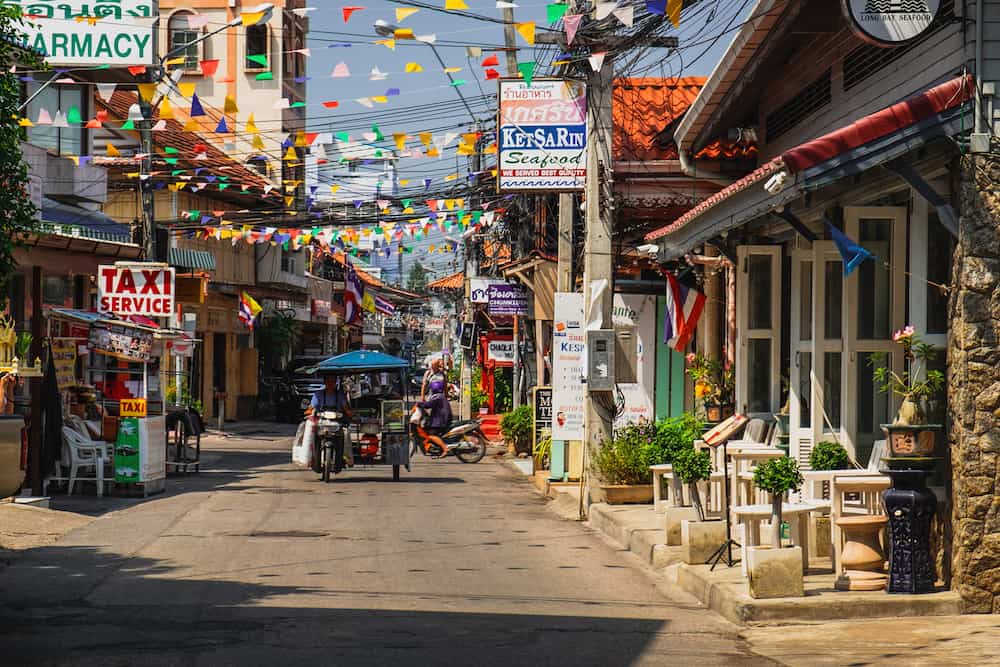
By late afternoon the centre changes gear. The night market fills the streets around Dechanuchit, hotel guests come down to the beach road, and the sois that were empty at 8am carry a steady flow of scooters and songthaews. It never becomes a city, but it is unmistakably a town centre.
Noise is street-specific rather than area-wide. One soi can be residential and silent after nine; the next one over has a bar with live music until late. Two buildings a hundred metres apart can offer completely different evenings, which is why the standard advice here is to come back after dark before you commit.
Seasonality matters too. From roughly November to February, weekends bring Bangkok traffic and the beach road slows down. In the low season the same streets feel almost provincial.
Where within the area?
The centre is small, but the difference between one street and the next is one of the biggest factors in whether you enjoy living here.
Beach road and the hotel strip
Sea views, easy beach access and the highest prices. Also the busiest pavements and the most tourist traffic, especially at weekends and during high season.
The market grid (Chatchai, Dechanuchit, Naresdamri)
Maximum convenience and the most character: fresh market, night market, seafood restaurants. Also the noisiest option after dark, and the least suited to a quiet home life.
West of Phetkasem, around the station
Cheaper, more Thai in feel and still walkable to town, though you cross the main road for the beach. Traffic noise from Phetkasem Road replaces bar noise.
South towards Soi 88 and BluPort
Quieter residential condos within reach of the centre, with the mall and supermarkets close by. A common compromise for people who want the centre's convenience without living inside the night market.
Who this area suits
People without a car
Groceries, pharmacies, banks, restaurants and the beach are all walkable, and motorbike taxis and Grab fill in the rest. This is the one part of Hua Hin where not driving is a genuine choice rather than a compromise.
Retirees who want services close by
Clinics, hospitals, immigration errands and daily shopping are all short trips, and there is enough going on to keep a week from feeling empty.
Long-stay renters testing Hua Hin
Condo stock is deep and turnover is high, so short leases are easier to find here than in villa areas. A first year in the centre is a common way to work out where you actually want to live.
People who like eating out
The density of restaurants, markets and cafés is unmatched anywhere else on this coast, from the fish stalls at Chatchai Market to the beach-road terraces.
Think twice if…
- You want silence. Even quiet sois in the centre carry scooter noise, and bar or hotel noise carries further than you expect on still nights.
- You want a garden or a pool of your own. Almost all central housing is shared-facility condominiums.
- You have children in an international school. Most campuses sit inland or south of town, so a school run means driving out of the centre twice a day.
- You dislike high-season crowds. From November to February the beach road, restaurants and car parks fill up, particularly at weekends.
- You need reliable parking. Older buildings often have far fewer spaces than units.
Housing and what you tend to find
Central Hua Hin is condominium territory. Buildings range from small older blocks on the sois to larger beachfront developments with pools, gyms and sea-facing units, and there is a long tail of studio and one-bedroom rentals aimed at long-stay visitors.
Houses exist but are the exception: mostly older Thai townhouses and shophouses, often without dedicated parking. If you want a standalone home with a garden, you are effectively looking outside the centre.
Beachfront and sea-view condos
The premium end. You pay for the view and the location rather than for size, and older beachfront buildings can carry high maintenance charges.
Soi condos and apartments
The bulk of the market. Studios and one- or two-bedroom units, often furnished, frequently available on six- or twelve-month leases.
Townhouses and shophouses
More space for the money and popular with people running a small business, but usually older, warmer and short on parking.
Newer developments towards Khao Takiab road
Larger buildings with proper facilities, slightly out of the walking core but still close enough to reach the centre quickly.
Indicative rents
Listings in this area commonly sit around ฿12,000 – ฿45,000 a month for long-term rentals. Sea views, building age and whether a unit is furnished move prices more than floor area does.
Rental prices vary substantially by property type, condition, location and season. Figures are indicative rather than quotations.
Daily life
Groceries
Chatchai fresh market for produce and fish, plus supermarkets in Market Village and BluPort and small Tops and convenience stores scattered through the centre. Weekly shopping without a car is realistic here.
Food
The widest choice in the province: Thai street food, seafood, and a large international restaurant scene aimed at both residents and visitors. Most of it is within walking distance rather than a drive.
Healthcare
Clinics and pharmacies are everywhere, Hua Hin Hospital is the government hospital in town, and Bangkok Hospital Hua Hin and San Paulo Hospital cover private care. Anything highly specialised still tends to mean a trip to Bangkok.
Schools
Thai schools are in and around the centre, but the international and bilingual campuses families usually shortlist sit inland or south, so plan a daily drive or a school bus route.
Everyday services
Banks, immigration-related errands, phone shops, laundry, repairs and post are all close together, which quietly saves a lot of time in the first months after a move.
Remote work
Fibre is widely available in condo buildings and there is a reasonable spread of cafés and co-working space. Check the actual line in the unit rather than the building's advertising.
Can you live here without a car?
Yes — one of the easiest parts of Hua Hin without a car
Almost everything a week requires — food, groceries, the beach, a pharmacy, a bank, a doctor — sits inside a walk or a five-minute ride. Songthaews run along the main roads, motorbike taxis wait at the corners, and ride-hailing works reasonably well in town.
A car becomes worthwhile if you have children at an inland school, if you shop at Makro or the larger stores on the highway, or if you want to spend weekends out towards Pranburi, Kaeng Krachan or the golf courses. Many residents here start without one and add a scooter first.
Parking is the other side of the argument: in the older grid it is genuinely difficult, and some condo buildings allocate fewer spaces than they have units.
Travel times are approximate and vary with traffic and your exact starting point. See the transport guide and Thai driving licence guide.
Beach life
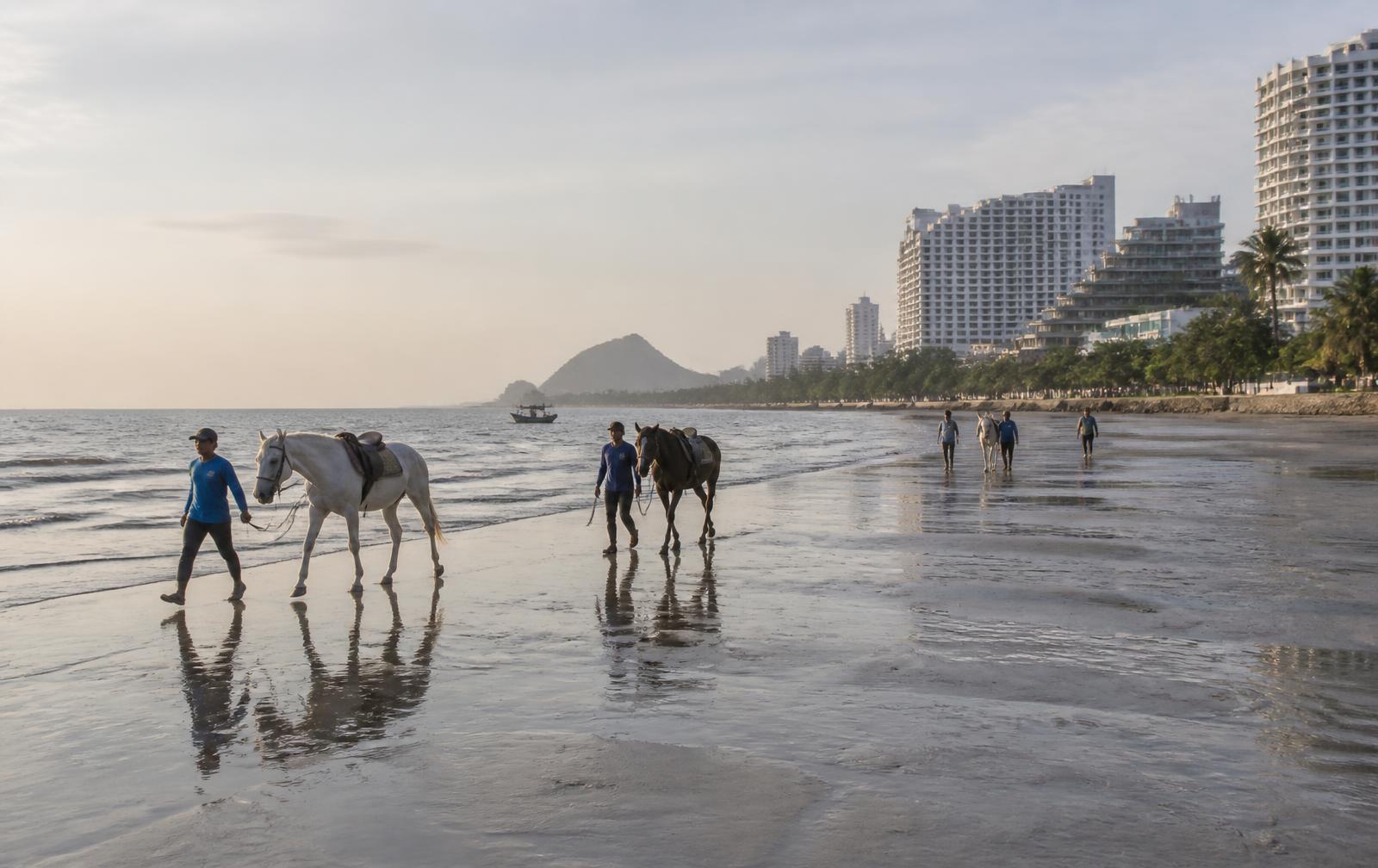
Hua Hin Beach runs the full length of the centre, which makes it part of ordinary life rather than an outing. Early mornings are for walking and swimming; by mid-afternoon the section near the hotels fills with sunbeds, horses and visitors.
The northern end near the fishing pier is rockier and busier; walking south the sand widens and the crowd thins. Tide matters more than most people expect — at low tide the beach is broad and firm enough to walk for kilometres.
Community and social life
Social life in the centre tends to organise itself around places rather than clubs: a regular café, a particular bar on the beach road, the Friday market run, a gym. Because so much is walkable, people bump into each other, which makes the centre an easy place to arrive knowing nobody.
The international community here is broad rather than tight — long-stay retirees, seasonal residents from Scandinavia and Germany, remote workers and Bangkok weekenders all overlap. If you want an organised group life, most of the established sports and charity activity sits slightly outside the centre, in the golf and villa areas.
What becomes part of life hereNot a list of attractions — the places residents actually end up using.
Chatchai Market
The town's daily fresh market, busiest in the early morning.
Where most residents settle into a produce and fish routine rather than shopping only in supermarkets.
Hua Hin Night Market
Street food and seafood on Dechanuchit Road every evening.
Convenient and cheap, but also the single biggest source of evening noise and crowds for nearby streets.
Hua Hin Railway Station
The historic station on the Bangkok–South line, still in daily use.
A genuine alternative to the road for Bangkok trips, and a landmark that anchors the western edge of the centre.
Market Village and BluPort
The two main shopping centres at the southern end of the centre.
Supermarkets, cinema, banks and services in one stop — the fallback for anything the sois don't cover.
The beach walk
The stretch of sand from the pier south towards Khao Takiab.
The default morning routine for a lot of residents, and the reason many accept the noise of the centre.
Read moreCicada and Tamarind markets
Weekend craft, food and music markets south of town.
The main weekend evening habit for people who want something other than the night market. A short drive or songthaew ride away.
Where it is
An approximate living area rather than an administrative boundary.
How it compares
The areas people usually weigh against this one.
Versus Nong Kae
Similar access to shops and hospitals with less noise and easier parking, but you lose the ability to walk to dinner and the beach from most streets.
Nong Kae guideVersus Khao Takiab
Beach living at a quieter pace and often more space for the money, at the cost of a drive whenever you want the centre's choice of restaurants and services.
Khao Takiab guideVersus Hin Lek Fai
The opposite trade: garden, pool and quiet, with a car required for everything and no walkable town life.
Hin Lek Fai guideNot sure which of these fits your household? Answer nine questions and see how they rank for you.
Compare this area in Neighbourhood CompassBefore signing a lease here
Questions people ask about living here
Can you live in central Hua Hin without a car?
Is central Hua Hin noisy?
Is the centre a good place for families?
What kind of housing is available in Hua Hin Centre?
How busy does the centre get in high season?
Hua Hin Compass verified
Last verified
August 2026
Next scheduled review
February 2027
Sources checked
- · Hua Hin Compass area visits
- · Municipal and provincial tourism information
- · Hospital and shopping-centre websites
- · Current rental listings across major Hua Hin agencies
Rents, shops and venues change. Local business and price information on this page is reviewed roughly every six months; geographic and character descriptions annually.
Where to go next
Compare areas
Housing and cost
Family and health
Everyday life